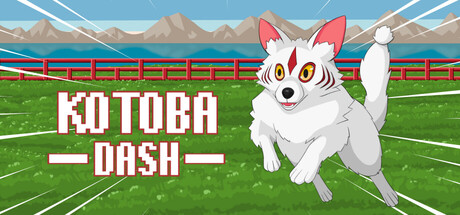
Kotoba Dash scores 72/100 — better than 46% of Action capsules (n=8,534).

Quick text summary

Kotoba Dash scored 72/100 on Steam Analyzer — Good for a Action capsule. Top priority fix: [genre_clarity] Add visual language learning cues such as Japanese kanji floating near the fox or a subtle flashcard prop to immediately signal educational gameplay beyond cute runner genre.

Capsule scores by dimension

  • Genre Clarity: 7/10 — Clear casual action with educational overlay. The running fox character on a stadium field immediately signals a movement-based game, and the Japanese character name reinforces educational positioning. At TINY size, the fox silhouette and stadium setting remain readable, though the vocabulary learning aspect is not visually obvious without context, making it feel like a general runner rather than a language learning game.
  • Title Readability: 8/10 — Bold legible title with clean placement. KOTOBA DASH uses a thick, high-contrast white sans-serif font centered on the green field with horizontal separator lines for emphasis. The title reads clearly at FULL and SMALL sizes; at TINY size it remains decipherable, though letterforms compress slightly and the dashes become thin lines.
  • Contrast & Color: 8/10 — Strong value separation and warm palette. The bright white title pops against the green field and blue sky, while the red fox ears and stadium details create warm accents that separate cleanly from the background. The composition uses distinct color zones (sky blue top, green field middle, red stadium trim) that maintain clear silhouettes at SMALL and TINY sizes even in grayscale.
  • Uniqueness & Polish: 6/10 — Competent cute aesthetic, generic sports setup. The white fox character is charming and well-rendered with good facial detail and expressive pose, but the stadium runner trope is familiar in casual game marketing. The illustration quality is solid, though the overall composition feels like a standard cute-character-on-field template rather than a distinctive hook that communicates the unique vocabulary-learning gameplay.
  • Brand Consistency: 7/10 — Consistent character and cohesive art style. The white fox with red markings is a consistent mascot character with recognizable proportions and color scheme that would likely carry across promotional materials. The illustration style (flat shading, anime-influenced proportions, simple backgrounds) feels cohesive, though without reference to the five store screenshots, brand identity signals are limited to the mascot alone.
  • Composition: 7/10 — Clear focal point, balanced layout, safe margins. The fox character sits slightly left of center with strong eye contact, drawing focus immediately while the stadium structure frames the scene. The title above and field below create three clear zones; the fox remains the primary subject at SMALL and TINY sizes, though the stadium detail becomes secondary visual noise at tiny scale.

What works

  • Readable title with strategic contrast. Bold white sans-serif on green field ensures KOTOBA DASH remains legible from FULL down to TINY sizes, aided by horizontal separator lines that reinforce the word breaks.
  • Strong color separation and value range. Blue sky, green field, red stadium, and white fox create distinct zones that maintain silhouette clarity even in grayscale, supporting quick visual parsing on Steam browse.
  • Clear primary focal point. The fox character is the dominant visual element that anchors attention, with a confident pose and direct gaze that reads well at all sizes.

What hurts the capsule

  • Generic sports-runner visual framing. Stadium and field setting are familiar casual game tropes that do not distinctly communicate that this is a Japanese vocabulary learning game rather than a pet racing sim.
  • Gameplay mechanic not visually implied. Nothing in the image hints at flashcards, translation, reading practice, or the movement-based learning loop that differentiates Kotoba Dash from standard runners.
  • Stadium detail becomes visual clutter at tiny scale. The red stadium structure and mountain background compress into noise at TINY size, creating secondary visual competition that dilutes focus on the fox character.

Priority fixes

  1. [genre_clarity] Add visual language learning cues such as Japanese kanji floating near the fox or a subtle flashcard prop to immediately signal educational gameplay beyond cute runner genre.
  2. [uniqueness_polish] Refine composition to feature the fox in a more dynamic movement pose (mid-sprint, mid-jump) or add visual storytelling that hints at the reading/translation mechanic.
  3. [composition] Simplify or reduce background stadium detail to maintain clarity at TINY size; consider a softer or more abstract field backdrop that does not compete with the fox.

Store copy priority fixes

  1. [hook_strength] Expand the short description to include one sentence about session length or game modes (e.g., "...short, engaging sessions designed to fit your daily routine") to reinforce convenience and accessibility.
  2. [feature_communication] In the Exploration mode description, add explicit benefit language: "No failure state means you can practice at your own pace without pressure" to clarify its unique value vs. other modes.
  3. [uniqueness] Add a comparison anchor in the opening detailed description, such as "Unlike static flashcard apps, Kotoba Dash ties answers to movement and time pressure to accelerate recognition and recall" to reinforce what makes it different.

Related guides

Steam app ID: 4002970 · Tags: Action, Casual, Strategy, Arcade, Trivia