Quick text summary
Feed the Reactor scored 68/100 on Steam Analyzer — Solid for a Incremental capsule. Top priority fix: [uniqueness_polish] Introduce a distinctive visual motif or character silhouette (e.g., operator at console, iconic reactor chamber design) that communicates the incremental/simulation tone and becomes a recognizable brand anchor.
Capsule scores by dimension
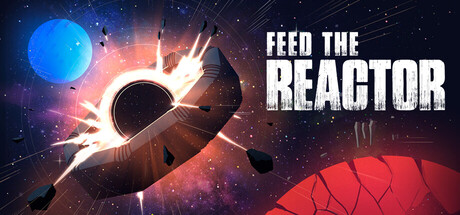
- Genre Clarity: 7/10 — Space sci-fi simulation evident. The capsule clearly communicates a space-themed game through the starfield background, glowing planet, and futuristic spacecraft with energy effects. The reactor explosion and glowing orb suggest an energy management mechanic. At TINY size, the sci-fi aesthetic reads strongly, though the specific incremental/simulation gameplay loop is not explicitly clear from visuals alone—genre feels more action-adventure than calm strategy at this scale.
- Title Readability: 8/10 — Bold white text, excellent contrast. The title 'FEED THE REACTOR' uses clean, all-caps sans-serif with strong white color and subtle drop shadow against the darker mid-ground. Text placement in the upper-right quadrant avoids the busy center explosion. At TINY size, the title remains legible and holds hierarchy well, though individual letter clarity diminishes slightly due to font weight consistency.
- Contrast & Color: 8/10 — Vibrant warm glow, strong separation. The warm orange-red energy explosion contrasts sharply against cool blue planet and deep space background, creating excellent value separation across the full spectrum. The white title punches through clearly. In grayscale test, the bright central explosion maintains silhouette definition, and the dark spacecraft reads distinctly against lighter glowing elements—the design holds well at SMALL and TINY sizes with no muddy collapse.
- Uniqueness & Polish: 6/10 — Competent sci-fi scene, generic execution. The capsule features professional particle effects, layered space lighting, and a recognizable reactor-explosion visual hook that ties directly to the title. However, the composition—glowing planet, exploding ship, starfield—follows common space-game visual templates without a distinctive art style or memorable visual identity that would set it apart from other sci-fi titles. The craft is solid but lacks a signature element or unique selling point communicated visually.
- Brand Consistency: 5/10 — No recognizable brand identity. The capsule does not establish an iconic character, color palette, motif, or visual signature that could be recognized across future marketing materials or screenshots. The reactor and explosion are game-relevant but generic space-game iconography. Without access to internal brand guidelines, the visual language appears functional but interchangeable with other incremental/sim games—no memorable identity cues emerge that would reinforce brand recognition.
- Composition: 7/10 — Clear hierarchy, centered subject. The composition uses a strong central focal point—the reactor explosion—with the planet providing secondary interest and the spacecraft wrapping around to frame the energy event. The title anchors to upper-right, creating breathing room. At SMALL and TINY sizes, the explosion remains the primary read, though the distributed spacecraft and planet elements create mild visual scatter that could compete for attention on quick scroll. Margins appear safe from Steam cropping.
What works
- Strong color contrast. Warm orange-red explosion against cool blue planet and deep space creates excellent separation that reads clearly at all sizes and maintains silhouette integrity in grayscale.
- Legible title placement. White all-caps text positioned upper-right avoids the busy center and maintains readability even at TINY size with effective drop shadow support.
- Direct visual gameplay hook. The reactor explosion immediately connects to the game title and core mechanic 'FEED THE REACTOR', anchoring the visual to the gameplay loop.
What hurts the capsule
- Generic space-game aesthetic. The glowing planet, starfield, and reactor explosion follow standard sci-fi visual templates without distinctive art direction that would differentiate from competitors.
- No brand identity signals. The capsule lacks a memorable character, icon, or signature color palette that would enable recognition in a feed of similar incremental/simulation games.
- Unclear gameplay tone. The dynamic explosion and action-focused energy effects suggest arcade action rather than the calm, meditative incremental gameplay promised by the description, creating potential expectation mismatch.
Priority fixes
- [uniqueness_polish] Introduce a distinctive visual motif or character silhouette (e.g., operator at console, iconic reactor chamber design) that communicates the incremental/simulation tone and becomes a recognizable brand anchor.
- [brand_consistency] Establish a signature color palette or repeating visual element (e.g., bioluminescent accent color, geometric reactor frame) that could appear consistently across store screenshots to build recognition.
- [genre_clarity] Adjust lighting or add subtle UI hints (energy bar, resource counter) to better communicate the strategy/simulation genre, reducing the sci-fi action impression.
- [composition] Consider repositioning secondary elements (planet, spacecraft) to create more breathing room around the primary explosion, reducing visual scatter at SMALL size.
Store copy priority fixes
- [feature_communication] Add 2–3 sentences explaining the core loop: 'Feed fuel to generate energy. Combine elements to unlock new reactor functions. Each prestige reset unlocks deeper mechanics and story chapters.'
- [uniqueness] Insert one sentence that differentiates this game: 'Unlike traditional incrementals, the reactor's purpose shifts across multiple endings—your choices alter what technologies you unlock.'
- [audience_targeting] Add explicit audience signal: 'Perfect for players who love incremental games with a narrative twist and enjoy uncovering mysteries without time pressure.'
Related guides
Steam app ID: 4009730 · Tags: Incremental, Strategy, Idler, Casual, Simulation