Scoring genre clarity...
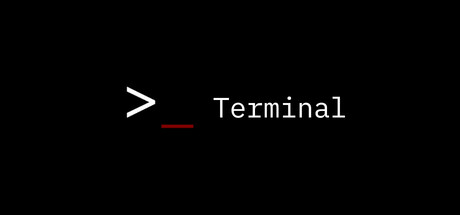
> Terminal capsule

> Terminal

Terminal is a command-line escape room. You aren't just reading a story; you're unlocking a machine. You are Tera, alone in your terminal window on a cold Illinois night. Your identity is lost, embedded somewhere within a haunted computer. Its code is a prison, but it's also your escape.

$5.003 user reviews
PuzzleLogicEscape Room
Terminal CLS LLCMar 27, 2026

> Terminal scores 62/100 — better than 4% of Puzzle capsules (n=4,408).

3 user reviews · $5.00 · Released Mar 27, 2026 · By Terminal CLS LLC

Quick text summary

> Terminal scored 62/100 on Steam Analyzer — Solid for a Puzzle capsule. Top priority fix: [genre_clarity] Introduce a visual symbol or glyph (e.g., a stylized identity fragment, lock icon, or abstract data motif) that communicates 'escape room' or 'mystery' beyond pure terminal interface.

Capsule scores by dimension

  • Genre Clarity: 5/10 — Ambiguous genre signals. The minimal terminal prompt and monospace typeface suggest a text-based or puzzle game, but do not clearly communicate 'escape room' or 'command-line adventure' at tiny size. The red accent and chevron are cryptic rather than genre-defining. At tiny size, this reads as generic tech or hacker aesthetic rather than a specific adventure game with narrative stakes.
  • Title Readability: 7/10 — Clear but minimal title. The word 'Terminal' in monospace font is legible at full and small sizes due to high contrast against black background and generous letter spacing. However, at tiny size the text becomes thin and the chevron icon loses symbolic clarity. The overall design prioritizes minimalism over readability assurance at the smallest viewing scale.
  • Contrast & Color: 7/10 — Strong value separation. White monospace text and chevron pop cleanly against the pure black background, creating excellent contrast that survives grayscale conversion. The red accent line under the chevron adds warmth and draws attention but is thin and could be lost at tiny sizes. The silhouette remains clear even in squint test, though the red element becomes invisible.
  • Uniqueness & Polish: 6/10 — Minimal aesthetic, generic execution. The terminal window aesthetic is thematically on-brand for a command-line escape room, but the execution feels like a straightforward technical treatment rather than a polished, distinctive capsule design. There is no visual storytelling element, character silhouette, or hook that communicates the narrative mystery or atmospheric tension described in the game summary. Compared to top-performing genre peers like DREDGE or Slay the Princess, this lacks memorable visual identity.
  • Brand Consistency: 6/10 — Thematic but not iconic. The monospace font and chevron prompt motif are consistent with terminal/hacker visual language and align with the command-line escape room concept. However, without access to other brand materials, the design feels like a literal interpretation of the concept rather than a distinctive brand signature. The red accent is the only potential brand color, but it is subtle and not reinforced by other visual cues.
  • Composition: 6/10 — Left-aligned, sparse layout. The chevron, red line, and title are left-aligned in the upper portion of the composition, leaving significant empty black space on the right and below. The focal point is clear but the layout feels incomplete and does not leverage the full capsule area effectively. At tiny size, the empty space becomes more pronounced, making the design appear minimal rather than intentionally spacious.

What works

  • High contrast readability. White text and chevron icon achieve strong value separation against pure black, ensuring the title remains legible even at small sizes and in quick scroll scenarios.
  • Thematically coherent concept. The monospace terminal aesthetic directly echoes the game's core mechanic and setting, creating immediate thematic alignment with the command-line escape room premise.
  • Clean minimalist execution. The spare design avoids clutter and visual noise, allowing individual elements to be parsed quickly without cognitive overload.

What hurts the capsule

  • Fails to convey narrative or mystery. The capsule is a literal terminal UI without any visual storytelling, atmosphere, or intrigue; it does not communicate the haunted machine, identity loss, or suspenseful premise that differentiates the game.
  • Red accent is too subtle at tiny sizes. The thin red line under the chevron adds visual interest at full size but disappears or becomes illegible at small and tiny scales, reducing design impact in the most critical viewing context.
  • Lacks distinctive brand identity. The generic terminal aesthetic could apply to any hacker game or developer tool; there are no iconic character, symbol, or signature elements that would be recognizable across marketing materials or merchandise.
  • Wasted composition space. Significant empty black area to the right and below the title creates an incomplete, undersized feeling rather than confident use of the full capsule canvas.

Priority fixes

  1. [genre_clarity] Introduce a visual symbol or glyph (e.g., a stylized identity fragment, lock icon, or abstract data motif) that communicates 'escape room' or 'mystery' beyond pure terminal interface.
  2. [uniqueness_polish] Add atmospheric or narrative visual context such as a faint background glow, warped data visualization, or silhouette element that hints at the haunted machine and personal stakes.
  3. [contrast_color] Strengthen the red accent line or introduce a secondary color that reinforces brand identity and reads clearly at tiny size; consider a glowing or gradient effect.
  4. [composition] Redistribute design elements to use more of the canvas intentionally; consider a centered or layered composition that feels complete at all scales and improves visual weight.

Store copy priority fixes

  1. [feature_communication] Add a sentence early in the detailed description explicitly describing the core loop: 'Type commands to explore files and folders, solve syntax puzzles, and uncover narrative fragments that piece together the truth.' This clarifies interaction immediately after the hook.
  2. [uniqueness] Strengthen the differentiation by adding a specific claim such as 'The only escape room where you dialogue with code, not characters—every command you type is a syntax puzzle that rewrites the story.' This makes the command-line mechanic feel definitively unique.
  3. [feature_communication] Include a brief example or two of actual verb+noun command syntax (e.g., 'SEARCH LOGS', 'DECRYPT FILE') in the Features section to make the puzzle mechanic tangible and concrete.
  4. [audience_targeting] Add a sentence identifying ideal players: 'Perfect for players who enjoy atmospheric mysteries, logic puzzles, and interactive fiction where your curiosity shapes the narrative path.' This removes ambiguity about who the game is designed for.

Related guides

Steam app ID: 4017990 · Tags: Puzzle, Logic, Escape Room, Hacking, Typing