Quick text summary

Kino scored 67/100 on Steam Analyzer — Solid for a Visual Novel capsule. Top priority fix: [contrast_color] Introduce a subtle warm or cool color accent (e.g., faint amber or blue tint) to increase value separation and visual pop against Steam's dark background.

Capsule scores by dimension

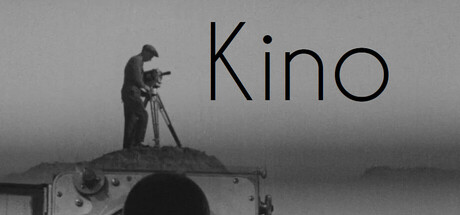
  • Genre Clarity: 5/10 — Narrative indie game unclear. The silhouette of a woman with a film camera tripod suggests cinema or documentary themes, but at tiny size this reads as ambiguous—it could be a photography sim, narrative adventure, or historical game. The black-and-white aesthetic is atmospheric but does not clearly communicate the 'choose-your-own-adventure' or interactive fiction genre that defines the actual gameplay. Genre identity depends entirely on the title and description rather than visual cues alone.
  • Title Readability: 8/10 — Clean sans-serif title readable. The word 'Kino' is rendered in a bold, modern sans-serif typeface positioned clearly in the right half of the composition against a neutral background. At small and tiny sizes, the letters remain distinct and legible without decoration or outline loss. The simplicity of the typography is a strength, though at tiny size some fine proportions may soften slightly due to the thin weight of certain letterforms.
  • Contrast & Color: 6/10 — Limited value range, monochromatic. The entire capsule is shot in black and white with a narrow range of gray mid-tones, creating minimal separation against Steam's dark background #1b2838. The figure and camera silhouette are only slightly darker than the background, and the title text, while present, does not benefit from strong value contrast. At tiny size, the low saturation and tight tonal range reduce visual pop and make the capsule visually passive in a crowded library view.
  • Uniqueness & Polish: 7/10 — Artistic aesthetic, thematic coherence. The homage to Dziga Vertov's 'Man with a Movie Camera' (1929) is executed with deliberate cinematic framing and period-appropriate visual language, creating a distinctive artistic identity. The black-and-white presentation and compositional stillness convey a premium, curator-approved indie feel rather than a generic asset collection. However, the concept, while refined, is primarily a niche reference that may not read as immediately distinctive to players unfamiliar with avant-garde cinema.
  • Brand Consistency: 7/10 — Cohesive cinematic identity. The monochromatic film still aesthetic, centered camera figure, and minimalist typography establish a consistent internal visual language aligned with the game's premise about cinema and observation. The design clearly communicates that this is a thoughtfully crafted, media-aware experience rather than a mainstream action game. The identity is memorable and self-consistent, though it lacks an iconic character or symbol that would make it instantly recognizable in isolation across multiple touchpoints.
  • Composition: 7/10 — Balanced focal point, strong hierarchy. The woman with the tripod occupies the left-center, creating a clear primary subject, while the title text anchors the right side in a clean two-zone layout. The composition uses horizontal depth and maintains safe margins, avoiding edge-clipping risks on Steam's variable crop. At small and tiny sizes, the silhouette remains readable as a focal point, though the stark negative space in the upper right becomes more pronounced and could feel slightly empty at the smallest viewport.

What works

  • Title typography clarity. The sans-serif 'Kino' is clean, legible at all sizes, and maintains letter distinction even at tiny viewport dimensions.
  • Artistic coherence and thematic intent. The cinematic black-and-white aesthetic and camera-figure composition clearly signal an art-house indie experience aligned with the game's narrative premise.
  • Composition balance and focal hierarchy. The human silhouette left-of-center with title right creates effective two-zone balance with clear primary subject and safe margins.

What hurts the capsule

  • Monochromatic contrast against dark Steam background. Limited grayscale separation between the figure, background, and Steam's #1b2838 reduces visual pop and discoverability in library scrolling.
  • Genre ambiguity without context. The camera-and-silhouette visual does not immediately communicate 'choose-your-own-adventure' or interactive fiction; it reads as potentially a doc sim or photography game.
  • Niche artistic reference may not resonate broadly. The Dziga Vertov homage is refined but relies on knowledge of early Soviet cinema; mainstream players may perceive it as simply 'arty' without understanding its unique hook.

Priority fixes

  1. [contrast_color] Introduce a subtle warm or cool color accent (e.g., faint amber or blue tint) to increase value separation and visual pop against Steam's dark background.
  2. [genre_clarity] Add a minimal UI element or visual cue (e.g., a choice indicator or branching symbol) near the figure to signal interactive fiction or choose-your-own-adventure mechanics.
  3. [composition] Verify that the silhouette and title both remain clearly readable at 120×45px thumbnail size and adjust scaling or positioning if either element loses definition.

Store copy priority fixes

  1. [feature_communication] Add one sentence explaining what the camera represents thematically—is it memory, fate, film itself, or the player's perspective—to deepen player investment in the core mechanic.
  2. [audience_targeting] Insert a line like 'No prior knowledge of Dziga Vertov required' or 'Inspired by experimental cinema' to clarify that artistic familiarity is optional, broadening the addressable audience.
  3. [hook_strength] Strengthen the short description's closing with a more evocative question than 'Can she find what was missing?'—e.g., 'Can she change her final choice?' or 'What was she really searching for?' to create sharper curiosity.

Related guides

Steam app ID: 4020670 · Tags: Visual Novel, Choose Your Own Adventure, Female Protagonist, RPG, Interactive Fiction