Scoring genre clarity...
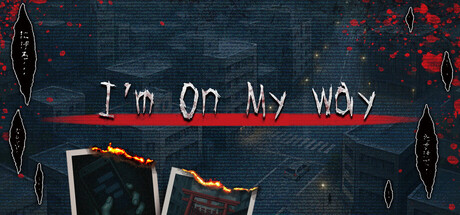
I'm On My Way capsule

I'm On My Way

On a quiet night, you text your friend Sugimoto: “I’m on my way.” This first-person horror adventure unfolds through smartphone chats. Walk the city at night, face strange encounters, and make choices that lead you to his room. Can you trust the words on your screen?

$0.991 user reviews
SimulationAdventureArcade
Defios Game StudioApr 30, 2026

I'm On My Way scores 68/100 — better than 17% of Simulation capsules (n=5,188).

1 user reviews · $0.99 · Released Apr 30, 2026 · By Defios Game Studio

Quick text summary

I'm On My Way scored 68/100 on Steam Analyzer — Solid for a Simulation capsule. Top priority fix: [genre_clarity] Add a visible smartphone or chat interface mockup to the composition to immediately communicate the unique narrative-driven phone mechanic and differentiate from generic horror.

Capsule scores by dimension

  • Genre Clarity: 7/10 — Horror atmosphere clear, mechanics unclear. The dark blue textured background, red glitch effects, and ominous floating leaf symbols strongly signal horror or supernatural themes. However, at TINY size the specific first-person smartphone-chat mechanic is not visually communicated—it reads as generic horror rather than the unique narrative-driven phone chat gameplay that defines the experience.
  • Title Readability: 8/10 — Strong readability with strategic placement. The title 'I'm On My Way' is rendered in clean white sans-serif typeface with excellent contrast against the dark background and reinforced by a bold red horizontal line that acts as a visual anchor. At SMALL and TINY sizes the text remains legible and the red underline provides a reliable recognition cue, though the supporting UI elements below become less clear at reduction.
  • Contrast & Color: 8/10 — High-value separation and atmospheric palette. White text pops decisively against the dark blue-teal background, and the saturated red accent line creates strong visual punctuation without muddiness. The silhouette of UI elements and the glitch particles maintain edge clarity even in grayscale, though the lower UI details fade into mid-tone noise at TINY sizes.
  • Uniqueness & Polish: 6/10 — Competent execution, familiar horror tropes. The design is clean and well-crafted with intentional glitch effects and atmospheric grading that feel premium, but it relies on well-worn horror genre cues—dark backgrounds, red accents, floating symbols—without a distinctive visual hook that sets it apart. The smartphone chat mechanic is not visually present, missing an opportunity to communicate the game's unique narrative innovation.
  • Brand Consistency: 5/10 — Generic horror aesthetic, limited identity. The capsule uses standard horror visual language—dark palette, red glitch effects, ominous floating elements—but does not establish a recognizable internal identity or memorable motif that would distinguish this game from other horror titles. No iconic character, signature symbol, or cohesive brand signal emerges that would aid later recognition.
  • Composition: 7/10 — Clear hierarchy, balanced focal points. The title anchors the upper third with the red line providing strong horizontal structure, while the partially visible UI elements below create depth and suggest interface-driven gameplay. At SMALL size the composition remains readable with clear primary and secondary zones, though the lower UI hints become ambiguous at TINY and risk being cropped or losing meaning.

What works

  • Strong title contrast and legibility. White sans-serif type with red underline maintains excellent readability across FULL, SMALL, and TINY sizes against the dark background.
  • Atmospheric and intentional visual direction. The glitch effects, floating leaf symbols, and color grading feel purposeful and premium rather than random or cheap.
  • Clear visual hierarchy and focal point. The centered title with red accent line creates an obvious primary focal point that guides attention immediately.

What hurts the capsule

  • Gameplay mechanic not visually communicated. The unique smartphone-chat narrative mechanic is absent from the capsule, making it read as generic horror instead of the innovative phone interface experience it is.
  • No distinctive brand identity or icon. The design uses common horror tropes—dark palette, red glitch, floating symbols—with no memorable motif or visual signal that would differentiate it from other horror games.
  • Lower UI elements ambiguous at small sizes. The partially visible UI elements below the title become unclear and lose meaning when the capsule is reduced to SMALL or TINY sizes, reducing communicative value.

Priority fixes

  1. [genre_clarity] Add a visible smartphone or chat interface mockup to the composition to immediately communicate the unique narrative-driven phone mechanic and differentiate from generic horror.
  2. [brand_consistency] Introduce a recognizable icon, character silhouette, or signature visual motif (e.g., a chat bubble shape, Sugimoto's avatar, or unique font styling) that creates internal cohesion and memorable brand identity.
  3. [composition] Simplify or remove the lower UI elements that lose clarity at small sizes, or enlarge and clarify them to maintain communicative value across all viewing scales.

Store copy priority fixes

  1. [feature_communication] Add a short paragraph explaining what 'word game' and 'arcade' mechanics mean in practice—do players type responses, make timed inputs, or solve puzzles? Currently these tag/copy mismatches create confusion.
  2. [feature_communication] Include concrete numbers or scope indicators—'Discover multiple endings,' 'Three nights of escalating dread,' or 'Over 50 dialogue choices'—to help players understand game length and replayability.
  3. [genre_clarity] Clarify the relationship between 'walking the city,' 'chat interface,' and any non-narrative gameplay; a sentence like 'Explore the city streets between conversations' or 'Pure narrative with no real-time action' would reduce ambiguity around the arcade/word game tags.

Related guides

Steam app ID: 4038560 · Tags: Simulation, Adventure, Arcade, Visual Novel, Word Game