Scoring genre clarity...

Triste capsule

Triste

Triste is a surreal tower defense, with no text or tutorials, designed to feel like a repeating nightmare that disorients you. It’s a relentless torture with no escape.

$3.99Positive(10)
StrategyRPGRoguelike
Santiago OrdizApr 8, 2026

Triste scores 62/100 — better than 3% of Strategy capsules (n=5,103).

Positive (10 reviews) · $3.99 · Released Apr 8, 2026 · By Santiago Ordiz

Quick text summary

Triste scored 62/100 on Steam Analyzer — Solid for a Strategy capsule. Top priority fix: [genre_clarity] Add a subtle tower defense UI element—a small grid, cursor, or defensive structure—to hint at the mechanical layer beneath the surreal horror wrapper.

Capsule scores by dimension

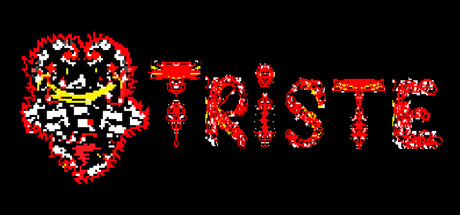
  • Genre Clarity: 5/10 — Unclear genre, surreal aesthetic dominates. The pixelated red and white distorted face with chaotic visual noise reads as horror or psychological thriller rather than tower defense. At TINY size, the abstract grotesque imagery communicates 'unsettling' but gives no clear gameplay hint—tower defense expectations are completely absent from the visual language. The horror/nightmare framing overshadows mechanical clarity.
  • Title Readability: 6/10 — Title readable at full, struggles at tiny. The word TRISTE is legible at full header size in red pixelated letters, but the decorative noise texture and chaotic letterform degradation make it choppy. At TINY size (120×45), the title compresses to barely readable blocky shapes with significant letter collision and loss of form. Strategic placement left of the logo helps, but the distressed effect undermines legibility at small scales.
  • Contrast & Color: 7/10 — Strong value separation, effective silhouette. Bright red and white pixels create high contrast against the black background (#1b2838), and the silhouette of the distorted face reads clearly even when squinting. The red-dominant palette pops immediately in quick scroll. In grayscale, the white highlights and red mid-tone maintain separation, though the noise texture adds visual clutter that reduces edge crispness slightly.
  • Uniqueness & Polish: 7/10 — Distinctive surreal horror aesthetic, intentional distress. The corrupted pixelated face and glitchy text treatment feel deliberate and thematic—it echoes the game's nightmarish, disorienting design philosophy. This is not a generic asset pull; the visual language commits to the surreal horror tone and avoids typical indie game clichés. However, the execution reads more like 'distorted for distortion's sake' rather than communicating a specific unique mechanic or hook beyond atmosphere.
  • Brand Consistency: 6/10 — Thematic cohesion present, limited iconic recall. The red-white-black palette and pixelated grotesque imagery are internally consistent and reinforce the nightmare/horror brand identity. The visual style could be recognized as 'Triste' again if seen, but there are no signature character, symbol, or motif strong enough to create instant brand recognition like top performers (Balatro's poker chip, Hades II's protagonist silhouette, DREDGE's ship). The identity is mood-driven rather than icon-driven.
  • Composition: 6/10 — Balanced focal points, safe margins respected. The distorted face anchors center-left, and title text flows to the right with balanced spacing. No critical elements violate edge margins or Steam crop zones. However, at SMALL and TINY sizes, the equal visual weight between the chaotic face and the degraded title creates competing focal points rather than a clear hierarchy. The composition reads 'balanced' but not 'directed'—viewers must work to parse what to focus on first.

What works

  • High contrast against dark background. Red and white pixels create immediate visual pop and silhouette clarity that survives squinting and grayscale conversion.
  • Thematic visual language. The distorted pixelated face and glitchy text directly reinforce the game's surreal nightmare premise and feel intentional rather than accidental.
  • Safe margin discipline. Title and logo placement respects Steam cropping zones and avoid dangerous edge positions.

What hurts the capsule

  • Genre misalignment. Visual language screams psychological horror, not tower defense—gameplay expectations are obscured by atmospheric aesthetic.
  • Title legibility collapse at TINY. Decorative noise texture and pixelated distortion cause letter forms to blur and merge at 120×45 px, reducing readability below expectation.
  • Competing focal points. The face and title carry equal visual weight at small sizes, creating ambiguity about what to parse first rather than clear hierarchy.
  • Limited iconic brand motif. No signature symbol, character, or visual element stands out as uniquely memorable—identity is mood-dependent rather than instantly recognizable.

Priority fixes

  1. [genre_clarity] Add a subtle tower defense UI element—a small grid, cursor, or defensive structure—to hint at the mechanical layer beneath the surreal horror wrapper.
  2. [title_readability] Reduce or remove pixel noise from letterforms and add a clean outline or shadow to stabilize TRISTE at tiny size without sacrificing distress effect.
  3. [composition] Increase visual dominance of the face as primary focal point and push title to supporting role, or vice versa—eliminate equal weight competition.
  4. [uniqueness_polish] Establish a signature visual motif (e.g., a recurring symbol, color accent, or character element) that appears across all marketing materials for stronger brand memory.

Store copy priority fixes

  1. [feature_communication] Add 2–3 sentences describing core gameplay verbs: 'Place towers to defend against waves of surreal enemies' or 'Manage limited resources as waves intensify.' This bridges the thematic hook to mechanical reality without breaking atmosphere.
  2. [genre_clarity] Clarify the roguelike or turn-based tactical structure mentioned in tags. If runs are procedural or if there is a meta-progression system, state it explicitly: 'Each run becomes harder; learn and adapt to escape the nightmare.'
  3. [audience_targeting] Add an explicit line targeting experimental players: 'For players who embrace cryptic, surreal challenges and want to unravel meaning through play, not tutorials.'
  4. [feature_communication] Expand the detailed description beyond the short description with at least one concrete example of what disorients the player (shifting rules, distorted visuals, unexpected mechanics) to justify the 'nightmare' framing and build intrigue.

Related guides

  • Steam page optimisationCapsule, copy, screenshots, tags — the full Steam page conversion stack.
  • Steam tags guideTag selection, ordering, and how it shapes Steam's recommendation rails.

Steam app ID: 4057600 · Tags: Strategy, RPG, Roguelike, Strategy RPG, Turn-Based Tactics