Scoring genre clarity...

What's the Password? capsule

What's the Password?

"What's the Password?" is a minimalistic puzzle game where you decode 4-digit passwords. Featuring over 100 puzzles!

$6.95Mostly Positive(44)
PuzzleLogicMinimalist
TrampolineTalesMay 28, 2026

What's the Password? scores 68/100 — better than 22% of Puzzle capsules (n=4,408).

Mostly Positive (44 reviews) · $6.95 · Released May 28, 2026 · By TrampolineTales

Quick text summary

What's the Password? scored 68/100 on Steam Analyzer — Solid for a Puzzle capsule. Top priority fix: [uniqueness_polish] Introduce a signature visual motif (e.g., glowing code elements, a mascot object, or subtle branded color accent) that distinguishes this capsule from generic puzzle game comps.

Capsule scores by dimension

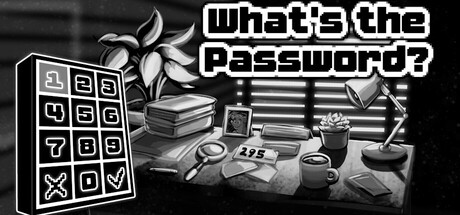
  • Genre Clarity: 7/10 — Puzzle game identity clear. The numeric keypad on the left, scattered papers, and lock motifs immediately signal a puzzle or code-breaking game. At tiny size, the keypad silhouette and puzzle paraphernalia remain recognizable, though the specific 'password' mechanic is implied rather than explicit. Genre reads as logic puzzle or brainteaser rather than action or narrative game.
  • Title Readability: 8/10 — Title legible across sizes. The white sans-serif text 'What's the password?' uses strong contrast against the dark grayscale background and maintains readability at small and tiny sizes. The bold, clean letterforms and generous spacing prevent collapse. At tiny size the question mark and core words remain distinguishable, though some detail softens.
  • Contrast & Color: 8/10 — Strong value separation. The grayscale palette creates excellent contrast against the Steam dark background #1b2838. Bright whites in the title and keypad stand out sharply, while mid-gray objects (papers, pen, plant) provide depth without muddiness. At tiny size, the silhouette hierarchy holds firm with clear light-dark separation.
  • Uniqueness & Polish: 6/10 — Competent but conceptually generic. The photorealistic monochrome aesthetic is well-executed with intentional lighting and shadow work, but the composition of scattered puzzle items (keypad, books, papers, pen) reads as a stock 'puzzle game' tableau without a distinctive hook or memorable visual angle. The execution is polished; the concept is familiar and expected in the genre.
  • Brand Consistency: 5/10 — Generic puzzle aesthetic. The monochrome, minimalist approach to puzzle games is category-standard rather than brand-distinctive. There are no iconic character, symbol, or color signature that would make 'What's the Password?' visually recognizable on repeat. The grayscale filter and office/study motif could apply to many indie puzzle games without loss of identity.
  • Composition: 7/10 — Balanced layout with clear focal areas. The keypad on the left anchors the eye, with supporting puzzle objects (books, papers, pen, plant) arranged in the center-right. The title floats cleanly across the top with breathing room. At small size, the keypad-as-primary-subject and title-as-label hierarchy remains intact; at tiny size, elements cluster slightly but do not collapse into illegibility or dead zones.

What works

  • Strong title contrast and legibility. Bold white sans-serif text reads clearly at all sizes against dark background with no outline or decorative loss.
  • Coherent monochrome visual language. Grayscale palette creates professional, focused aesthetic that avoids visual noise and maintains silhouette clarity in quick scroll.
  • Clear focal hierarchy at small scales. Keypad-on-left, title-on-top layout survives compression and directs attention without competing elements.

What hurts the capsule

  • Generic puzzle game tableau. Scattered objects (books, pen, papers, plant) are expected category clichés with no distinctive visual hook or unique selling point.
  • No memorable brand identity. No iconic character, symbol, or signature style that would differentiate this capsule from other minimalist puzzle games or allow visual recognition.
  • Monochrome flattens emotional appeal. The grayscale filter, while polished, removes color warmth and personality that could make the game feel more inviting or memorable against competitors.

Priority fixes

  1. [uniqueness_polish] Introduce a signature visual motif (e.g., glowing code elements, a mascot object, or subtle branded color accent) that distinguishes this capsule from generic puzzle game comps.
  2. [brand_consistency] Add a color signature or iconic symbol visible at tiny size that would be recognizable across all marketing materials and store screenshots.
  3. [uniqueness_polish] Recompose the scene to emphasize the 4-digit password mechanic more explicitly (e.g., oversized digits, a prominent lock or display screen) rather than relying on generic puzzle clutter.

Store copy priority fixes

  1. [hook_strength] Replace the generic opening with a concrete hook: 'Decode hidden 4-digit passwords using pure logic. No guessing. No timers. Just you and the puzzle.' This leads with the core appeal and differentiates via calm, logic-focused gameplay.
  2. [uniqueness] Add 1-2 sentences explaining what makes the password-decoding format unique compared to other logic puzzles—e.g., explain how the randomized solutions or hint system creates a specific puzzle experience not found elsewhere.
  3. [tone_match] Rewrite the feature list to match the noir/minimalist aesthetic: replace casual phrases like 'make you go aha!' with grounded language that evokes atmosphere: 'Each puzzle is a logical investigation. Black-and-white visuals match the detective mindset.'
  4. [audience_targeting] Add a sentence identifying the ideal player: e.g., 'Perfect for logic enthusiasts seeking a guilt-free 2-hour playthrough, with no pressure or time limits.'

Related guides

Steam app ID: 4095490 · Tags: Puzzle, Logic, Minimalist, Linear, Relaxing