Scoring genre clarity...

Night Patrol:Barracks capsule

Night Patrol:Barracks

You patrol an abandoned Chinese apartment where time loops endlessly. Watch closely, find anomalies on every floor. If you ignore them, you will never escape this building.

Free to PlayMixed(14)
SimulationWalking Simulator3D
27 BandNov 27, 2025

Night Patrol:Barracks scores 72/100 — better than 41% of Simulation capsules (n=5,188).

Mixed (14 reviews) · Free to Play · Released Nov 27, 2025 · By 27 Band

Quick text summary

Night Patrol:Barracks scored 72/100 on Steam Analyzer — Good for a Simulation capsule. Top priority fix: [genre_clarity] Introduce a subtle UI anomaly highlight or visual hint (e.g., glitch effect, red circle, magnifying glass motif) to communicate the core anomaly-hunting mechanic and differentiate from generic exploration games.

Capsule scores by dimension

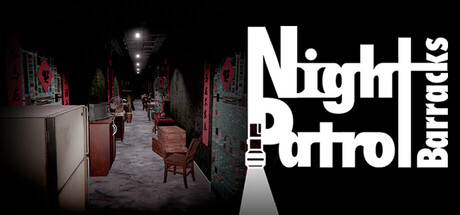
  • Genre Clarity: 7/10 — Atmospheric mystery with clear setting cues. The capsule immediately communicates an eerie, confined exploration experience through the dimly lit apartment hallway with red neon signage, furniture, and overhead lighting. At tiny size, the residential setting and unsettling atmosphere still read clearly, though the specific anomaly-hunting mechanic is not visually explicit. The visual language aligns with indie psychological/survival simulation rather than action or other genres.
  • Title Readability: 8/10 — Bold sans-serif logo reads well at scale. The title 'Night Patrol' and 'Barracks' use a clean, bold white sans-serif font positioned on the right side against a predominantly black background, ensuring strong contrast and legibility across all sizes. At tiny size the main title remains readable, though 'Barracks' becomes compact. The strategic placement on a solid background rather than over the noisy apartment texture preserves clarity at small and tiny viewport sizes.
  • Contrast & Color: 8/10 — Strong value separation with red accent pops. The bright white title and red neon signage within the apartment create clear silhouettes against the dark apartment interior and black background, producing excellent value contrast against Steam's #1b2838 dark theme. The red accents (signage, doorways) provide saturated focal points while the grayscale apartment texture maintains readable separation. Even at tiny size, the red-and-white combination stands out distinctly without muddy mid-tones.
  • Uniqueness & Polish: 7/10 — Cinematic mood with competent craft execution. The capsule demonstrates professional lighting, atmospheric depth, and a coherent photorealistic apartment setting that communicates the game's core premise effectively. However, the visual execution leans toward cinematic realism rather than distinctive art direction—it feels polished but not immediately iconic or memorable compared to top-tier indie peers like Balatro or DREDGE that feature more distinctive visual hooks. The mood is strong, but the design lacks a signature visual motif or stylized element.
  • Brand Consistency: 6/10 — Functional but generic visual identity. The capsule uses a consistent photorealistic apartment aesthetic and clean typography, but provides no distinctive brand signals—no recurring iconography, character, symbol, or signature color palette that would make the game immediately recognizable across marketing materials. The red and white palette is functional but not unique to Night Patrol. Without reference to the 6 store screenshots, the visual identity feels competent but interchangeable with other urban exploration games.
  • Composition: 7/10 — Clear hierarchy with slight title edge proximity. The composition splits well between the atmospheric apartment on the left (70%) and the bold title on the right (30%), creating natural visual hierarchy and balance. The white title stands as the clear focal point while the apartment provides context and mood. At small and tiny sizes this division remains readable, though the title sits relatively close to the right edge, risking minor Steam UI cropping depending on container width. The depth layering (foreground furniture, midground hallway, background lighting) is clear and effective.

What works

  • Strong atmospheric premise communicated visually. The dimly lit apartment hallway with red neon, furniture, and overhead lighting immediately conveys the eerie, confined loop-exploration theme central to the game.
  • Excellent contrast and legibility of title text. Bright white bold sans-serif positioned on black background maintains readability across full, small, and tiny viewport sizes without relying on texture or busy backgrounds.
  • Balanced left-right composition with clear focal point. The 70-30 split between apartment setting and title creates natural hierarchy and prevents scattered attention across the capsule area.
  • Red neon accent provides saturated visual anchor. The red signage and doorways pop distinctly against the dark interior, guiding the eye and adding production value without overwhelming the mood.

What hurts the capsule

  • Generic photorealistic style lacks distinctive identity. The apartment setting, while atmospheric, could belong to many urban exploration or survival games and features no signature visual motif or stylized art direction.
  • Title positioned close to right edge. Steam container cropping or responsive layout shifts could push the 'Barracks' subtitle off-screen or compress the title awkwardly at certain breakpoints.
  • No character or iconic object to anchor brand recall. The capsule lacks a memorable protagonist, NPC, or signature prop that would make the game visually recognizable in isolation or alongside competitors.
  • Anomaly-hunting mechanic not visually communicated. While the atmosphere is clear, the core gameplay loop—finding and spotting anomalies—is not implied through UI hints, visual storytelling, or recognizable puzzle iconography.

Priority fixes

  1. [genre_clarity] Introduce a subtle UI anomaly highlight or visual hint (e.g., glitch effect, red circle, magnifying glass motif) to communicate the core anomaly-hunting mechanic and differentiate from generic exploration games.
  2. [brand_consistency] Develop a distinctive visual motif or signature element (e.g., repeating symbol, character silhouette, unique color accent beyond red) that appears across store images and marketing to anchor brand identity.
  3. [composition] Adjust title positioning to ensure 'Barracks' and full logo clear safe margins and avoid cropping at small and responsive Steam container widths.
  4. [uniqueness_polish] Layer a stylized overlay, grain texture, or art direction cue (e.g. VHS distortion, film grain, scan-line effect) to signal indie authenticity and differentiate from photorealistic competitor capsules.

Store copy priority fixes

  1. [hook_strength] Rewrite the short description to lead with a single unsettling image or question rather than pure mechanic: e.g., 'Patrol an abandoned 1980s Chinese barracks apartment. Something is wrong on every floor—but if you look away, you'll be trapped here forever.'
  2. [feature_communication] Add 2-3 sentences describing what anomalies actually are (visual distortions, objects in wrong places, figures in shadows) so players know what to hunt for.
  3. [tone_match] Infuse the detailed description with atmospheric language that evokes dread and psychological unease, not just procedural instruction—e.g., 'Your flashlight beam cuts through thick darkness. Not everything you see is real.'
  4. [uniqueness] Explicitly highlight the 1980s Chinese barracks setting as the game's distinctive anchor, explaining how this specific place drives the story and atmosphere beyond generic abandoned building tropes.

Related guides

Steam app ID: 4103550 · Tags: Simulation, Walking Simulator, 3D, 1980s, 1990's