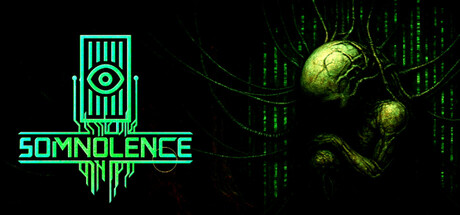
Somnolence scores 75/100 — better than 70% of Atmospheric capsules (n=5,292).

Quick text summary

Somnolence scored 75/100 on Steam Analyzer — Good for a Atmospheric capsule. Top priority fix: [contrast_color] Increase stroke weight on the geometric logo icon by 1-2 pixels to ensure the eye and tower motif remain crisp at 120x45 thumbnail resolution.

Capsule scores by dimension

  • Genre Clarity: 7/10 — Sci-fi psychological thriller implied. The cyan tech logo with eye motif, green neural/digital matrix background, and organic sphere elements suggest a technology-meets-consciousness theme aligned with the dream research premise. At tiny size, the geometric logo and matrix patterns read as sci-fi/tech, though the specific 'psychological adventure' subgenre is not immediately obvious without context. The visual hierarchy successfully communicates something unnatural and cerebral rather than standard action or exploration.
  • Title Readability: 8/10 — Strong legibility at all sizes. SOMNOLENCE in bright cyan sans-serif with clear letter spacing and no decorative flourishes maintains excellent readability from full header down to tiny thumbnail size. The title is positioned on a controlled dark background free of competing visual noise, with the geometric logo providing a stable anchor to the left. Even at tiny size, the word remains distinct and the logo silhouette is recognizable, though fine vertical lines in the logo become harder to parse.
  • Contrast & Color: 8/10 — Excellent value separation and pop. The bright cyan (#00FFFF range) logo and text create strong luminosity contrast against the pure black background, and the lime-green sphere elements add warm accent saturation. In grayscale mental test, the cyan reads as light midtone and the black as dark anchor, with good edge separation. At tiny size, the bright cyan still pops distinctly, and the glowing sphere on the right provides secondary focal depth, though some fine detail in the matrix pattern becomes lost.
  • Uniqueness & Polish: 7/10 — Stylish aesthetic with coherent vision. The neon cyberpunk/sci-fi aesthetic is executed cleanly with intentional geometric logo design, thematic color palette, and matrix/neural visual language that aligns with the dream-research premise. The organic sphere contrasts nicely against digital elements, reinforcing the consciousness-technology duality described in the game. However, neon-cyan-on-black with matrix backgrounds is a familiar indie sci-fi trope (see DREDGE, Viewfinder), so while well-crafted, it does not feel distinctly memorable compared to top-tier peers like Slay the Princess or Harold Halibut.
  • Brand Consistency: 7/10 — Cohesive internal identity present. The eye-within-geometric-form logo, cyan-and-green color palette, and tech-organic visual language are internally consistent and suggest a recognizable brand identity around consciousness/surveillance themes. The neon styling and matrix elements form a coherent art direction that would be identifiable across marketing materials. However, without reference to the 12 store screenshots, it is unclear if this palette and logo appear consistently, and the overall aesthetic, while strong, shares visual DNA with competitor indie sci-fi games.
  • Composition: 8/10 — Balanced hierarchy with clear focal points. The logo and title occupy the left-center anchor position with the bright sphere and matrix elements on the right, creating asymmetrical balance and clear depth layering—foreground text, midground logo geometry, background matrix particle field. At small and tiny sizes, the eye naturally lands on the cyan logo first, then the text, then the sphere, providing good narrative flow. The composition avoids edge clipping risk, respects safe margins, and the primary subject (logo + title) remains legible even at thumbnail scale, though the background sphere softness becomes compressed.

What works

  • Cyan logo highly distinctive. The geometric eye-within-towers icon is clean, memorable, and immediately catches attention at all sizes, anchoring the capsule with a strong visual symbol.
  • Title remains legible at tiny size. SOMNOLENCE in straight sans-serif with generous spacing reads clearly even at 120x45 thumbnail, avoiding common collapse issues that plague decorative fonts.
  • Thematic color language reinforces concept. The cyan (digital/synthetic) paired with organic green spheres effectively visualizes the consciousness-versus-code tension described in the game's premise.
  • Strong background-foreground separation. The pure black base provides an uncluttered stage that lets the bright cyan elements and sphere pop without visual competition or muddy mid-tones.

What hurts the capsule

  • Generic sci-fi neon aesthetic. Cyan-on-black with matrix backgrounds is a familiar indie game visual language; the capsule executes it well but lacks the distinctive hook of top competitors like Slay the Princess or COCOON.
  • Matrix pattern becomes noise at tiny size. The fine green digital rain/code texture in the background compresses into visual mud at thumbnail scale, losing the intended layered effect.
  • Logo detail loss at extreme compression. The thin vertical lines in the logo icon become difficult to resolve at tiny size, risking that the symbol reads as just a blur rather than a distinct mark.
  • Sphere lacks integration with text hierarchy. The glowing green sphere on the right is visually interesting but sits somewhat isolated from the title group, creating a secondary focal point that competes rather than supports the main read.

Priority fixes

  1. [contrast_color] Increase stroke weight on the geometric logo icon by 1-2 pixels to ensure the eye and tower motif remain crisp at 120x45 thumbnail resolution.
  2. [uniqueness_polish] Add a distinctive procedural or fractured glass effect to differentiate the sphere or introduce a signature visual element beyond the standard neon palette, drawing from the game's dream-research theme.
  3. [composition] Tighten the visual relationship between the sphere and title by moving it slightly closer or adding a connecting line/energy effect to create one unified focal hierarchy.
  4. [genre_clarity] Consider subtle UI or dreamscape iconography (e.g., a faint clock, nested door, or neural path) within the logo or background to reinforce 'psychological adventure' over generic sci-fi.

Store copy priority fixes

  1. [feature_communication] Integrate moment-to-moment gameplay earlier: add a sentence after 'Explore liminal rooms...' explaining a concrete example of interaction (e.g., 'Listen to distorted recordings that reveal fragments of your past; navigate spaces that shift based on memory and choice') to clarify the core loop.
  2. [uniqueness] Strengthen the differentiator by explicitly framing consciousness and choice as the central mechanic: rewrite the closing sentence from 'only consciousness' to something like 'Your only tool is awareness itself—each decision to remember, investigate, or retreat reshapes the system around you,' positioning this as distinct from traditional adventure games.
  3. [hook_strength] Lead the short description with the core emotional conflict rather than wake-up framing: rewrite to 'Trapped between consciousness and code in a dream experiment designed to keep you asleep, you must decide if waking up or staying lost is the true escape.' This inverts the line-between-reality theme and makes the choice more immediate.
  4. [audience_targeting] Add a brief sentence after the first paragraph naming the intended audience, e.g., 'If you loved the existential mystery of Outer Wilds or the intimate storytelling of Firewatch, Somnolence offers a similar meditative exploration of mind and identity.' This anchors the game to recognizable reference points.

Related guides

Steam app ID: 4129940 · Tags: Atmospheric, Psychological Horror, Surreal, Sci-fi, Adventure