Scoring genre clarity...
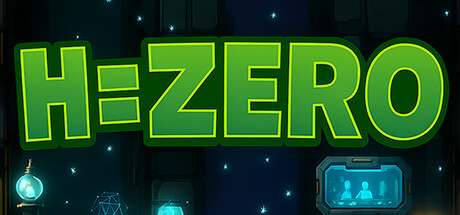
H=ZERO capsule

H=ZERO

In a future where humanity has vanished, machines maintain vast underground complexes under the command of artificial intelligences. You are a unit activated to deliver a mysterious payload. Face hostile systems, precision challenges, and uncover the forgotten purpose of your existence.

$3.99
AdventureActionPlatformer
Jefferson Nascimento Ferreira Jan 5, 2026

H=ZERO scores 72/100 — better than 48% of Adventure capsules (n=7,922).

$3.99 · Released Jan 5, 2026 · By Jefferson Nascimento Ferreira

Quick text summary

H=ZERO scored 72/100 on Steam Analyzer — Good for a Adventure capsule. Top priority fix: [uniqueness_polish] Add a distinctive visual element—a recognizable character silhouette, unique mechanical symbol, or unexpected color accent—that signals the core gameplay loop (delivery mission, precision challenge, or exploration) and creates brand recall differentiation from generic sci-fi peers.

Capsule scores by dimension

  • Genre Clarity: 7/10 — Sci-fi action setting, unclear mechanics. The neon green title, dark space background, and cyan glowing UI elements (bottom left globe, bottom right holographic display) strongly signal a futuristic sci-fi setting. However, at tiny size the specific gameplay genre remains ambiguous—it could be action, puzzle, or strategy—and the payload/mystery narrative doesn't visually translate into clear gameplay type cues like combat pose or environmental hazard clarity. The cyan tech elements hint at precision/UI-heavy gameplay but lack the iconic pose or environmental storytelling that would confirm action-adventure.
  • Title Readability: 9/10 — Excellent contrast and bold legibility. The H=ZERO title uses thick, high-saturation lime green letters with a darker outline against the dark space background, creating exceptional value separation. The geometric, blocky font maintains perfect readability even at tiny thumbnail size due to wide letter spacing and substantial stroke weight. At small and tiny sizes, the title remains one of the clearest legible text treatments possible, with no loss of recognizability even under quick scroll stress.
  • Contrast & Color: 8/10 — Strong neon pop with excellent silhouettes. The bright lime-green title pops dramatically against the dark navy-black background (#1b2838 equivalent), creating high value contrast that reads clearly at all sizes including tiny. The cyan accent elements (globe icon, holographic UI box) provide secondary contrast layering and warm-cool color separation that guides the eye effectively. In grayscale, the silhouettes remain crisp and separate; the only minor weakness is that the space background's scattered stars blend into darkness slightly, but the title itself is bulletproof.
  • Uniqueness & Polish: 6/10 — Clean design with generic sci-fi aesthetic. The capsule demonstrates solid craft—the neon title treatment is well-executed, the UI icon details suggest intentional world-building, and the color palette is coherent. However, the overall composition relies heavily on familiar sci-fi tropes (glowing neon text, dark space, cyan holograms) without a distinctive visual hook or art style that sets it apart from other indie sci-fi titles like COCOON or Viewfinder. The payload narrative concept and mystery framing don't translate into a visually unique selling point on the capsule itself.
  • Brand Consistency: 6/10 — Consistent palette, minimal identity cues. The capsule maintains internal cohesion through consistent use of lime-green primary text, dark navy background, and cyan secondary UI elements that likely appear throughout the game's interface. However, there are no iconic character, motif, or symbol elements that create a memorable brand identity—the design feels like a functional sci-fi UI theme rather than a distinctive brand signature. Without access to the 18 screenshots, the cyan holographic UI box appears to be the closest identity signal, but it reads more as generic future-tech than branded asset.
  • Composition: 7/10 — Clear hierarchy, unbalanced focal points. The H=ZERO title dominates the center-top and creates an immediate primary focal point with strong hierarchy. The bottom-left cyan globe and bottom-right holographic UI box provide secondary anchoring elements that frame the composition and prevent dead space. However, the upper half of the capsule is top-heavy with the title, while the lower half feels slightly sparse, creating a composition that works well at full size but becomes unbalanced at small/tiny sizes where supporting elements lose visual weight. The layout is safe from cropping but could benefit from more deliberate mid-composition balance.

What works

  • Neon title exceptional at all sizes. The lime-green H=ZERO maintains perfect readability and visual impact from full header down to tiny 120×45 thumbnail, with thick letterforms and strategic outline ensuring no legibility loss under any viewing condition.
  • High contrast against dark background. The bright neon palette creates strong value separation from the dark navy space background, ensuring the design pops in quick-scroll browsing and remains clear even in grayscale contrast testing.
  • Coherent sci-fi color language. The lime-green primary, cyan secondary, and dark navy background form a cohesive and intentional color palette that communicates a futuristic technology theme with internal consistency throughout the visible design.

What hurts the capsule

  • Generic sci-fi visual without unique hook. The capsule relies on familiar neon-text-in-space tropes without distinctive art direction, character, or mechanic visualization that would differentiate it from other indie sci-fi titles in genre peers.
  • Ambiguous gameplay genre at tiny size. The supporting UI elements (globe, holographic box) are decorative rather than functionally clear at small sizes, leaving the actual gameplay type (action vs. puzzle vs. strategy) undefined from the visual alone.
  • Top-heavy composition balance. The title consumes the upper portion of the capsule with significant whitespace below, creating an unbalanced focal-point distribution that feels slightly awkward at small and tiny sizes where vertical real estate is compressed.

Priority fixes

  1. [uniqueness_polish] Add a distinctive visual element—a recognizable character silhouette, unique mechanical symbol, or unexpected color accent—that signals the core gameplay loop (delivery mission, precision challenge, or exploration) and creates brand recall differentiation from generic sci-fi peers.
  2. [composition] Redistribute the focal point vertically by anchoring the title higher or introducing a stronger mid-composition element that balances the bottom UI icons and creates more intentional layering that reads well at small sizes.
  3. [genre_clarity] Introduce a subtle gameplay cue—player unit silhouette, hazard visualization, or environmental detail—in the supporting elements that clarifies whether the core gameplay is action-oriented, puzzle-focused, or exploration-driven.

Store copy priority fixes

  1. [feature_communication] Add one concrete example of an upgrade or system mechanic (e.g., 'enhanced jumping protocols' or 'hacking tools') to ground the upgrade system in tangible gameplay.
  2. [hook_strength] Rewrite the opening to lead with the player's action verb: 'Activate as a lone unit tasked with delivering a mysterious payload deep into a dead world's automated defenses' to prioritize agency over world-state.
  3. [uniqueness] Add a sentence differentiating the level design or progression system: specify if this is a fully open-world Metroidvania, linear with branching paths, or another structure that competitors don't use.
  4. [feature_communication] Mention permadeath in the detailed description (e.g., 'One wrong move ends your mission') to align copy with a key tag and inform audience expectations about difficulty.

Related guides

Steam app ID: 4159970 · Tags: Adventure, Action, Platformer, Metroidvania, 2D Platformer