Scoring genre clarity...

Battle Hanafuda capsule

Battle Hanafuda

A strategic two-player card battle based on the traditional Japanese game Hanafuda. Learn as you play and enjoy thrilling “Koi-Koi” duels filled with risk and reward.

$6.996 user reviews
Early AccessCasualStrategy
SUZUKI PLAN, Yoji SuzukiMar 10, 2026

Battle Hanafuda scores 60/100 — better than 0% of Early Access capsules (n=3,067).

6 user reviews · $6.99 · Released Mar 10, 2026 · By SUZUKI PLAN

Quick text summary

Battle Hanafuda scored 60/100 on Steam Analyzer — Solid for a Early Access capsule. Top priority fix: [composition] Replace scattered background noise with a single clear secondary focal point—such as a Hanafuda card in mid-ground or a character face—to guide eye flow and reduce visual clutter at small sizes.

Capsule scores by dimension

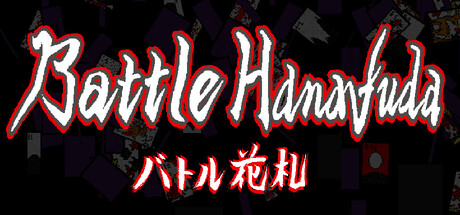
  • Genre Clarity: 7/10 — Card game strategy clear. The neon red title and Japanese characters (バトル花札) immediately signal a card-based game with Japanese cultural roots. The stylized brush-stroke aesthetic and Hanafuda reference make the strategy card game genre readable at full size. However, at TINY size the visual collapses into red text on dark noise; the genre connection requires prior knowledge of Hanafuda rather than visual clarity alone.
  • Title Readability: 6/10 — English readable, kanji unclear. The English title 'Battle Hanafuda' is legible at full and small sizes with its bold red neon stroke outline and clean letterforms. At TINY size the text remains distinguishable but loses sharpness, and the Japanese subtitle (バトル花札) becomes unreadable noise. The outline technique prevents text from disappearing but adds visual weight that crowds the composition.
  • Contrast & Color: 6/10 — Bright neon with muddled background. The white and red neon stroke title has strong luminance pop against the dark background, creating clear separation. However, the dark chaotic background elements (scattered card silhouettes, scattered ink marks) remain muddy and provide minimal supporting contrast definition at small sizes. At TINY size the surrounding noise dominates, reducing the visual hierarchy impact despite the bright title.
  • Uniqueness & Polish: 6/10 — Aesthetic atmospheric but generic. The neon red brush-stroke title and Japanese cultural setting convey style, but the scattered card fragments and ink splatter background feel like standard card game tropes without a distinctive hook or visual storytelling moment. The composition relies on atmosphere (dark, moody, Japanese-inspired) rather than communicating a unique game mechanic or fresh angle. It reads competently but lacks a memorable distinctive selling point that separates it from other indie card games.
  • Brand Consistency: 6/10 — Cohesive Japanese aesthetic. The neon red title, Japanese script, scattered card motifs, and dark moody palette create internal visual coherence around a 'Japanese card game' brand identity. The rendered style is consistent and the color scheme unmixed. However, there is no iconic character, symbol, or signature visual element that would make this capsule distinctly recognizable as Battle Hanafuda rather than any other Hanafuda game—the identity is culturally appropriate but not unique.
  • Composition: 5/10 — Title-centric, unfocused background. The large centered red title dominates the composition and has clear hierarchy at all sizes. The background is scattered with card silhouettes and ink marks that create visual noise without supporting the focal point or adding layered depth. At SMALL and TINY sizes the background clutter competes for attention and distracts from the title rather than supporting it; the composition lacks a clear secondary focal point or intentional supporting elements.

What works

  • Strong title legibility. The white-outlined red neon stroke on the 'Battle Hanafuda' text maintains readable letterforms and contrast across full, small, and tiny sizes.
  • Cultural genre clarity. The Japanese script and Hanafuda reference immediately communicate the specific card game subgenre to informed players.
  • Cohesive color palette. The dark background with red neon accents and scattered card motifs create a unified moody aesthetic without clashing values.

What hurts the capsule

  • Cluttered unfocused background. The scattered card silhouettes and ink marks create visual noise that competes with the title and fails to create clear hierarchical depth at small sizes.
  • Unreadable Japanese subtitle. The kanji (バトル花札) becomes illegible at small and tiny sizes, adding visual complexity without communicating value to non-Japanese speakers.
  • Weak visual storytelling. The capsule communicates 'Japanese card game' but shows no game mechanic, character, or unique hook that explains why this Hanafuda game is distinctive or worth playing.
  • Grayscale contrast collapse. When squinting or converting to grayscale, the dark background elements blend together, reducing the silhouette separation of scattered card fragments.

Priority fixes

  1. [composition] Replace scattered background noise with a single clear secondary focal point—such as a Hanafuda card in mid-ground or a character face—to guide eye flow and reduce visual clutter at small sizes.
  2. [uniqueness_polish] Add a visual element that communicates core gameplay (e.g., hand of cards, Koi-Koi risk indicator, or a two-player duel setup) to differentiate from generic card game aesthetics.
  3. [title_readability] Remove or reduce the Japanese subtitle or relocate it to a less visually heavy position; prioritize the English title as the primary readable element at tiny size.
  4. [contrast_color] Increase background value separation by adding a gradient overlay or reducing the opacity of scattered elements, ensuring the dark background reads as a unified supporting surface rather than competing texture.

Store copy priority fixes

  1. [hook_strength] Add a lead sentence to the detailed description that emphasizes the core gameplay appeal (e.g., 'Master the art of risk and bluffing in Koi-Koi, where one decision can double your score or cost you everything') to strengthen the emotional hook before diving into rules.
  2. [uniqueness] Insert a concise differentiation statement early in the detailed description such as 'Unlike other Hanafuda games, Battle Hanafuda is built from the ground up for accessibility—without sacrificing the strategic depth that makes Koi-Koi compelling' to clarify why this version matters.
  3. [feature_communication] Restructure the detailed description with clear section headers and bullet points for accessibility features, multiplayer modes, and game modes to reduce wall-of-text fatigue and improve 30-second skimmability.
  4. [genre_clarity] Move the 'What is Hanafuda?' and 'What is Koi-Koi?' sections to the end or a collapsible FAQ-style area, and replace with a concise 2-3 sentence summary of core gameplay loop (play cards → capture matching months → complete scoring hands → decide to finish or Koi-Koi) in the opening paragraph.

Related guides

Steam app ID: 4161340 · Tags: Early Access, Casual, Strategy, Arcade, Card Game