Scoring genre clarity...

Today's Menu capsule

Today's Menu

Mix cards with restaurant management in this sim game. Build, gather ingredients, and learn recipes. Use your deck to serve customers, earn profits and fame, then upgrade and expand to craft your ideal restaurant.

$7.991 user reviews
CasualSimulationStrategy
YEEFUNTECHMar 12, 2026

Today's Menu scores 78/100 — better than 82% of Casual capsules (n=10,153).

1 user reviews · $7.99 · Released Mar 12, 2026 · By YEEFUNTECH

Quick text summary

Today's Menu scored 78/100 on Steam Analyzer — Good for a Casual capsule. Top priority fix: [genre_clarity] Add a subtle visual indicator of card-deck interaction (e.g., cards in hand, card selection UI element) to differentiate from pure restaurant sims and clarify the hybrid mechanic at thumbnail size.

Capsule scores by dimension

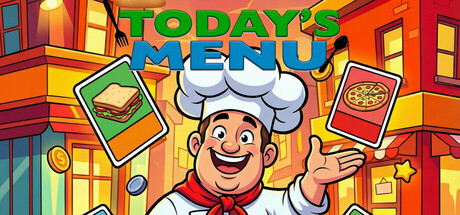
  • Genre Clarity: 8/10 — Clear casual restaurant management sim. The chef character with white hat and red neckerchief, combined with visible food cards (sandwich, pizza) and vibrant warm-toned urban restaurant setting, immediately signals a casual cooking/management game. At tiny size, the chef silhouette and food imagery remain recognizable, though the card-based mechanic is less obvious without close inspection.
  • Title Readability: 8/10 — Bold, legible title with strong contrast. TODAY'S MENU uses bright green and blue block letters with thick outlines positioned prominently across the top third, maintaining excellent readability at both full and tiny sizes. The letterforms are chunky and high-contrast against the warm yellow building background, though at tiny size the text remains intact without collapse.
  • Contrast & Color: 9/10 — Vibrant warm palette pops cleanly. Bright yellows, oranges, reds, and lime green create strong value separation against the dark Steam background, with the chef's warm skin tones and red neckerchief anchoring visual focus. In grayscale test, the light building windows and chef face separate clearly from mid-tone walls and darker roof elements, maintaining silhouette clarity at tiny size.
  • Uniqueness & Polish: 7/10 — Competent cartoon style, familiar archetype. The cheerful chef character and colorful diner aesthetic feel polished and intentional, with clean vector illustration style and thematic card imagery that telegraphs the deck-building mechanic. However, the friendly cartoon chef is a well-worn archetype in casual games, and the scene reads as thematically appropriate but not visually distinctive compared to genre peers like Dave the Diver or Balatro.
  • Brand Consistency: 7/10 — Cohesive warm aesthetic, generic branding. The capsule establishes a consistent warm color palette (yellows, oranges, reds) and cartoon illustration style with the chef as a recurring character motif. The internal art direction is coherent, but without access to other store assets the capsule lacks distinctive identity cues—the warm diner aesthetic could belong to multiple restaurant sims.
  • Composition: 8/10 — Strong focal point, balanced layout. The smiling chef positioned in the center serves as a clear primary focal point, with flanking food cards and city building background creating depth and supporting visual interest without clutter. Title placement at top leaves safe margins, and the composition remains readable at small size; the layered building, chef midground, and floating card elements create good spatial hierarchy.

What works

  • Excellent color contrast and vibrancy. Warm yellows, oranges, and lime green pop sharply against the dark Steam background, ensuring visibility and appeal in quick-scroll browsing.
  • Clear genre and mechanic communication. Chef character, food cards, and restaurant setting immediately signal casual management gameplay with card-based deck building.
  • Strong readable title typography. Bold block letters with outlines maintain legibility from full header down to tiny thumbnail sizes without losing impact.
  • Well-balanced spatial composition. Focal point hierarchy guides the eye naturally from title to chef to supporting card elements with no dead space or awkward gaps.

What hurts the capsule

  • Generic cheerful chef archetype. The smiling character with white hat is a familiar trope in casual food games, reducing distinctiveness against competitors like Supermarket Simulator.
  • Card mechanic undersells at tiny size. While food cards are visible, the deck-building hook—a core mechanic differentiator—becomes unclear at 120×45 resolution, reading more as generic restaurant sim.
  • Limited visual storytelling beyond setting. The capsule shows what the game looks like but does not hint at unique mechanics, progression loops, or the interaction between cards and management.

Priority fixes

  1. [genre_clarity] Add a subtle visual indicator of card-deck interaction (e.g., cards in hand, card selection UI element) to differentiate from pure restaurant sims and clarify the hybrid mechanic at thumbnail size.
  2. [uniqueness_polish] Consider a more distinctive or character-driven visual hook—unique chef personality, signature restaurant aesthetic, or recipe-card art style—to stand out against the cheerful-chef category.
  3. [brand_consistency] Establish and reinforce a signature visual motif (branded card border, restaurant logo, or palette accent) that would be recognizable across store screenshots and future marketing.

Store copy priority fixes

  1. [feature_communication] Expand the detailed description with a second paragraph explaining how the card system works mechanically: e.g., 'Each card represents a dish on your menu. On service days, customers arrive with requests—you play cards from your hand to satisfy their orders and earn coins and reputation.' This directly answers the 'how do I play?' question.
  2. [hook_strength] Rewrite the opening line of the detailed description to lead with emotional stakes: e.g., 'After years of study, you inherit your family's struggling restaurant—now it's up to you to turn it around.' This strengthens the narrative hook and personal investment.
  3. [tone_match] Replace generic language like 'Work hard' with warmer, more evocative phrasing that reflects the game's cozy vibe: e.g., 'Carefully craft menus, delight customers, and watch your little restaurant flourish.' This makes the game feel more appealing and personality-driven.
  4. [audience_targeting] Add one sentence explicitly addressing the ideal player: e.g., 'Perfect for players who love casual strategy and the satisfaction of building something from the ground up.' This immediately clarifies who the game is for and improves conversion for the right audience.

Related guides

Steam app ID: 4175700 · Tags: Casual, Simulation, Strategy, Cooking, Resource Management