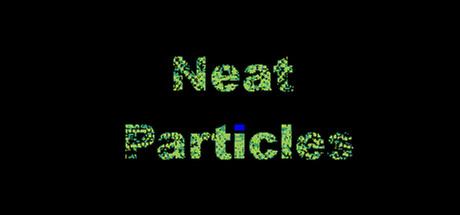
Neat Particles scores 70/100 — better than 27% of Simulation capsules (n=5,188).

Quick text summary

Neat Particles scored 70/100 on Steam Analyzer — Good for a Simulation capsule. Top priority fix: [genre_clarity] Add a subtle animated or static particle field behind or around the text to visually demonstrate the core mechanic and differentiate from generic software.

Capsule scores by dimension

  • Genre Clarity: 7/10 — Clear simulation toy aesthetic. The pixelated green particle text and black background immediately signal a digital/software tool or simulation toy rather than a narrative game. At tiny size, the glitchy green text effect reads as procedural or particle-based, aligning with the game's core mechanic. However, the visual lacks iconic simulation UI cues (gauges, buttons, grids) that would make it unmistakably a 'simulator' versus a generic digital toy.
  • Title Readability: 8/10 — Strong green contrast, legible typography. Both 'Neat' and 'Particles' are rendered in bright lime green (#8FFF00 approximately) with a pixelated/chunky letterform that maintains clarity even at small and tiny sizes. The stacked layout gives clear hierarchy, and the green-on-black contrast is excellent. At tiny size, individual letters remain distinguishable, though fine pixel detail softens slightly but does not collapse readability.
  • Contrast & Color: 8/10 — Excellent value separation and vibrancy. Bright lime green text pops sharply against pure black background, creating maximum value contrast and strong silhouette definition. The color choice is saturated and warm enough to grab attention in quick scroll without feeling garish. Grayscale test confirms the text maintains high luminance separation, ensuring it reads clearly even on colorblind or desaturated displays.
  • Uniqueness & Polish: 6/10 — Competent but visually generic theme. The pixelated green text-on-black aesthetic feels clean and intentional, but it is a common trope for tech/software tools and lacks distinctive visual storytelling beyond the title. There is no character, unique particle behavior showcase, or gameplay moment visible that communicates the 'explore weird/pretty patterns' hook. The design is polished in execution but does not convey what makes Neat Particles different from other simulation toys.
  • Brand Consistency: 6/10 — Minimal visual identity signals. The lime green and pixelated style are consistent and recognizable as the game's visual language, but without memorable iconography, character, or motif, there is limited brand recall potential. The capsule alone does not establish a unique identity that could be recognized on other marketing materials or community content without the title text.
  • Composition: 7/10 — Centered, balanced, safe layout. The two-line text stack is centered and well-balanced on the black canvas, with adequate breathing room and no edge-hugging risks. The layout is resilient to Steam cropping and reads clearly at all sizes. However, the composition is purely typographic with no layered depth, visual hierarchy beyond text size, or secondary focal points—it functions well but feels minimal and static.

What works

  • Bright lime-green contrast pops against dark background. The luminance separation is excellent and maintains readability at tiny size, ensuring strong discoverability in scrolling Steam lists.
  • Clean pixelated typography maintains legibility at all scales. Both title lines are clearly readable from full header to tiny thumbnail without collapsing or becoming muddy.
  • Balanced centered composition with safe margins. No elements risk Steam cropping and the layout feels intentional and stable across viewing sizes.

What hurts the capsule

  • No visual storytelling or gameplay hook communicated. The capsule shows the title but does not hint at the 'explore weird/pretty particle patterns' core mechanic or what makes the game fun.
  • Generic text-on-black aesthetic lacks distinctive brand identity. The green pixelated style is common for tech tools and does not create a memorable visual identity that stands apart from competing simulators.
  • Purely typographic composition lacks visual depth. No background detail, character, particle showcase, or secondary elements create layering or visual interest beyond the text itself.

Priority fixes

  1. [genre_clarity] Add a subtle animated or static particle field behind or around the text to visually demonstrate the core mechanic and differentiate from generic software.
  2. [uniqueness_polish] Introduce a signature visual element—such as a recognizable particle pattern, a color accent, or a subtle UI motif—that hints at the exploration and experimentation hook.
  3. [composition] Layer in a background element (procedural grid, soft particle glow, or subtle color gradient) to add depth and break the flat text-only layout.

Store copy priority fixes

  1. [hook_strength] Rewrite the short description to lead with the verb and payoff: 'Watch endlessly varied particle patterns emerge from randomized modifiers, from spirals to fractals to abstract chaos.' Remove the parenthetical AI disclaimer to the detailed section.
  2. [feature_communication] Add a sentence explaining player agency clearly: 'Tap to generate new behaviors, watch them unfold, tweak modifier chances to fine-tune the style you love.'
  3. [audience_targeting] Insert a sentence early in the detailed description that speaks to the intended player: 'Perfect for artists exploring procedural generation, or anyone seeking meditative visual play.'
  4. [uniqueness] Strengthen the closing by replacing 'little side project' with a specific claim: 'Try to find another particle system that generates this much variety from just 31 simple rules.'

Related guides

Steam app ID: 4216140 · Tags: Simulation, Design & Illustration, Sandbox, 2D, Abstract