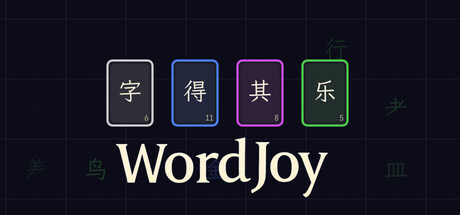
字得其乐WordJoy scores 75/100 — better than 76% of Word Game capsules (n=245).

Quick text summary

字得其乐WordJoy scored 75/100 on Steam Analyzer — Good for a Word Game capsule. Top priority fix: [genre_clarity] Add a small in-game board snippet (e.g., a 3x3 or 5x5 grid with example hanzi placements) in the background to visually communicate the placement-strategy core mechanic.

Capsule scores by dimension

  • Genre Clarity: 7/10 — Clear puzzle-casual game vibe. The four colorful Chinese character tile cards immediately signal a word/puzzle game mechanic, and the grid-like presentation with neon outlines suggests board-based gameplay. At TINY size, the card icons and layout still communicate 'character puzzle game,' though the specific mechanics (idle incremental, placement strategy) are not visually obvious without context.
  • Title Readability: 8/10 — Strong bilingual title hierarchy. WordJoy is large, clean, and centered in white sans-serif with excellent contrast against the dark background; legible at all sizes down to TINY. The four Chinese characters above sit in their own framed tiles with contrasting neon borders, making them individually readable at SMALL size and recognizable as distinct elements even at TINY size, though the specific characters blur slightly.
  • Contrast & Color: 8/10 — Vibrant neon cards pop cleanly. The four character tiles use distinct neon borders—white, blue, magenta, and green—that create strong value separation against the dark navy grid background. The white title text punches through effectively, and each card silhouette remains clear even when squinting; the neon glow effect adds premium polish without creating muddy overlaps.
  • Uniqueness & Polish: 7/10 — Distinctive character-card aesthetic. The neon-bordered tile design is cohesive and memorable, with a modern, premium feel that differentiates it from generic word-game capsules; the bilingual treatment (Chinese characters + English) is a unique brand hook. However, the design does not explicitly communicate the idle-incremental or placement-strategy twist, and the grid background feels somewhat generic despite being functional.
  • Brand Consistency: 7/10 — Consistent tile-based visual identity. The neon-outlined card motif is internally cohesive and likely recognizable across store screenshots; the color palette (white, blue, magenta, green on dark) establishes a clear branded look. The bilingual title and tile-card framing create recognizable identity cues, though without reference to actual store screenshots, it is hard to confirm if this extends consistently across all promotional materials.
  • Composition: 8/10 — Balanced focal point with clear hierarchy. The four character tiles occupy the upper-center region and naturally draw the eye, while the large WordJoy title anchors the lower half, creating a strong two-tier hierarchy. At TINY size, both the cards and title remain distinct and centered; the grid background provides context without clutter, and no critical elements sit at dangerous crop edges.

What works

  • Neon cards command attention. The four colorful tile outlines (white, blue, magenta, green) pop strongly against the dark background and remain distinct even at TINY size, signaling a polished, premium puzzle game.
  • Clear bilingual branding. The pairing of Chinese character tiles with the English 'WordJoy' title creates a unique and memorable identity that communicates cultural specificity and target audience.
  • Strong title legibility across sizes. WordJoy is large, centered, high-contrast white sans-serif that reads perfectly at FULL, SMALL, and TINY sizes without any outline or decoration loss.
  • Organized grid layout. The structured background grid and balanced two-tier composition keep the design clean and uncluttered while maintaining a sense of coherent game aesthetics.

What hurts the capsule

  • Mechanic clarity absent. The visual design does not hint at the core idle-incremental or placement-strategy mechanics; a viewer sees 'word puzzle' but not 'buy pieces, arrange them, earn coins over time.'
  • Character details blur at TINY. While the four tile outlines remain visible at TINY size, the actual hanzi inside the cards become illegible, losing the specific language-learning or character-recognition selling point.
  • Background grid feels generic. The faint square grid layout, while functional, does not add visual personality or unique charm compared to top-tier casual indie capsules like Balatro or Sticky Business.
  • No gameplay scene or context. The capsule shows only UI elements (tiles and logo) rather than in-game board state or character arrangement examples, missing an opportunity to communicate the unique placement mechanic visually.

Priority fixes

  1. [genre_clarity] Add a small in-game board snippet (e.g., a 3x3 or 5x5 grid with example hanzi placements) in the background to visually communicate the placement-strategy core mechanic.
  2. [uniqueness_polish] Introduce subtle animated highlights or coin/upgrade icons near the character tiles to hint at the idle-incremental earning loop and distinguish from static word puzzles.
  3. [composition] Include a small tagline or icon near the title (e.g., 'Chinese + Clicker + Strategy') to clarify the hybrid genre blend at FULL size without cluttering TINY size.
  4. [contrast_color] Add a subtle glow or shadow effect behind the character tiles to further separate them from the background and enhance the neon-card premium feel at all sizes.

Store copy priority fixes

  1. [hook_strength] Replace the short description opening with a verb-forward, curiosity-driven hook such as: "Turn scattered Chinese character parts into a coin-printing machine that grows while you're away" to immediately signal the incremental appeal.
  2. [tone_match] Rewrite the "Features" bullet list in the same conversational voice as the opening paragraphs—use short declarative sentences that match the tone of "See that component? Put it on board."
  3. [audience_targeting] Add one explicit sentence in the short description targeting idle/casual players, such as: "Perfect for passive play: set up your board and watch it snowball with minimal input."
  4. [hook_strength] Move or echo the phrase "self-growing machine" or "snowball effect" into the short description or opening line of the detailed description to amplify the core appeal earlier.

Related guides

Steam app ID: 4218330 · Tags: Word Game, Logic, Casual, Incremental, Indie