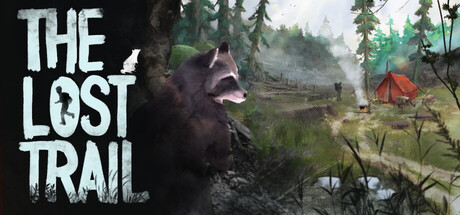
Scoring genre clarity...

The lost trail capsule

The lost trail

Play as a raccoon on a heartfelt and dangerous journey to find the boy who once saved you from poachers. Explore the wild, avoid traps, uncover secrets, and experience a story of friendship, survival, and hope.

AdventureExploration3D
Pavlo Prokopchuk2026

The lost trail scores 68/100 — better than 19% of Steam capsules we've analysed (n=22,658).

Released 2026 · By Pavlo Prokopchuk

Quick text summary

The lost trail scored 68/100 on Steam Analyzer — Solid for a Steam capsule. Top priority fix: [contrast_color] Add a warm accent color (orange, amber, or gold) to the campfire or raccoon fur to create tonal separation and pop against the cool green palette.

Capsule scores by dimension

  • Genre Clarity: 7/10 — Adventure creature, survival narrative clear. The raccoon protagonist and wilderness setting with campfire establish an adventure-survival genre immediately. At SMALL size the animal silhouette and natural environment read well, though at TINY size the creature loses definition and reads as abstract wildlife rather than a specific narrative-driven journey. The overgrown camp and poacher-trap implications come through in the visual language.
  • Title Readability: 8/10 — Bold sans-serif, high contrast placement. The title 'THE LOST TRAIL' uses a strong, chunky white sans-serif positioned on the left against darker foliage background, ensuring legibility at all sizes. At TINY size the text remains readable as solid white geometric forms with clear letterforms and generous tracking. The placement avoids the busiest center area, maintaining clarity even under quick scroll conditions.
  • Contrast & Color: 7/10 — Strong whites against muted greens. The white title text pops cleanly against the dark teal-green forest palette with good value separation. The raccoon's warm brown and pale fur tones create moderate separation from the cool background, though the midtone wilderness area lacks dramatic contrast. In grayscale, the title remains crisp and the raccoon silhouette reads as distinct, but environmental detail becomes murky at TINY scale.
  • Uniqueness & Polish: 6/10 — Competent nature scene, mildly generic composition. The capsule features clean landscape painting and atmospheric forest rendering that feels professionally crafted, but the wilderness campfire setup is a familiar trope in adventure gaming. The raccoon protagonist is visually distinct as a core selling point, yet the overall composition of creature-in-nature-with-campfire feels common in indie adventure titles. Polish is solid but the visual hook does not distinctly communicate the emotional friendship narrative.
  • Brand Consistency: 6/10 — Nature palette consistent, no iconic motifs. The muted green-teal forest colors, warm earth tones, and cool misty atmosphere are internally coherent and suggest a cohesive art direction. However, no distinctive brand symbols, signature color accent, or memorable visual motif emerges that would be immediately recognizable as 'The Lost Trail' without the title. The raccoon is the primary identity anchor but lacks distinctive pose or style cues that suggest deeper branding.
  • Composition: 7/10 — Clear focal point, good hierarchy structure. The raccoon is positioned as the dominant left-center focal point with the campfire and treeline creating depth in the background, establishing strong foreground-midground-background layering. The title sits securely on the left edge with adequate margin and the composition avoids dead center voids. At SMALL size the raccoon reads clearly as the primary subject; at TINY the arrangement holds but environmental detail collapses into muddy green.

What works

  • Title legibility across sizes. The bold white sans-serif 'THE LOST TRAIL' maintains excellent readability from full header down to thumbnail scale due to strong contrast and chunky letterforms.
  • Clear protagonist focus. The raccoon positioned as the dominant visual element immediately signals this is a character-driven adventure rather than a generic landscape game.
  • Atmospheric depth layering. Foreground raccoon, midground campfire, and background treeline create visual hierarchy that guides the eye and suggests environmental storytelling.

What hurts the capsule

  • Generic wilderness scene setup. The raccoon-in-forest-with-campfire composition feels familiar across multiple indie adventure titles and does not visually distinguish this game's emotional core.
  • Weak raccoon-to-background contrast. The raccoon's warm brown and gray fur tones blend into the muddy green-brown midground, reducing silhouette clarity at SMALL and TINY sizes.
  • No distinctive visual motif or icon. The capsule lacks a signature color accent, symbolic object, or memorable visual hook that would become recognizable as unique brand identity.
  • Environmental detail loss at tiny scale. The intricate wilderness textures, campfire glow, and atmospheric fog collapse into murky, indistinct green at thumbnail size, reducing visual appeal in quick scrolls.

Priority fixes

  1. [contrast_color] Add a warm accent color (orange, amber, or gold) to the campfire or raccoon fur to create tonal separation and pop against the cool green palette.
  2. [uniqueness_polish] Introduce a distinctive visual motif such as a trinket, the boy's item, or a symbolic object that communicates the friendship-survival narrative beyond a generic scene.
  3. [contrast_color] Increase raccoon fur value contrast with subtle highlight or rim lighting to strengthen silhouette separation from background at TINY size.
  4. [composition] Adjust raccoon pose or add a clear gesture (reaching, looking toward boy's direction) that implies the emotional journey rather than static observation.

Store copy priority fixes

  1. [feature_communication] Add a short gameplay mechanics sentence in the detailed description, such as: 'Navigate environmental puzzles, evade predators and hunters, and piece together memories of the boy through exploration and investigation.'
  2. [genre_clarity] Explicitly state the game structure early, e.g., 'Experience a linear, story-driven exploration adventure' or 'Uncover the mystery across six interconnected wilderness regions,' to clarify progression.
  3. [audience_targeting] Add one sentence identifying the intended player type, e.g., 'Perfect for players who love emotional, story-rich adventures and atmospheric exploration over combat or time pressure.'

Related guides

Steam app ID: 4225370