Scoring genre clarity...
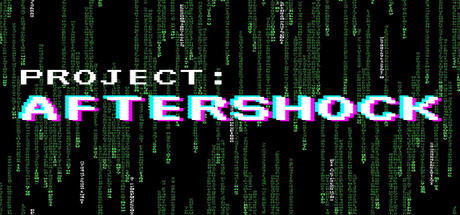
Project: AFTERSHOCK capsule

Project: AFTERSHOCK

Project: AFTERSHOCK is a fast-paced arcade hacking roguelite set in a dystopian future. Command a 20-year-old legacy terminal to breach enemy systems, siphon funds, and upgrade your hardware. Use your reflexes to survive the countdown and bring down the very system you created.

$1.99Positive(14)
Early AccessSimulationHacking
Tuna DundarMar 23, 2026

Project: AFTERSHOCK scores 67/100 — better than 12% of Early Access capsules (n=3,067).

Positive (14 reviews) · $1.99 · Released Mar 23, 2026 · By Tuna Dundar

Quick text summary

Project: AFTERSHOCK scored 67/100 on Steam Analyzer — Solid for a Early Access capsule. Top priority fix: [uniqueness_polish] Replace or simplify the Matrix code background with a custom visual element that hints at the arcade roguelite mechanic (e.g., terminal UI elements, upgrade circuit boards, or a unique glitch pattern) to increase distinctiveness.

Capsule scores by dimension

  • Genre Clarity: 7/10 — Hacking and cyber themes clear. The Matrix-style cascading code background immediately signals a cyberpunk/hacking theme, and the glitchy cyan text effect reinforces a digital dystopian setting. At TINY size, the green matrix rain and neon text are still recognizable as hacking-adjacent, though the specific arcade roguelite mechanic is not evident from visuals alone.
  • Title Readability: 6/10 — Readable but glitch effect risks clarity. The title 'PROJECT: AFTERSHOCK' is rendered in bright cyan with a chromatic aberration glitch effect that adds style but slightly compromises legibility. At SMALL size the text holds up reasonably well, but at TINY size the glitch distortion and thin letterforms risk becoming muddy; the color contrast against the dark code background is strong enough to maintain function, though not optimal.
  • Contrast & Color: 7/10 — Strong neon pop with good value separation. Bright cyan and magenta text pops decisively against the black background with the green matrix code providing mid-tone support, creating clear visual separation. The grayscale test shows strong white-to-black contrast, and the neon palette reads well at SMALL and TINY sizes; however, the heavy texture of cascading code creates visual noise that slightly dilutes subject isolation.
  • Uniqueness & Polish: 7/10 — Stylish hacking aesthetic, slightly derivative. The Matrix-inspired falling code background and chromatic aberration glitch effect convey a premium cyberpunk look that feels intentional and polished. The treatment is thematically on-brand for a hacking roguelite, but the visual execution is a familiar trope in the genre—Matrix rain effects are common in hacking-themed media, so while the craft is solid, the hook feels less distinctive than the benchmark titles which each have a unique signature visual language.
  • Brand Consistency: 6/10 — Cohesive cyberpunk style, limited identity markers. The color palette (cyan, magenta, green, black) is internally consistent and the glitch effect treatment is unified across the text, creating a coherent cyberpunk brand voice. However, without reference to the 8 screenshots, there are no memorable icons, character silhouettes, or signature visual motifs visible here that would make this capsule instantly recognizable as PROJECT: AFTERSHOCK versus any other hacking-themed indie game.
  • Composition: 7/10 — Centered title with strong focal point. The title is prominently centered in the upper half with the subtitle 'PROJECT:' above, creating a clear hierarchy and primary focal point that dominates the frame. The falling code background fills the entire composition without dead space, though the uniform texture throughout means the title does not sit on a controlled background region, which at TINY size could cause minor blend-in; cropping should be safe as the title is well-centered with adequate margins.

What works

  • Strong thematic alignment. The Matrix-style falling code is instantly recognizable as hacking/cyberpunk, perfectly matching the game's core premise of terminal-based system breaching.
  • Excellent color contrast. Bright cyan and magenta neon text pops decisively against the dark background and green code texture, maintaining readability even at tiny sizes.
  • Polished glitch effects. The chromatic aberration on the text is coherent and intentional, adding premium cyberpunk flavor that reinforces the dystopian arcade tone.

What hurts the capsule

  • Generic visual execution. The Matrix rain aesthetic is an overused trope in hacking games, lacking a distinctive visual hook that differentiates this capsule from similar indie cyberpunk titles.
  • Noisy background competes with text. The dense cascading code texture fills the entire background without a controlled zone for the title, creating visual competition that slightly dilutes hierarchy at small sizes.
  • No recognizable brand symbols. The capsule lacks character silhouettes, icons, or signature motifs that would become identifiable across future marketing materials and screenshots.

Priority fixes

  1. [uniqueness_polish] Replace or simplify the Matrix code background with a custom visual element that hints at the arcade roguelite mechanic (e.g., terminal UI elements, upgrade circuit boards, or a unique glitch pattern) to increase distinctiveness.
  2. [composition] Introduce a subtle vignette or gradient fade behind the title to create a controlled background zone and improve text isolation at SMALL and TINY sizes without losing the cyberpunk aesthetic.
  3. [brand_consistency] Add a recognizable icon, character element, or signature UI motif (the 20-year-old legacy terminal, for example) to establish a memorable visual identity that differentiates PROJECT: AFTERSHOCK from generic hacking-game capsules.

Store copy priority fixes

  1. [feature_communication] Add a sentence after "BE FAST" explaining the specific hacking mechanic: e.g., 'Match rotating encryption keys to firewalls' or 'Tap nodes in sequence before the timer resets'—something concrete that differentiates from generic hacking.
  2. [uniqueness] In the Advanced Defense Systems section, replace generic language with specifics: e.g., 'The Regime's AI learns your patterns and strengthens weak spots—each run, the difficulty path is unique to *your* play style' instead of 'infinite puzzle variations'.
  3. [audience_targeting] Add a sentence in the opening that signals skill floor/ceiling: e.g., 'Perfect for players seeking arcade-level precision with roguelite strategic depth' or 'A challenge for reflexive players who love high-stakes, time-limited problem solving'.
  4. [hook_strength] Consider leading the short description with the personal stakes angle before the mechanics: e.g., 'Imprisoned architect. Legacy terminal. Three seconds. Bring down the Regime you built.' to prioritize emotional hook over gameplay keywords.

Related guides

Steam app ID: 4230350 · Tags: Early Access, Simulation, Hacking, Strategy, Puzzle