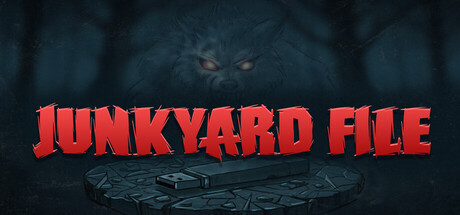
Junkyard File scores 68/100 — better than 18% of Strategy capsules (n=5,103).

Quick text summary

Junkyard File scored 68/100 on Steam Analyzer — Solid for a Strategy capsule. Top priority fix: [genre_clarity] Incorporate a visual cue tied to the pendrive or digital corruption mechanic—such as a corrupted/pixelated element, USB shape, or glitched overlay—to hint at the game's unique reality-bending premise and differentiate it from generic horror.

Capsule scores by dimension

  • Genre Clarity: 7/10 — Horror theme clear, genre ambiguous. The dark atmospheric forest setting with glowing eyes and junkyard debris clearly signals horror/dark themes, but the casual indie strategy context is not visually evident. At tiny size, the ominous silhouette and moody lighting read as psychological horror, which partially aligns with the game's actual focus on exploration and environmental interaction.
  • Title Readability: 8/10 — Bold title readable at all sizes. JUNKYARD FILE uses a thick, high-contrast red sans-serif font positioned centrally over a controlled dark background, making it easily readable at full, small, and tiny sizes. The letterforms maintain clarity even when squinted or viewed at thumbnail scale, though the tagline below the title is too small to read at tiny size.
  • Contrast & Color: 8/10 — Strong red-dark separation effective. The bright orange-red title has excellent value separation against the dark teal-blue forest background, creating a clear pop that holds up at small size. In grayscale, the title maintains strong luminosity contrast, and the glowing eyes in the background add subtle highlight interest without competing with the primary focal point.
  • Uniqueness & Polish: 6/10 — Competent horror aesthetic, generic execution. The capsule uses familiar psychological horror iconography—dark forest, glowing predatory eyes, junkyard clutter—that communicates mood effectively but feels formulaic compared to genre standouts like DREDGE or Lethal Company. The visual execution is clean and professional, but the concept lacks a distinctive hook that hints at the unique pendrive/reality-bending mechanic central to the game.
  • Brand Consistency: 5/10 — Limited identity cues, no memorable motif. The capsule establishes a dark horror mood but provides no recurring visual language, iconic symbol, or signature palette that would make Junkyard File recognizable in future marketing materials. Without referencing the 16 available store screenshots, the capsule alone does not convey a distinctive brand identity tied to the pendrive or corrupted reality themes.
  • Composition: 7/10 — Centered focus, good hierarchy at small size. The title sits prominently in the upper-middle portion with the glowing eyes creature as secondary focal point below, creating a natural top-to-bottom read that works at small and tiny sizes. The junkyard clutter grounds the composition but risks feeling slightly scattered; edge-hugging dark areas are safe from Steam cropping, though the composition could be tighter overall.

What works

  • Title contrast and readability. Bold red typography maintains legibility across full, small, and tiny viewports with no weight loss or collapse at scale.
  • Atmospheric mood establishment. Dark forest setting, glowing predatory eyes, and moody lighting immediately signal a horror experience and grab attention in quick scroll.
  • Safe composition margins. Key elements are positioned within safe zones and will not be clipped by Steam crop boundaries across display contexts.

What hurts the capsule

  • Generic horror visual language. The dark forest and glowing eyes concept is familiar and does not visually distinguish Junkyard File from dozens of other horror indie titles.
  • Missing unique mechanic signals. The pendrive/reality-corruption concept that makes this game unique is not communicated visually; the capsule could promote any psychological horror game.
  • No recognizable brand motif. There is no iconic symbol, character, or signature visual pattern that would allow players to recognize this game again from the capsule alone.

Priority fixes

  1. [genre_clarity] Incorporate a visual cue tied to the pendrive or digital corruption mechanic—such as a corrupted/pixelated element, USB shape, or glitched overlay—to hint at the game's unique reality-bending premise and differentiate it from generic horror.
  2. [uniqueness_polish] Add a distinctive brand motif or signature visual element (corrupted artifact, branded symbol, or art style flourish) that appears consistently across marketing to build recognition and stand out against genre benchmarks like DREDGE.
  3. [brand_consistency] Reference the store screenshots to identify a recurring character, environment detail, or visual pattern that should appear in the capsule to establish internal franchise coherence.

Store copy priority fixes

  1. [genre_clarity] Remove or clarify the 'Casual' tag; either replace it with a modifier like 'Casual Psychological Horror' or replace it entirely with a more accurate descriptor like 'Narrative Horror' to eliminate audience confusion.
  2. [feature_communication] Expand the short description to briefly explain the multiple games mechanic: specify how many pendrive games are included and hint at their role in the escalating horror, e.g., 'Try them all while you still can—but each one brings consequences.'
  3. [uniqueness] Add a concrete differentiator to the Gameplay Features section, such as 'Environmental Consequences' or 'Meta-Narrative Gameplay,' that explains how the game's reality-bending mechanic sets it apart from conventional first-person horror.

Related guides

  • Steam page optimisationCapsule, copy, screenshots, tags — the full Steam page conversion stack.
  • Steam tags guideTag selection, ordering, and how it shapes Steam's recommendation rails.

Steam app ID: 4243720 · Tags: Strategy, 3D, First-Person, Horror, Psychological Horror