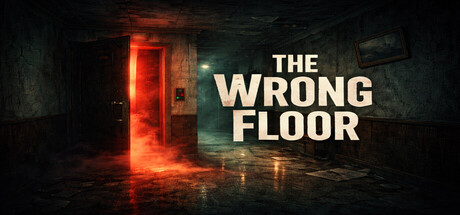
The Wrong Floor scores 72/100 — better than 52% of Walking Simulator capsules (n=1,308).

Quick text summary

The Wrong Floor scored 72/100 on Steam Analyzer — Good for a Walking Simulator capsule. Top priority fix: [genre_clarity] Add subtle UI elements or visual cues that hint at the decision-mechanic and progression system to differentiate from generic horror and clarify adventure-game identity

Capsule scores by dimension

  • Genre Clarity: 7/10 — Mystery hotel thriller established. The crimson glowing doorway, institutional concrete setting, and dark atmospheric environment clearly signal a horror or thriller genre. At tiny size, the red door glow and confined space read as tense and mysterious, though the adventure/puzzle mechanics are not visually explicit. The confined elevator-like space and ominous lighting effectively communicate danger and entrapment.
  • Title Readability: 8/10 — Clean white text stands firm. Title "THE WRONG FLOOR" is rendered in bold, high-contrast white sans-serif positioned on the right side of the composition against a darker background region. At small and tiny sizes, the letterforms remain clearly legible with strong separation from the background. Text placement avoids the bright red door area, which is a smart tactical choice for readability.
  • Contrast & Color: 8/10 — Saturated red glow dominates palette. The crimson doorway and warm orange floor reflections create strong value separation against the cool dark teal and black surroundings. The color scheme pops immediately against Steam's #1b2838 background through both saturation and luminosity contrast. At tiny size, the red focal point remains unmistakable and the silhouette of the door frame holds clarity in grayscale.
  • Uniqueness & Polish: 7/10 — Polished cinematic presentation effective. The image demonstrates professional lighting, realistic material rendering on concrete and metal, and cinematic framing typical of high-quality indie horror. The concept of a mysterious hotel floor mechanic feels moderately distinctive within the adventure genre. However, the visual execution, while clean, follows familiar atmospheric horror tropes without a singular standout artistic hook that distinguishes it from competitors like DREDGE or The Invincible.
  • Brand Consistency: 6/10 — Solid atmosphere no iconic signature. The capsule presents a coherent dark institutional aesthetic that likely carries through the game's visual identity based on the horror-thriller framing. The consistent use of architectural brutalism, industrial lighting, and cool-warm color contrast suggests internal cohesion. However, without recognizable character, motif, or distinctive symbol, the identity feels genre-appropriate but not uniquely memorable or iconic compared to stronger indie brand presences.
  • Composition: 7/10 — Clear focal point with balance. The glowing red door creates a dominant center-left focal point that immediately draws attention and establishes the primary mystery. Title placement on the right side balances the composition and avoids competing with the door. The reflective floor adds depth and layering, though at tiny size the complexity of the floor detail becomes muddy and the composition reads primarily as red glow plus white text.

What works

  • High contrast title placement. White bold sans-serif text positioned strategically on darker background region ensures legibility at all sizes from full header to tiny thumbnail.
  • Strong atmospheric focal point. The saturated crimson doorway immediately communicates danger and mystery, creating instant visual intrigue that survives quick scroll conditions.
  • Professional lighting and rendering. Realistic material handling on concrete, metal, and light reflections conveys a polished, premium production quality that elevates perceived value.

What hurts the capsule

  • Generic horror aesthetic formula. Dark institutional space plus red emergency/danger lighting follows predictable thriller visual language without distinctive artistic signature.
  • Floor detail loses clarity at scale. The intricate reflections and floor texture become visual noise at small and tiny sizes, cluttering the composition rather than enhancing hierarchy.
  • Weak genre specificity signals. The capsule reads as horror-thriller but does not visually communicate the simulation, decision-making, or point-based progression mechanics mentioned in the game description.

Priority fixes

  1. [genre_clarity] Add subtle UI elements or visual cues that hint at the decision-mechanic and progression system to differentiate from generic horror and clarify adventure-game identity
  2. [uniqueness_polish] Introduce a distinctive visual motif, character silhouette, or symbolic element specific to the hotel setting that creates memorable brand recognition
  3. [composition] Reduce floor texture complexity and increase focal point clarity by darkening or simplifying the ground plane to strengthen the red door as sole primary element

Store copy priority fixes

  1. [hook_strength] Rewrite the short description to open with a higher-stakes emotional hook, such as 'Trapped in an endless hotel loop, one wrong observation sends you back to the start. Descend using only your wits and dangerous gambles.' to create urgency rather than curiosity alone.
  2. [uniqueness] Add a sentence that contrasts this game's innovation against traditional anomaly games, such as 'Unlike similar games, your choices ripple: earn points to unlock powerful abilities, or risk everything in gambling mini-games for game-changing advantages.' to clarify what makes it distinct.
  3. [feature_communication] Provide one concrete example of an anomaly or ability, such as 'Spot a clock running backward while all others move forward, then choose which elevator descends' to make the abstract loop tangible.

Related guides

Steam app ID: 4293590 · Tags: Walking Simulator, Horror, First-Person, Psychological, Simulation