Scoring genre clarity...
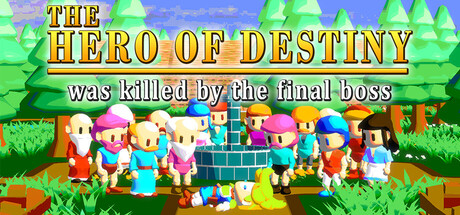
The Hero of Destiny was killed by the final boss capsule

The Hero of Destiny was killed by the final boss

How many NPCs equal 1 Hero? In the land of Alta, The Hero of Destiny was fated to defeat a terrible Dark Wizard... but the Hero of Destiny was killed by the final boss. What now? Next to the final dungeon, in a sleepy village, 50 NPCs decide to take matters into their own hands. 

$9.997 user reviews
ActionAdventureRPG
SungrandMar 15, 2026

The Hero of Destiny was killed by the final boss scores 60/100 — better than 0% of Action capsules (n=8,534).

7 user reviews · $9.99 · Released Mar 15, 2026 · By Sungrand

Quick text summary

The Hero of Destiny was killed by the final boss scored 60/100 on Steam Analyzer — Solid for a Action capsule. Top priority fix: [title_readability] Integrate the subtitle into the main title design or replace it with a single short memorable phrase that remains readable at TINY size with stronger contrast.

Capsule scores by dimension

  • Genre Clarity: 7/10 — Clear RPG adventure with comedic twist. The pixel art style, colorful NPCs in a village setting, and visible fantasy architecture immediately signal a classic adventure RPG with a lighthearted tone. At TINY size, the bright primary-colored character silhouettes and pastoral environment remain readable as a fantasy adventure game, though the comedic premise about 50 NPCs replacing a dead hero is not visually apparent without text.
  • Title Readability: 5/10 — Title readable at full, collapses at tiny. The main title 'THE HERO OF DESTINY' in bright yellow with black outline reads clearly at full size, but the secondary text 'was killed by the final boss' in white below becomes illegible at TINY size due to thin letterforms and insufficient contrast against the green background. The visual hierarchy prioritizes the main title adequately, but the subtitle that conveys the core premise is unreadable at small browsing sizes.
  • Contrast & Color: 6/10 — Adequate but muddied by busy palette. The bright greens, blues, and primary colors create nominal separation from the dark Steam background, but the capsule suffers from a cluttered mid-tone range with grass, trees, and characters competing for attention. The yellow title stands out reasonably well, yet the overall composition lacks the clear light-dark separation and silhouette clarity needed for strong discoverability at SMALL size; in grayscale, many mid-ground elements blur together.
  • Uniqueness & Polish: 6/10 — Competent pixel art, generic scene composition. The art style is clean and consistently rendered with solid sprite work and bright colors typical of indie RPGs, but the layout feels like a standard village scene with lined-up NPCs rather than a distinctive visual hook. The premise is clever, but the capsule does not visually communicate the unique mechanic of 50 NPCs as a replacement hero; instead it reads as a colorful but generic fantasy adventure setup similar to many other RPG capsules.
  • Brand Consistency: 6/10 — Consistent pixel style, no memorable motif. The sprite art style, color palette, and visual approach are internally coherent across the capsule, with no jarring tonal shifts or rendering inconsistencies. However, there is no iconic character, symbol, or signature visual cue that would make this capsule recognizable in future marketing or sequel materials; it relies on pleasant but generic fantasy adventure aesthetics without a standout brand identity signal.
  • Composition: 6/10 — Balanced but unfocused center composition. The layout is well-balanced with the title anchored at top and NPCs distributed across the center and bottom, creating a stable overall frame. However, the focal point is diffused across many equal-weight characters rather than creating a single clear primary subject, and at SMALL size the scattered NPCs and building elements create visual noise that diminishes impact; the composition lacks the depth layering and hierarchical clarity that would guide viewer attention.

What works

  • Readable main title. The bright yellow 'THE HERO OF DESTINY' text with black outline contrasts well against the sky background at full size.
  • Consistent pixel art rendering. Sprite work is clean and technically well-executed across all characters and environment elements.
  • Coherent color palette. Greens, blues, and primary colors create a cohesive and vibrant fantasy village aesthetic without clashing tones.

What hurts the capsule

  • Illegible subtitle at small size. The secondary text 'was killed by the final boss' disappears into the background at TINY size and fails to communicate the game's unique premise.
  • Diffused focal point. Multiple NPCs of equal visual weight compete for attention, preventing a clear primary subject that would stand out at small browsing sizes.
  • Generic scene composition. The village scene with lined-up characters reads as a standard RPG background rather than a distinctive visual hook that communicates the core mechanic.
  • Busy mid-tone muddy contrast. Grass, trees, and character bodies create a cluttered mid-range that lacks silhouette clarity and separation in grayscale squint test.

Priority fixes

  1. [title_readability] Integrate the subtitle into the main title design or replace it with a single short memorable phrase that remains readable at TINY size with stronger contrast.
  2. [composition] Emphasize one or two iconic NPCs as primary focal subjects in the foreground with clear depth separation from background village elements to guide viewer attention.
  3. [uniqueness_polish] Add a visual cue that communicates the 50 NPCs mechanic, such as a formation pattern, numerical indicator, or stacked character silhouette that differentiates this from generic RPG setups.
  4. [contrast_color] Introduce stronger light-dark value separation by darkening the background foliage or adding a lighter supporting plane behind key characters to improve silhouette clarity.

Store copy priority fixes

  1. [genre_clarity] Add a single sentence clarifying the combat system: 'Real-time action RPG battles' or 'Turn-based party tactics,' placed in the opening paragraph or near the first 'BUILD' section.
  2. [feature_communication] Expand the multiplayer section with details on how co-op changes gameplay—do players share a party or control separate characters? Does it affect difficulty or strategy?
  3. [feature_communication] Add a brief 'Progression & Challenge' subsection explaining difficulty curve, whether there are intermediate bosses, and how party size/composition scales through the game.

Related guides

Steam app ID: 4364210 · Tags: Action, Adventure, RPG, Action RPG, Action-Adventure