Quick text summary
Dice Heroes scored 70/100 on Steam Analyzer — Good for a Strategy capsule. Top priority fix: [genre_clarity] Integrate visual dice elements into the composition—either on the sword, in the sand, or as a subtle overlay—to communicate the unique dice-roll mechanic at a glance.
Capsule scores by dimension
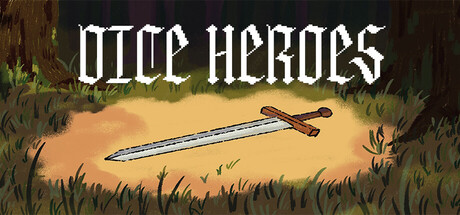
- Genre Clarity: 7/10 — Fantasy strategy game clear. The ornate sword centerpiece and medieval fantasy setting immediately signal a strategy or RPG experience. The grass and outdoor environment suggest exploration or wilderness combat, though the dice-driven mechanic is not visually communicated at any size. At tiny size, the sword and landscape remain readable enough to suggest fantasy strategy, but the unique dice-based roguelike identity is completely lost.
- Title Readability: 8/10 — Strong serif title, excellent contrast. The white serif-style 'DICE HEROES' text sits clearly against the dark background at full, small, and tiny sizes with excellent contrast and no background texture interference. The letterforms remain legible even at tiny size due to generous letter spacing and weight. The title placement in the upper third leaves prime real estate uncluttered and avoids edge crop risk.
- Contrast & Color: 8/10 — Warm palette pops well. The warm tan and golden-brown sand with green grass foliage create strong value separation against the dark Steam background (#1b2838). The sword features bright metallic highlights that catch attention without harsh glare. In grayscale, the composition maintains clear silhouette separation between foreground sword, midground grass, and background tree shadows.
- Uniqueness & Polish: 5/10 — Competent but generic fantasy. The ornate sword and pastoral fantasy setting are well-rendered but communicate a fairly standard fantasy aesthetic with no distinctive visual hook or mechanic indicator. The art is clean and polished with consistent illustration style, yet feels like a generic fantasy theme that could fit dozens of games. The central sword presentation is straightforward but lacks a memorable unique selling point or visual storytelling cue about the dice-driven roguelike core mechanic.
- Brand Consistency: 6/10 — Cohesive but unmemorble identity. The internal color harmony between sand, grass, and metallic sword elements is consistent and well-coordinated in a storybook fantasy illustration style. There are no obvious identity markers or recurring visual motifs that would create recognition—no iconic character, symbol, or palette signature that stands apart. Without additional context from store screenshots, this capsule lacks a distinctive brand signature.
- Composition: 8/10 — Clear focal point, balanced layout. The sword is a strong, centered primary focal point that reads immediately at all sizes, with the grass and foliage creating natural framing and depth layers. The title placement at top and subject at center-bottom creates effective hierarchy without dead space or clutter. Composition remains resilient to Steam cropping with no critical elements at dangerous edges.
What works
- Title clarity and contrast. White serif text reads perfectly at tiny size with excellent value separation and no background texture interference.
- Composition hierarchy. Central sword focal point with natural layering (background trees, midground grass, foreground sword) creates clear visual depth.
- Warm color palette cohesion. Golden-brown and green hues pop strongly against the dark Steam background while maintaining internal harmony.
What hurts the capsule
- Generic fantasy aesthetic. The ornate sword and pastoral setting lack distinctive visual identity or memorable brand signature.
- Missing mechanic communication. The core dice-based roguelike mechanic is completely invisible visually; the capsule communicates standard fantasy strategy instead of the unique risk-driven gameplay.
- No visual storytelling hook. The presentation is straightforward scene composition rather than a concept or mechanic showcase that differentiates from dozens of generic fantasy games.
Priority fixes
- [genre_clarity] Integrate visual dice elements into the composition—either on the sword, in the sand, or as a subtle overlay—to communicate the unique dice-roll mechanic at a glance.
- [uniqueness_polish] Add a distinctive visual motif or character element that creates brand recognition and signals the risk-driven roguelike identity beyond standard fantasy tropes.
- [uniqueness_polish] Incorporate visual storytelling that hints at the core mechanic (splitting a die value between attack and defense) rather than showing a generic sword in grass.
Store copy priority fixes
- [feature_communication] In the 'Progression and replayability' section, add a concrete example of how artifact synergies work (e.g., 'combine the Doubled Die artifact with the Risk Amplifier for a high-variance, high-reward build') to make the build system tangible.
- [hook_strength] Integrate the identity/quest narrative into the mechanical description by adding a sentence like 'Each run is a battle to survive and uncover your past' to connect story and systems.
- [audience_targeting] Add a sentence specifying the target player type, such as 'Perfect for players who enjoy puzzle-like decision-making and roguelike runs' to strengthen audience clarity.
- [uniqueness] Add a direct differentiator statement such as 'Unlike other roguelikes where stats grow passively, every turn here forces you to choose between power and survival' to strengthen positioning against competitors.
Related guides
Steam app ID: 4389530 · Tags: Strategy, Roguelike, Turn-Based Combat, Puzzle, Medieval