Scoring genre clarity...

Glyph Quest capsule

Glyph Quest

A blend of nonogram puzzles and auto-battler combat. As you reveal tiles, both heroes and monsters build charge based on their Speed stat to perform actions.

$3.993 user reviews
CasualPuzzleAuto Battler
plyoungMar 27, 2026

Glyph Quest scores 72/100 — better than 43% of Casual capsules (n=10,153).

3 user reviews · $3.99 · Released Mar 27, 2026 · By plyoung

Quick text summary

Glyph Quest scored 72/100 on Steam Analyzer — Good for a Casual capsule. Top priority fix: [uniqueness_polish] Emphasize the core mechanic by adding a subtle visual indicator (e.g., speed meter, charge aura, or stat symbol) to make the auto-battler charge system immediately apparent.

Capsule scores by dimension

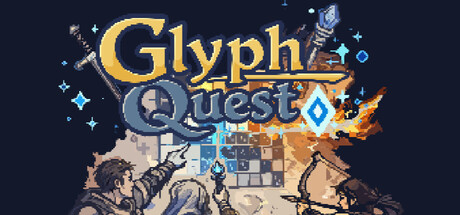
  • Genre Clarity: 7/10 — Puzzle meets action hybrid clear. The capsule communicates a puzzle-action blend through the nonogram grid visible in the center-right and the character silhouettes on the left suggesting combat involvement. At tiny size, the grid pattern and dual hero-monster framing are readable enough to hint at strategy gameplay, though the specific puzzle mechanic is not immediately obvious without context.
  • Title Readability: 8/10 — Gold title with solid legibility. The 'Glyph Quest' title in warm gold lettering sits prominently in the upper portion with clear letterforms and good contrast against the dark background. At tiny size, the title remains decipherable, though the subtitle positioning below becomes less clear; the word 'Quest' stacks well enough to maintain recognition.
  • Contrast & Color: 8/10 — Warm gold pops cleanly overall. The golden title and warm orange-amber combat effects create strong value separation against the cool dark navy background, with blue magical accents providing additional contrast cues. Character silhouettes and the grid maintain readable edges at small sizes, though some mid-tone detail in the left character blends slightly into the background.
  • Uniqueness & Polish: 7/10 — Polished indie blend distinctive. The fusion of visible nonogram mechanics with fantasy combat and the specific art style combining pixel characters with magical effects feels intentional and cohesive rather than generic. However, the composition leans toward a fairly standard 'hero with puzzle overlay' template that, while executed cleanly, doesn't immediately convey the unique auto-battler charge-building mechanic that differentiates Glyph Quest.
  • Brand Consistency: 6/10 — Competent cohesion lacking memorability. The pixel art style, warm color palette, and magical effects are internally consistent and professional, suggesting a clear art direction across the game. However, without distinctive character iconography or a signature visual motif visible on this capsule, the brand identity feels functional but not particularly memorable or immediately recognizable.
  • Composition: 7/10 — Clear hierarchy with layered depth. The composition establishes a clear focal point with the gold title at top, followed by the nonogram grid and character action in the middle, and supporting magical effects around the edges. The layout uses depth effectively across background, midground, and foreground, though at tiny size the left character detail becomes less distinct and some edge elements risk cropping; overall the structure survives the size reduction reasonably well.

What works

  • Strong title contrast and placement. The gold 'Glyph Quest' lettering pops clearly against the dark background and sits in a prime safe zone that survives all size reductions.
  • Genre blend visually apparent. The nonogram grid, character silhouettes, and magical effects combine to hint at the puzzle-action hybrid nature even at reduced sizes.
  • Cohesive warm-cool color palette. The warm gold and orange accents contrast effectively with cool blue magical effects and the dark navy background, creating visual harmony and separation.

What hurts the capsule

  • Unique mechanic not immediately visible. The auto-battler charge-building system and speed stat mechanics that differentiate the game are not visually communicated; the capsule reads as generic puzzle-action.
  • Left character detail loss at small sizes. The pixel art character on the left loses definition and blends into the background when viewed at tiny thumbnail size.
  • Limited iconic brand identity. The capsule lacks a distinctive character, symbol, or visual hook that would make Glyph Quest instantly recognizable among similar indie titles.

Priority fixes

  1. [uniqueness_polish] Emphasize the core mechanic by adding a subtle visual indicator (e.g., speed meter, charge aura, or stat symbol) to make the auto-battler charge system immediately apparent.
  2. [brand_consistency] Introduce a more distinctive character pose or signature UI element (like a glyph symbol or charge indicator) that could become an iconic brand motif across marketing.
  3. [composition] Increase left character contrast with a subtle glow or outline effect to ensure silhouette clarity at tiny thumbnail size and prevent blending into background.

Store copy priority fixes

  1. [uniqueness] Add a sentence explaining what makes the nonogram + auto-battler fusion unique—e.g., 'the puzzle becomes a resource race: solve faster than enemies can charge their attacks' or 'mistakes cost you tactically, not just puzzle progress.'
  2. [audience_targeting] Insert a sentence that speaks directly to the intended player—e.g., 'Perfect for puzzle lovers seeking strategic depth' or 'If you enjoy roguelike team-building and meditative puzzle-solving, this is your game.'
  3. [tone_match] Rewrite one or two sentences in the detailed description to inject warmth or personality—replace 'adding another strategic layer' with something more evocative about the feeling or flow.
  4. [hook_strength] Strengthen the opening line of the detailed description by leading with a sensory or emotional hook—e.g., 'Solve nonograms in real-time: every correct tile empowers your heroes, but every mistake triggers a counterattack.'

Related guides

Steam app ID: 4474640 · Tags: Casual, Puzzle, Auto Battler, Pixel Graphics, Fantasy