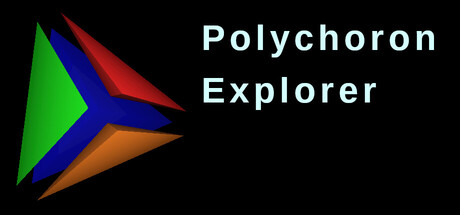
Polychoron Explorer scores 67/100 — better than 15% of Casual capsules (n=10,153).

Quick text summary

Polychoron Explorer scored 67/100 on Steam Analyzer — Solid for a Casual capsule. Top priority fix: [genre_clarity] Add a subtle gameplay cue—e.g., a hand interaction, UI overlay, or figure-building silhouette—to signal 'sandbox explorer' or 'educational tool' rather than pure geometry visualization.

Capsule scores by dimension

  • Genre Clarity: 5/10 — Abstract math, unclear gameplay intent. The colorful 3D geometric shape reads as mathematical or educational, but there are no clear game mechanics, UI elements, or activity cues visible at any size. At TINY size, it appears to be purely a geometric logo without gameplay context, making it ambiguous whether this is a puzzle game, educational tool, or sandbox experience. The capsule communicates 'something mathematical' but fails to signal what the player actually does.
  • Title Readability: 8/10 — Clean, readable title with good contrast. The title 'Polychoron Explorer' is rendered in bright white sans-serif against a pure black background, providing excellent value separation. At SMALL and TINY sizes, the text remains fully legible with no collapse or blur. The layout is simple and predictable, using standard letterforms that maintain clarity at all viewing distances.
  • Contrast & Color: 8/10 — Vibrant geometry pops against black. The bright primary-colored 3D shape (greens, blues, reds, oranges) creates strong silhouette separation against the pure black background. In grayscale mental test, the geometry maintains clear edges due to saturated hues that translate to distinct value ranges. At TINY size, the shape remains visually distinct and doesn't blend into the Steam dark background.
  • Uniqueness & Polish: 6/10 — Competent but generic geometric presentation. The 3D polychoron rendering is technically clean and well-lit, but feels like a straightforward visualization rather than a distinctive art direction or branded hook. There are no character, narrative, or unique mechanical cues that communicate the sandbox exploration aspect or educational value proposition. Compared to top indie capsules like Balatro or DAVE THE DIVER, this lacks a memorable visual or conceptual anchor that signals premium craft.
  • Brand Consistency: 6/10 — Minimal branding, relies on logo alone. The polychoron shape itself serves as the primary identity signal, but without supporting visual language (consistent color palette, typography, UI motifs, or character iconography) there is limited brand consistency signaling. The white sans-serif title is generic and interchangeable; there are no distinctive design patterns that would help recognition across store screenshots or marketing materials. The capsule feels like a functional logo placeholder rather than a cohesive brand expression.
  • Composition: 7/10 — Clear left-right balance, safe layout. The 3D shape is anchored to the left third, with the title positioned in the upper right, creating a stable visual balance with no overlapping or clutter. The black background provides safe margins and prevents cropping issues. However, the composition is static and straightforward—at TINY size, the eye doesn't travel meaningfully through the design; the shape and text are separate elements that don't interact or create visual narrative depth.

What works

  • Title contrast and legibility. White sans-serif type on pure black background maintains full readability at all sizes, from full to TINY thumbnail.
  • Geometric silhouette clarity. The saturated primary colors of the 3D polychoron create strong value separation and edge definition against the dark background, even when squinting or viewing at small scale.
  • Safe, balanced composition. Left-aligned shape and right-aligned title avoid center-weighted voids and edge-hugging issues, with no element in danger of cropping.

What hurts the capsule

  • Ambiguous genre and gameplay intent. No UI elements, mechanics cues, or activity context visible; the capsule reads as 'abstract geometry' rather than 'sandbox explorer' or 'educational game'.
  • Generic branding and identity. The white title is standard and interchangeable; there are no distinctive visual patterns, icons, or color motifs that create memorable brand recognition.
  • Lack of narrative or hook. The design is purely functional—no character, storytelling element, or unique mechanical concept visible that communicates the core appeal of 4D space exploration or sandbox creation.
  • Static composition with no visual depth layering. The shape and text feel like separate, non-interacting elements; there is no foreground-midground-background hierarchy or visual storytelling that engages the viewer.

Priority fixes

  1. [genre_clarity] Add a subtle gameplay cue—e.g., a hand interaction, UI overlay, or figure-building silhouette—to signal 'sandbox explorer' or 'educational tool' rather than pure geometry visualization.
  2. [uniqueness_polish] Develop a distinctive visual identity: introduce a signature color accent, a unique typography treatment, or a branded UI element that appears consistently across the store page and feels premium compared to generic math software.
  3. [brand_consistency] Create supporting visual language—e.g., a consistent icon set, accent color, or decorative motif—that reinforces the polychoron theme and carries identity forward to screenshots and community assets.
  4. [composition] Layer visual depth by positioning a figure-in-progress or layered geometric elements in the midground to hint at the interactive sandbox experience and create visual narrative engagement.

Store copy priority fixes

  1. [feature_communication] Add a single sentence early in detailed description clarifying what is currently playable vs. planned (e.g., 'The sandbox exploration and polychoron tools are available now; puzzle mode is coming in a future update.') to eliminate Early Access ambiguity.
  2. [tone_match] Rewrite the opening two sentences of the detailed description to lead with 'Explore 4D geometry by rotating and manipulating shapes as a 4D creature would see them' rather than starting with the technical rendering explanation—move philosophy to later sections.
  3. [feature_communication] Simplify or contextualize technical terms: replace 'volumetric (3D) space for visual sensing' with 'exploring in 3D the way you normally explore in 2D' and 'convex polychorons' with 'regular 4D shapes' on first mention.
  4. [audience_targeting] Add one sentence explicitly addressing player motivation for non-mathematicians, such as 'Whether you're a geometry enthusiast, puzzle lover, or just curious about higher dimensions, there's a way to play' to broaden appeal beyond math-only audiences.

Related guides

Steam app ID: 4526310 · Tags: Casual, Puzzle, Sandbox, Early Access, 3D