Quick text summary
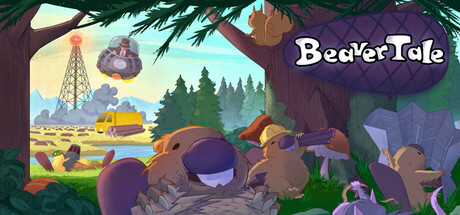
Beavertale scored 75/100 on Steam Analyzer — Good for a Adventure capsule. Top priority fix: [genre_clarity] Add a subtle gameplay hint such as a blueprint icon, resource counter, or beaver construction tool in the lower corner to signal puzzle-building mechanics and differentiate from pure story-adventure games
Capsule scores by dimension
- Genre Clarity: 7/10 — Clear casual adventure with puzzle hints. The beaver protagonist, forest setting, and construction elements (visible wooden structures on right) clearly signal a nature-themed casual adventure game. At TINY size, the beaver silhouette and forest backdrop remain recognizable, though the puzzle-platforming and strategy layers are less obvious from visuals alone. The evil corporation element (implied by machinery on left) is readable at full size but fades at small scales.
- Title Readability: 8/10 — Strong readable title with good placement. The 'BeaverTale' title uses clean white lettering positioned in the upper right with a subtle shadow outline, ensuring legibility at all sizes including TINY. The sans-serif font is sturdy and undecorative, maintaining clarity when scaled down against the darker green background. At full size and small size, the title stands apart from background clutter without competing with the focal subject.
- Contrast & Color: 8/10 — Vibrant warm palette with good separation. The composition uses warm yellows, oranges, and browns in the left industrial scene contrasting against cooler forest greens and purples on the right, creating clear visual zones. The beaver protagonist in warmer brown tones pops against the darker forest background, and the white title provides strong value contrast. At TINY size, the warm-cool color separation holds and the silhouettes remain distinct in grayscale.
- Uniqueness & Polish: 7/10 — Polished art style with some generic elements. The watercolor-like illustration style is cohesive and appealing, with detailed environments and thoughtful layering that suggests premium indie craft. However, the composition borrows familiar storybook aesthetic conventions (forest edge view, cute protagonist, pastoral vs industrial conflict framing) that align more with expected indie genre templates than with a distinctive hook. The visual execution is clean but the conceptual novelty is moderate for the genre.
- Brand Consistency: 7/10 — Consistent art style with recognizable character. The beaver character has a clear, memorable design with warm brown coloring and confident posture that should carry across store screenshots and promotional materials. The watercolor illustration style is applied consistently across foreground and background elements, creating an internal cohesive identity. The palette of forest greens, warm construction yellows, and earthy browns forms a recognizable brand signature, though the style shares similarities with other indie adventure titles.
- Composition: 8/10 — Well-layered depth with clear focal point. The composition uses strong foreground (beaver and construction), midground (forest edge), and background (tower and machinery vista) layering that creates visual depth and guides focus naturally. The beaver sits in left-center with balanced environmental storytelling on both sides—industrial development on left, pristine forest on right—effectively communicating the core conflict. At SMALL and TINY sizes, the beaver remains the primary focal point while the environmental context stays readable, with good margin safety and no critical edge-clipping.
What works
- Title placement and legibility. White 'BeaverTale' text in upper right with shadow outline maintains crisp readability from full size down to TINY without degradation or overlap with focal elements.
- Environmental storytelling composition. Left-side industrial machinery versus right-side pristine forest creates immediate visual communication of the game's core conflict and theme within a single coherent scene.
- Warm-cool color contrast. Yellow-orange machinery tones against green forest and purple shadows produce strong value separation that reads clearly at small scales and maintains silhouette integrity in grayscale.
- Consistent watercolor art direction. Unified illustration style across all scene elements creates a polished, recognizable visual identity without asset mismatch or tone inconsistency.
What hurts the capsule
- Generic storybook aesthetic. The pastoral-versus-industrial conflict framing and cute protagonist design follow familiar indie adventure conventions, reducing distinctiveness against top-tier competitors like Viewfinder or DAVE THE DIVER.
- Limited puzzle and strategy visibility. The capsule emphasizes environment and character over gameplay mechanics; the building, resource management, and puzzle-platforming elements that differentiate the title are not visually prominent at any size.
- Moderate depth at TINY scale. While composition holds at small sizes, the detailed midground forest elements begin to blur into the background at TINY size, reducing the clarity of the three-layer depth structure.
Priority fixes
- [genre_clarity] Add a subtle gameplay hint such as a blueprint icon, resource counter, or beaver construction tool in the lower corner to signal puzzle-building mechanics and differentiate from pure story-adventure games
- [uniqueness_polish] Introduce a signature visual element unique to Beavertale (custom UI badge, iconic symbol, or distinctive color accent) that sets it apart from other woodland adventure titles and reinforces brand recognition
- [contrast_color] Test the capsule in grayscale to verify the beaver and key environmental elements maintain edge clarity at TINY size; consider increasing saturation or value separation on the protagonist if midtones merge with background
Store copy priority fixes
- [feature_communication] Replace the generic 'building constructs' language with a specific example: 'build bridges from wood to cross gaps,' or 'construct walls to block hostile machines' so players understand the construction loop concretely.
- [uniqueness] Add a clear differentiator after 'classic platformer' such as 'where every action consumes resources you must carefully harvest,' or highlight how construction interacts with platforming in a way competitors do not.
- [feature_communication] Expand the resource management line in the short description with a concrete example: 'manage limited wood and gears to fuel your machines' so players grasp the economic constraint.
- [audience_targeting] Clarify difficulty and pacing: add a phrase like 'a relaxing puzzle-platformer with no time pressure' or 'a challenging test of timing and planning' to help players self-select.
Related guides
Steam app ID: 4568350 · Tags: Adventure, Platformer, Singleplayer, Strategy, Pixel Graphics