Scoring genre clarity...
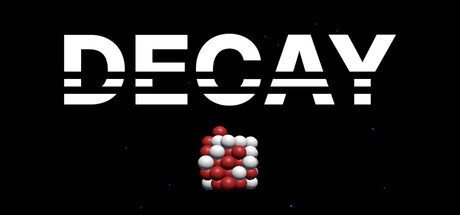
Decay capsule

Decay

Decay is an incremental game in which you are tasked with using your trusty particle launcher to create ever-larger and more unstable atomic nuclei, witnessing longer and more complex atomic decay chains and aiming to discover all the isotopes!

$3.992 user reviews
IdlerSimulationScience
RacctualityMay 26, 2026

Decay scores 72/100 — better than 34% of Idler capsules (n=1,270).

2 user reviews · $3.99 · Released May 26, 2026 · By Racctuality

Quick text summary

Decay scored 72/100 on Steam Analyzer — Good for a Idler capsule. Top priority fix: [uniqueness_polish] Introduce a signature visual motif or custom atomic cluster design that reflects Decay's incremental progression—consider layered nucleus rings, energy trails, or a stylized decay arrow to signal the core mechanic.

Capsule scores by dimension

  • Genre Clarity: 7/10 — Atomic simulation concept clear. The molecular structure visual (red and white spheres arranged in a 3D nucleus pattern) immediately communicates a physics or chemistry-based game, and combined with the title 'DECAY' strongly implies nuclear/particle simulation. At tiny size, the spherical cluster reads as a cohesive scientific object, though the specific incremental/idle mechanic is not visually apparent from the capsule alone. The genre signals are appropriate and unambiguous for the science simulation space.
  • Title Readability: 9/10 — Bold sans-serif stands out clearly. The title 'DECAY' uses a thick, geometric, all-caps sans-serif font in pure white with strategic horizontal line interruptions that add visual interest without compromising legibility. It reads perfectly at full size and maintains excellent clarity at small and tiny sizes due to high contrast against pure black background and generous letter spacing. The design is intentional and memorable rather than decorative, making it one of the strongest elements.
  • Contrast & Color: 8/10 — Strong value separation achieves pop. Pure white title and red-and-white molecular structure create crisp value separation against the solid black background, ensuring immediate visual pop in Steam browse. The red nuclei provide warm accent color that draws the eye while maintaining sufficient contrast; in grayscale, the white title and light spheres stand apart from the black void. At tiny size this silhouette remains clean and recognizable, with no muddy midtones or blending issues.
  • Uniqueness & Polish: 6/10 — Competent but minimal execution. The capsule presents a clean, focused visual without decoration or excess, which serves the incremental game's aesthetic well. However, the composition is quite sparse—essentially title, sphere cluster, and void—without additional storytelling, UI hints, or visual hooks that would distinguish it as premium or distinctive. Compared to top performers like House Flipper 2 or Techtonica, this feels functional but lacks the crafted detail or unique visual language that signals exceptional polish.
  • Brand Consistency: 5/10 — Generic science aesthetic, no icon. The red-and-white molecular cluster is a generic symbol for chemistry/physics that could apply to many science games and lacks a distinctive brand mark or character specific to Decay's identity. Without reference to in-game UI or store screenshots, there are no recognizable iconic motifs, signature colors beyond red-white-black, or visual markers that would establish brand recall. The minimalist approach fails to create a memorable identity that would be recognizable in a lineup of similar simulation games.
  • Composition: 8/10 — Balanced hierarchy with clear focus. The title anchors the top third of the image with strong visual weight, the molecular cluster centers below as the secondary focal point, and the black void provides breathing room and safe margins on all sides. At small and tiny sizes, the eye moves naturally from title to nucleus with no competing elements or clutter. The composition avoids edge-hugging or awkward cropping, with all critical elements well-positioned for Steam's display conditions.

What works

  • Excellent title contrast and legibility. The white geometric sans-serif reads flawlessly at all sizes from full to tiny, with strategic line breaks adding polish without sacrificing clarity.
  • Clean focal hierarchy at small sizes. Title and nucleus form a natural reading path with no competing elements; the composition scales well to thumbnail without losing clarity.
  • Pure-black background maximizes pop. The solid void ensures white and red elements achieve maximum contrast and silhouette separation, critical for quick-scroll recognition.

What hurts the capsule

  • Generic scientific iconography. The red-and-white nucleus is a stock symbol for chemistry with no distinctive brand identity or tie to Decay's unique incremental mechanics.
  • Minimal visual storytelling. The capsule communicates 'science game' but does not hint at idle/incremental progression, particle launching, or discovery mechanics that define the gameplay loop.
  • No premium polish or craft signals. Compared to top-tier simulation capsules, this feels sparse and template-like rather than showcasing intentional art direction or unique visual hooks.

Priority fixes

  1. [uniqueness_polish] Introduce a signature visual motif or custom atomic cluster design that reflects Decay's incremental progression—consider layered nucleus rings, energy trails, or a stylized decay arrow to signal the core mechanic.
  2. [brand_consistency] Add a subtle recurring color accent or shape language from in-game UI (if available) to create internal brand cohesion and improve recognition across store assets.
  3. [composition] Consider adding minimal contextual detail—a faint particle emitter, decay trajectory, or meter UI element—to hint at the particle launcher mechanic without adding clutter at tiny size.

Store copy priority fixes

  1. [hook_strength] Rewrite the opening to lead with the emotional payoff: 'Watch atomic nuclei decay in real-time, discover hundreds of real isotopes, and automate your entire laboratory' instead of starting with the launcher metaphor.
  2. [feature_communication] Expand the Automation and Upgrade sections with concrete examples: 'Unlock lab equipment that doubles particle output, then set multiple test chambers to run experiments automatically while you're away' to show tangible progression.
  3. [uniqueness] Promote the real science angle to the short description or first paragraph: 'Discover all 200+ real isotopes and witness actual decay chains' rather than burying it as a feature, as this is the key differentiator from generic clickers.
  4. [audience_targeting] Add a sentence explicitly positioning the game for relaxed, long-term play: 'Perfect for idle gameplay with no time pressure or competition—progress whether you're active or away.'

Related guides

Steam app ID: 4594750 · Tags: Idler, Simulation, Science, Automation, Physics