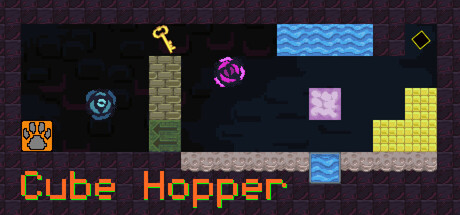
Cube Hopper scores 70/100 — better than 28% of 2D Platformer capsules (n=1,970).

Quick text summary

Cube Hopper scored 70/100 on Steam Analyzer — Good for a 2D Platformer capsule. Top priority fix: [uniqueness_polish] Add a distinctive visual hook—iconic character expression, signature color, or speedrun/speedometer element—to communicate the 'fast as possible' speedrun focus and differentiate from generic platformers.

Capsule scores by dimension

  • Genre Clarity: 7/10 — Platformer gameplay clearly signaled. The capsule immediately communicates a 2D platformer through stacked blocks, a jumping character silhouette, and level editor hints visible in the scattered cubes and building structure. At tiny size, the pixelated block aesthetic and vertical architecture read as platform-game-specific, though the 'cannot die' speedrun focus is not visually apparent from the capsule alone.
  • Title Readability: 8/10 — Bold orange title reads cleanly. The title 'Cube Hopper' is rendered in large, high-contrast orange pixelated letters against the dark background, with excellent separation and legibility at all sizes. At tiny size the text collapses slightly but remains identifiable due to bold weight and strong value contrast, though some letter detail softens.
  • Contrast & Color: 8/10 — Strong value separation throughout. Bright orange title, vivid yellow and cyan block elements, and purple/pink accent orbs all pop sharply against the dark navy-purple background with excellent silhouette clarity. The grayscale test confirms each major element—title, character, blocks, and UI hints—maintains distinct tonal separation and remains readable even when desaturated.
  • Uniqueness & Polish: 6/10 — Competent pixel art, generic premise. The retro pixel aesthetic is clean and intentional, with well-executed sprite work and consistent rendering, but the visual presentation follows expected indie platformer tropes without a distinctive hook or memorable narrative cue. The level editor concept is not visually communicated as a core selling point, keeping it in baseline territory rather than premium distinction.
  • Brand Consistency: 6/10 — Coherent pixel style, limited identity. The capsule maintains consistent low-resolution pixel rendering across all elements and uses a unified warm/cool color palette, but lacks a recognizable mascot, signature motif, or memorable visual signature that could be identified across other materials. The block and cube theme is appropriate to the title but not distinctive enough to feel like a branded identity.
  • Composition: 7/10 — Clear hierarchy with balanced layout. The title anchors the bottom-left with strong weight, while the level preview and character elements occupy the center-right with good depth layering—blocks progress from background to foreground, creating visual flow. At small and tiny sizes the focal point remains clear, though scattered UI elements (coins, doors, blocks) could feel slightly busy; the composition holds together well despite the multiple asset types.

What works

  • High-contrast orange title. The bold pixelated title pops distinctly against the dark background and remains readable even at tiny thumbnail size.
  • Clear platformer genre signal. Stacked blocks, jumping silhouettes, and vertical level architecture immediately communicate the 2D platformer category without confusion.
  • Consistent pixel art style. All assets—character, blocks, UI elements—share a unified retro aesthetic that feels intentional and well-crafted rather than asset-flipped.

What hurts the capsule

  • Generic indie platformer look. Despite solid execution, the visual presentation follows standard retro pixel conventions without a distinctive hook, memorable character, or unique selling point.
  • Level editor concept not visual. The game's core feature (level editor with online leaderboards) is not clearly communicated through the capsule imagery, reducing perceived unique value.
  • Scattered element clustering. Multiple coins, blocks, UI hints, and doors compete for attention across the composition, creating mild visual noise at small sizes.

Priority fixes

  1. [uniqueness_polish] Add a distinctive visual hook—iconic character expression, signature color, or speedrun/speedometer element—to communicate the 'fast as possible' speedrun focus and differentiate from generic platformers.
  2. [composition] Reduce background asset clutter by consolidating or muting secondary UI elements (coins, decorative blocks) so a single focal character or action moment dominates at small and tiny sizes.
  3. [brand_consistency] Introduce a recognizable mascot face, symbol, or signature palette element that ties to the game's identity and could be reused across screenshots and promotional materials for stronger brand recall.

Store copy priority fixes

  1. [hook_strength] Rewrite the opening to lead with action and energy: 'Race through impossible levels at breakneck speed—you can't die, only get faster. Compete globally on leaderboards and design levels that challenge the world.' This adds urgency and community appeal.
  2. [feature_communication] Expand the detailed description to explain how key features enhance gameplay—e.g., 'The 25 unique tiles let you design intricate obstacle courses' and 'Compete on individual leaderboards for every custom level created in Steam Workshop.'
  3. [tone_match] Inject personality and energy into the copy to match the speedrun arcade aesthetic—use action verbs, exclamation marks sparingly, and language that feels crafted for this exact game rather than generic platformer boilerplate.
  4. [uniqueness] Add a sentence contrasting this game's no-death design against traditional platformers, e.g., 'Unlike punishing precision platformers, Cube Hopper removes the death penalty so you focus entirely on pure speed and skill.'

Related guides

Steam app ID: 485850 · Tags: 2D Platformer, Indie, Platformer, Precision Platformer, Multiplayer