Scoring genre clarity...
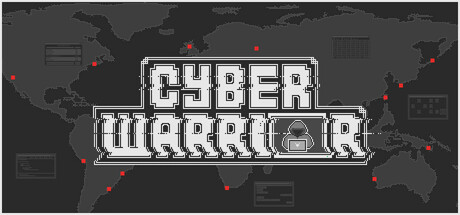
Cyber Warrior capsule

Cyber Warrior

Cyber Warrior is a hacking simulator where you play as an ex retired bureau agent recruited back to take on a powerful criminal organization. Explore dozens of interactive desktops, navigate 200+ in-game websites, solve puzzles, customize your setup and make decisions that will shape a new cyber age

$4.49Positive(39)
HackingProgrammingTyping
Dunke GamesMay 20, 2025

Cyber Warrior scores 68/100 — better than 23% of Hacking capsules (n=132).

Positive (39 reviews) · $4.49 · Released May 20, 2025 · By Dunke Games

Quick text summary

Cyber Warrior scored 68/100 on Steam Analyzer — Solid for a Hacking capsule. Top priority fix: [uniqueness_polish] Add a distinctive visual element—a stylized agent silhouette, iconic hacker motif, or recognizable UI window mockup—to differentiate from generic cyber-strategy games and communicate the desktop exploration core mechanic.

Capsule scores by dimension

  • Genre Clarity: 7/10 — Cybersecurity theme clear, genre ambiguous. The pixelated retro computer aesthetic and world map with red threat indicators strongly signal a hacking/cyber-themed game, establishing the cybersecurity subject matter effectively. However, at TINY size, the visual language doesn't immediately distinguish whether this is a simulation, strategy, puzzle game, or action title—the world map suggests strategy or real-time threat response rather than a puzzle-focused hacking simulator. The retro aesthetic reads clearly but doesn't uniquely communicate the specific blend of desktop exploration and website navigation that defines the gameplay.
  • Title Readability: 8/10 — Bold blocky title, readable at all sizes. The 'CYBER WARRIOR' title uses a strong, chunky white outlined sans-serif font positioned in the center with clear letterform separation and high contrast against the dark background. The font maintains legibility even at TINY size due to thick strokes and distinct character shapes; the outline provides additional clarity. However, the title placement directly over mid-tones of the map means it doesn't sit on a fully clean background region, which slightly reduces the polish at full resolution.
  • Contrast & Color: 7/10 — Good value separation, red accents effective. The white title and bright red threat indicators pop distinctly against the dark gray background, creating strong value separation in both color and grayscale modes. The red dots draw the eye and reinforce the cybersecurity theme without overwhelming the composition. At SMALL and TINY sizes, the red accent dots maintain visibility, though the overall world map backdrop reads as relatively flat mid-gray, limiting dramatic depth contrast in the main visual field.
  • Uniqueness & Polish: 6/10 — Competent retro aesthetic, lacks distinctive hook. The retro pixelated style and minimalist world map design are executed cleanly with consistent rendering and intentional typography, meeting baseline polish standards. The concept of a cyber-themed game with a global threat map is thematically appropriate but visually generic—many strategy and simulation games use similar world map layouts and dark, muted color schemes. At TINY size, nothing stands out as immediately distinctive or memorable compared to other indie sims; the capsule reads as 'competent cyber game' rather than 'must-play unique experience.'
  • Brand Consistency: 6/10 — Coherent retro style, limited identity signals. The pixel art style, muted color palette, and minimalist composition are internally consistent and reinforce a cohesive retro-hacker aesthetic without jarring inconsistencies. However, there are no distinctive brand motifs, iconic characters, signature UI patterns, or memorable visual elements that would make this capsule recognizable as 'Cyber Warrior' versus any other hacking simulator game. The style is appropriate but not proprietary; without seeing additional store screenshots, this capsule alone does not establish a unique brand fingerprint.
  • Composition: 7/10 — Centered title, clear hierarchy at scale. The composition places the title in strong center hierarchy over a world map background with red threat indicators scattered across the field, creating a clear primary focal point. The layout reads well from FULL down to SMALL size; the title remains the dominant element and the red accents guide secondary attention without clutter. At TINY size, the composition remains legible, though the world map becomes an abstracted texture and the red dots merge into visual noise, slightly reducing the strategic theme impact.

What works

  • Strong title contrast and readability. White chunky outlined font maintains clarity at all viewport sizes and creates immediate visual hierarchy.
  • Thematic color and element choice. Red threat indicators on a world map effectively reinforce the cybersecurity and global-scope premise.
  • Consistent retro-minimalist execution. Pixel art style and muted palette are cohesive throughout, conveying deliberate design intent rather than laziness.

What hurts the capsule

  • Generic visual treatment. The world map and dark UI aesthetic are common in strategy and simulation games, offering no distinctive visual hook.
  • Limited thematic specificity. The capsule signals 'cyber game' broadly but doesn't visually communicate the unique hacking simulator + desktop exploration + puzzle-solving blend.
  • Flat mid-tone background. The gray world map lacks depth, dimensional contrast, or layering that would make the composition feel dynamic or premium.

Priority fixes

  1. [uniqueness_polish] Add a distinctive visual element—a stylized agent silhouette, iconic hacker motif, or recognizable UI window mockup—to differentiate from generic cyber-strategy games and communicate the desktop exploration core mechanic.
  2. [contrast_color] Introduce a secondary accent color or lighting effect (e.g., blue glow, scan lines, terminal green highlights) to add visual depth and make the composition feel less flat and more immersive at SMALL and TINY sizes.
  3. [composition] Layer the world map with foreground UI elements or a subtle character presence to create visual depth and make the focal point more engaging than a flat background.

Store copy priority fixes

  1. [feature_communication] Add a paragraph explaining the core gameplay loop—how do hacking and puzzle-solving actually work? Show a concrete example of an interaction (e.g., 'decrypt a server, find evidence, then interrogate the suspect').
  2. [uniqueness] Insert a differentiating claim in the short description such as 'the only hacking sim where your moral choices rewrite your agency's mission' or highlight what makes the puzzle design or website variety special.
  3. [audience_targeting] Clarify the skill floor and target audience—is this for casual detective-game fans, programming learners, or both? Add a line like 'No coding experience needed' or 'Challenge your logic and programming skills' depending on the actual game.
  4. [feature_communication] Dedicate a sentence or bullet point to explain the customization and choice systems—what can you customize, and how do choices impact the narrative or mission outcomes?

Related guides

Steam app ID: 726980 · Tags: Hacking, Programming, Typing, Detective, Logic