Scoring genre clarity...
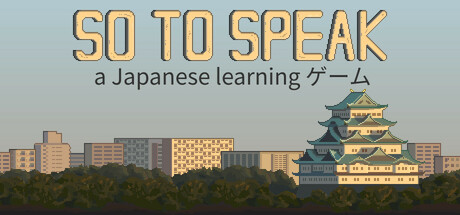
So to Speak capsule

So to Speak

Can you learn Japanese by solving puzzles? So to Speak is a game about wandering in Japan, looking at signs, overhearing conversations, and using context clues in the environment to figure out what it all means. No background in Japanese is assumed.

$17.99Very Positive(108)
Language LearningEducationPuzzle
Erik AndersenMar 31, 2025

So to Speak scores 68/100 — better than 19% of Steam capsules we've analysed (n=22,373).

Very Positive (108 reviews) · $17.99 · Released Mar 31, 2025 · By Erik Andersen

Quick text summary

So to Speak scored 68/100 on Steam Analyzer — Solid for a Language Learning capsule. Top priority fix: [contrast_color] Increase saturation of the castle's golden tones or add a warmer accent color (amber, orange) to the sky gradient to improve pop against the Steam dark background and maintain distinctiveness at SMALL size.

Capsule scores by dimension

  • Genre Clarity: 7/10 — Japanese cultural exploration game. The Japanese castle (pagoda) and traditional architecture immediately signal a Japan-themed game, and the subtitle in Japanese characters reinforce the language learning context. At TINY size, the castle silhouette remains recognizable and the Japanese text is visible, though the exact genre (puzzle/simulation/adventure) is not entirely clear from visuals alone—it reads more as a cultural exploration game than a specific gameplay type.
  • Title Readability: 8/10 — Clear title with readable subtitle. The main title 'So to Speak' is rendered in bold, clean sans-serif type with strong contrast against the light blue-gray background and does not suffer legibility loss at smaller sizes. The Japanese subtitle 日本語を学ぶゲーム is readable at full size and remains distinguishable at SMALL size, though it becomes soft at TINY size. The title placement in the upper-center avoids competition with the castle focal point.
  • Contrast & Color: 7/10 — Good separation with warm accents. The castle's golden-cream and dark teal roofing create moderate contrast against the muted blue-gray sky background, with the castle silhouette reading clearly in grayscale. The warm yellow-beige building tones pop slightly against the cool background, and at TINY size the castle maintains enough dark-to-light separation to remain a distinct shape. However, the overall palette is relatively muted and cool-toned, which reduces the 'pop' factor compared to higher-saturation designs.
  • Uniqueness & Polish: 6/10 — Competent but slightly generic approach. The Japanese castle architectural illustration is well-executed with good detail work and a pixel-art or stylized digital painting aesthetic that matches the indie game vibe. However, the treatment feels like a safe, expected visual choice for a Japan-themed game rather than a distinctive hook—the castle is a recognizable symbol but does not communicate the unique puzzle-solving or context-clue gameplay loop that sets this game apart from other cultural exploration titles.
  • Brand Consistency: 6/10 — Cohesive Japan-focused visual identity. The design is internally consistent with a muted, warm-earth palette dominated by cream, gold, teal, and gray tones, and the illustration style is uniform throughout. The Japanese subtitle establishes a clear cultural brand identity that ties directly to the game's core mechanic (learning Japanese), but there are no iconic character motifs, signature symbols, or memorable visual hooks that would make this capsule immediately recognizable on repeat viewing.
  • Composition: 7/10 — Balanced layout with clear focal point. The castle is positioned right-of-center as the primary focal point, with the title anchored safely at top-center and the Japanese subtitle directly below; the urban building silhouettes in the foreground provide layered depth. At SMALL size the composition remains readable with the castle as the clear subject, though at TINY size the architectural detail softens and the supporting buildings become visual noise. The layout respects safe margins and does not place critical elements at edges that would be cropped.

What works

  • Strong title contrast and legibility. Bold sans-serif 'So to Speak' reads clearly at all sizes and sits on a controlled background region with excellent value separation from the light sky.
  • Japan-specific visual context. The castle and Japanese subtitle immediately communicate the game's cultural theme and learning focus, making the unique premise clear at first glance.
  • Layered depth and composition. Foreground buildings, midground castle, and background sky create visual hierarchy that supports the focal point and maintains interest across different viewing sizes.

What hurts the capsule

  • Generic castle-as-visual-anchor approach. While well-illustrated, the castle is a safe, expected symbol for Japan-themed games and does not visually communicate the distinctive puzzle-solving or eavesdropping gameplay loop.
  • Muted palette lacks pop and memorability. The cool gray-blue sky and warm but desaturated building tones blend together at smaller sizes, reducing visual impact and making the capsule less distinctive in a scrolling Steam list.
  • No iconic character or signature motif. The design relies entirely on architectural scenery without introducing a memorable visual symbol, character, or UI element that could serve as a brand recognition hook.

Priority fixes

  1. [contrast_color] Increase saturation of the castle's golden tones or add a warmer accent color (amber, orange) to the sky gradient to improve pop against the Steam dark background and maintain distinctiveness at SMALL size.
  2. [uniqueness_polish] Introduce a subtle human silhouette or character element (e.g., a figure looking at a sign in the foreground) to visually hint at the context-clue and eavesdropping gameplay and differentiate from generic Japan-themed games.
  3. [genre_clarity] Add a small visual UI element (e.g., a speech bubble, magnifying glass, or written character overlay) in the bottom corner to signal the puzzle-solving and language-learning mechanic more directly.

Store copy priority fixes

  1. [feature_communication] Add a paragraph explaining the core loop in more detail: 'To solve a word, you find matching clues in the environment—a sign, a character's dialogue, or an English description. Once matched, the word unlocks and appears in your vocabulary bank.' This removes ambiguity about success conditions.
  2. [audience_targeting] Insert a sentence clarifying audience: 'Best for people who want to learn Japanese naturally through exploration rather than traditional study, or for anyone curious about language and puzzle games.' This helps self-selection.
  3. [feature_communication] Add a line about progression structure: 'The game unfolds as you wander—there are no levels or chapters, just a continuous flow of discovery.' This sets expectations about pacing and agency.

Related guides

Steam app ID: 1779030 · Tags: Language Learning, Education, Puzzle, Simulation, Wholesome