Scoring genre clarity...
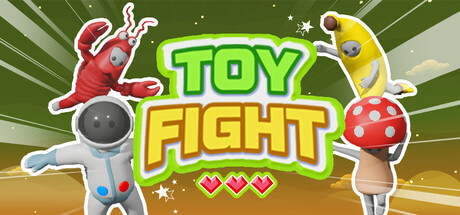
Toy Fight capsule

Toy Fight

《Toy Fight》is a fun-filled multiplayer battle game. When several players are sent onto the battlefield at the same time, an amusing 'comedy show' begins! Make good use of the terrain and randomly appearing weapons to engage in a fierce fight!

$1.99
Zoom GamesMay 29, 2025

Toy Fight scores 80/100 — better than 95% of RPG capsules (n=3,544).

$1.99 · Released May 29, 2025 · By Zoom Games

Quick text summary

Toy Fight scored 80/100 on Steam Analyzer — Good for a RPG capsule. Top priority fix: [uniqueness_polish] Add a subtle signature visual element or specific game mechanic icon (e.g., terrain feature, weapon silhouette, or special effect) that hints at the comedy/chaos angle and differentiates from generic multiplayer action games.

Capsule scores by dimension

  • Genre Clarity: 8/10 — Clear multiplayer action game. The cartoonish toy characters (red rocket, yellow banana, gray robot, red mushroom) immediately signal a lighthearted action game with strong multiplayer battle vibes. The dynamic poses, stars, and energetic composition clearly communicate an arcade-style combat experience. At tiny size, the character silhouettes and bright color diversity still read as a fun action title, though the specific 'toy' theme becomes less distinct.
  • Title Readability: 9/10 — Excellent legibility at all sizes. The bold two-tier title 'TOY FIGHT' uses a thick sans-serif font with strong green and yellow outlines that create excellent contrast against the background. The white internal fill ensures it remains sharp at full, small, and tiny sizes without any collapse. Spacing is generous and placement is centered on a clean control area, making it instantly readable even in quick scroll conditions.
  • Contrast & Color: 9/10 — Strong pop and silhouette clarity. The bright neon green and yellow typography paired with vivid toy character colors (red, yellow, gray, crimson) create excellent value separation against the warm tan-to-green gradient background. The white outlines on characters and the high-saturation palette ensure every element pops in a squint test and reads clearly at tiny size. The radial starburst background adds depth without muddying the foreground subjects.
  • Uniqueness & Polish: 7/10 — Polished execution with familiar charm. The capsule demonstrates clean craft with well-rendered toy assets, crisp outlines, and cohesive visual effects (stars, motion lines, gradient background). The playful character roster and comedic tone signal a distinctive multiplayer experience. However, the core concept—cute objects fighting—is a familiar indie game formula, and the composition reads more as a generic 'fun multiplayer game' rather than a unique selling point.
  • Brand Consistency: 7/10 — Consistent toy aesthetic, generic palette. The capsule maintains a unified bright, cartoonish toy style with clean outlines and consistent rendering across all four character assets, which aligns well with the game's core identity. The neon green and yellow branding is memorable and would be recognizable across marketing materials. However, without access to the 8 store screenshots, the internal consistency cannot be fully verified, though the visual language appears cohesive and intentional.
  • Composition: 8/10 — Strong hierarchy, balanced focal points. The four toy characters are evenly distributed around the centered 'TOY FIGHT' title, creating a balanced composition with the title as the clear primary focus. The radial starburst background and motion lines guide attention inward, and all elements sit safely away from edges with good margin resilience. At tiny size, the arrangement still reads clearly with the title dominant and characters framing it naturally.

What works

  • Title readability is exceptional. The thick outlined sans-serif 'TOY FIGHT' text with green and yellow fills remains sharp and legible across all sizes including tiny thumbnails.
  • Vibrant color contrast against Steam background. Bright neon greens, yellows, reds, and crimsons pop powerfully against the dark #1b2838 Steam interface with strong value separation in both full and grayscale views.
  • Clear multiplayer action messaging. The four distinct toy characters in dynamic poses with stars and motion effects immediately communicate a lighthearted, chaotic multiplayer battle experience.
  • Well-balanced composition with safe margins. Characters and title are distributed evenly with generous spacing from edges, ensuring no content loss during Steam's typical crop operations.

What hurts the capsule

  • Generic multiplayer concept premise. While well-executed, cute objects fighting is a common indie game trope that lacks a distinctive visual hook or unique selling point beyond 'fun multiplayer game.'
  • Limited brand identity differentiation. The toy aesthetic and neon color palette, while cohesive, do not clearly distinguish this game from dozens of other colorful indie action titles without deeper visual storytelling.
  • Specific toy theme dilutes at tiny size. At thumbnail scale, the distinction between 'toys' and generic cartoon characters becomes less apparent, reading more as a colorful party game rather than specifically toy-themed.

Priority fixes

  1. [uniqueness_polish] Add a subtle signature visual element or specific game mechanic icon (e.g., terrain feature, weapon silhouette, or special effect) that hints at the comedy/chaos angle and differentiates from generic multiplayer action games.
  2. [brand_consistency] Verify that the bright neon green and yellow palette is consistently used across all 8 store screenshots and loading screens to build a recognizable brand signature.
  3. [genre_clarity] Consider adding a small environmental detail (e.g., sandbox, battle arena, or household setting) in the background to strengthen the 'toy battle' identity at all viewing sizes.

Store copy priority fixes

  1. [hook_strength] Rewrite the short description to lead with a specific, energetic hook: 'Toy Fight is a chaotic 2-player couch combat game where you pummel friends with wrenches, bananas, and whatever the stage throws at you.' This is concrete, fun, and immediately clarifies scope and tone.
  2. [uniqueness] Add a differentiating line in the detailed description that explains what makes Toy Fight distinct—e.g., 'Unlike other brawlers, every match feels different thanks to randomized weapons, hazards, and map rotations that reward adaptation over memorization.' This converts generic features into a unique pitch.
  3. [audience_targeting] Explicitly state the ideal player in the short description or opening of detailed description: 'Perfect for local co-op with friends, family game nights, or a silly break from competitive games.' This immediately signals who should buy.
  4. [feature_communication] Move the two-player limitation to the very first line of the short description or create a prominent note near the top—e.g., 'Two-player local multiplayer (or solo with dual-control challenge mode).' Currently, this critical information is buried and could cause buyer regret.

Related guides

Steam app ID: 3432130 · Tags: RPG, Cartoon, Family Friendly, Local Multiplayer, Local Co-Op