Quick text summary
Ghost In The Feed scored 70/100 on Steam Analyzer — Good for a Psychological Horror capsule. Top priority fix: [uniqueness_polish] Add a distinctive visual element such as an anomaly effect, glitch artifact, or unique skull variation that hints at the paranormal detection core mechanic and differentiates the game from generic horror titles.
Capsule scores by dimension
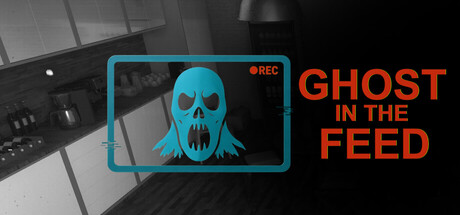
- Genre Clarity: 7/10 — Horror surveillance gameplay clear. The cyan skull on a monitor screen with REC indicator immediately signals horror and surveillance mechanics. At SMALL size the monitor-within-frame concept and spectral skull remain recognizable, though at TINY size the skull detail softens but the monitor frame persists as a clear genre cue. The setup clearly communicates a paranormal monitoring game rather than action-combat horror.
- Title Readability: 8/10 — Bold orange title readable throughout. GHOST IN THE FEED is rendered in large, high-contrast orange-red sans-serif text positioned right of the monitor frame on dark background. The title maintains full legibility at SMALL size and remains mostly readable at TINY despite slight compression. Strategic placement away from the busy monitor graphic prevents overlap and collision.
- Contrast & Color: 8/10 — Strong cyan-orange pop on dark. The cyan skull and monitor frame create sharp value separation against the desaturated grayscale industrial background, while the orange title punches through with high saturation and lightness. At TINY size the cyan-orange combination still reads distinctly even when squinting. The grayscale background ensures no competing color noise.
- Uniqueness & Polish: 6/10 — Competent but familiar horror trope. The cyan skull-on-monitor concept is clean and well-executed with a teal outline and consistent rendering, but skull iconography is common in horror indie games. The execution is polished without rough edges, yet it lacks a distinctive visual hook or memorable art direction that sets it apart from other paranormal indie titles. The surveillance monitor framing is thematic but not visually surprising.
- Brand Consistency: 6/10 — Minimal identity, no signature motif. The capsule establishes cyan and orange as the color identity and the monitor-frame as a recurring compositional element, but there are no character, symbol, or palette cues that would be instantly recognizable on a second viewing. The design is internally coherent but does not create a memorable brand signature that distinguishes Ghost in the Feed from other horror surveillance games.
- Composition: 7/10 — Clear hierarchy, balanced layout. The monitor frame sits left-center as the primary focal point with the title anchoring the right side, creating a balanced L-shaped composition that reads well at all sizes. The skull-on-screen draws immediate eye contact without clutter, and safe margins prevent edge cropping issues. At TINY size the left-right split remains legible, though the monitor detail becomes a secondary silhouette.
What works
- Title contrast and placement. Large, high-saturation orange text positioned cleanly on dark background maintains readability even at tiny size without competing with the monitor graphic.
- Monitor frame clarity at small sizes. The cyan-outlined monitor silhouette remains recognizable as the primary subject across all viewing sizes and immediately communicates surveillance mechanics.
- Color palette restraint. Limiting the design to cyan, orange, and grayscale tones prevents visual noise and ensures the title and icon both pop distinctly against the dark Steam background.
What hurts the capsule
- Generic skull iconography. Cyan skulls are a common horror cliché; the design executes it cleanly but offers no distinctive artistic style or memorable visual hook that stands out in a crowded indie horror market.
- Lack of gameplay visual storytelling. The capsule communicates horror and surveillance but does not hint at the core memory and vigilance mechanics or the specific camera-anomaly gameplay that differentiates Ghost in the Feed from similar titles.
- No recognizable brand identity cues. The capsule has no iconic character, signature symbol, or distinctive art direction that would make the game instantly recognizable if the title were removed or obscured.
Priority fixes
- [uniqueness_polish] Add a distinctive visual element such as an anomaly effect, glitch artifact, or unique skull variation that hints at the paranormal detection core mechanic and differentiates the game from generic horror titles.
- [brand_consistency] Develop a recognizable icon or motif (e.g., a stylized anomaly symbol, a signature UI element from the camera feed) that can anchor brand identity across store pages and future marketing.
- [composition] Consider adding a secondary visual layer such as subtle camera feed distortion, floating UI elements, or a paranormal silhouette in the background to add depth and reinforce the surveillance-horror fusion without cluttering the design.
Store copy priority fixes
- [uniqueness] Add a sentence that explicitly differentiates the game: e.g., 'Unlike traditional hidden-object games, Ghost in the Feed forces you to actively switch between specialized camera modes to expose anomalies that actively resist detection.'
- [audience_targeting] Clarify the intended player archetype in the opening: e.g., 'For players who love the tension of Five Nights at Freddy's combined with the puzzle-solving of observation games, Ghost in the Feed delivers...'
- [hook_strength] Replace 'Dive into the supernatural atmosphere' with a more active, specific verb that leads with core tension: e.g., 'Hunt spectral anomalies across 14 haunted locations using five specialized camera modes—but miss a single detail and the night becomes lethal.'
- [tone_match] Remove or rewrite the 'Why You'll Love It' section to maintain the darker, more grounded tone of the feature list rather than reverting to corporate marketing language.
Related guides
Steam app ID: 3473390 · Tags: Psychological Horror, Hidden Object, Puzzle, Atmospheric, Mystery