Scoring genre clarity...
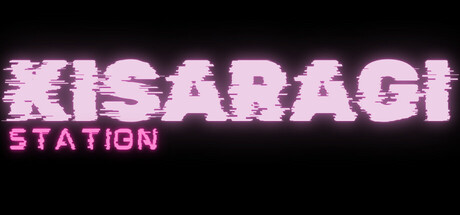
Kisaragi Station capsule

Kisaragi Station

In this spine-chilling indie horror game, you must navigate through a landscape teetering on the edge of reality and nightmare, in a race against time to rescue your sister, Kioko, from the clutches of the malevolent Akumu. Will you prevail?

$2.991 user reviews
RPGAction RPG2D Platformer
Audrey Rose Productions, Emily ForsterFeb 24, 2025

Kisaragi Station scores 77/100 — better than 84% of RPG capsules (n=3,544).

1 user reviews · $2.99 · Released Feb 24, 2025 · By Audrey Rose Productions

Quick text summary

Kisaragi Station scored 77/100 on Steam Analyzer — Good for a RPG capsule. Top priority fix: [genre_clarity] Add a subtle silhouette, environmental detail, or icon suggesting RPG/adventure gameplay (e.g., a character outline, map element, or HUD motif) to clarify genre beyond horror.

Capsule scores by dimension

  • Genre Clarity: 7/10 — Horror atmosphere clear, genre ambiguous. The glitchy pink-purple text treatment and dark background immediately signal horror and digital unease, which aligns with the game's reality-bending premise. However, the RPG elements are not visually communicated—at tiny size, this reads as pure horror/thriller without gameplay type clarity, and a viewer would not intuit combat, progression, or party mechanics from the capsule alone.
  • Title Readability: 8/10 — Bold glitchy text reads well small. The title 'KISARAGI' uses a thick, distressed font with strong letter spacing that maintains legibility at small and tiny sizes despite the intentional glitch effect. The magenta-pink color contrasts adequately against the dark background. The subtitle 'STATION' is smaller but still readable at small size, though at tiny size it becomes soft; the primary title carries the read alone.
  • Contrast & Color: 8/10 — Strong magenta-pink pops cleanly. The bright magenta-pink text has excellent value separation from the near-black background, creating a high-contrast silhouette that survives squinting and maintains legibility in grayscale. The glitch effect adds texture variation without collapsing the overall contrast, and the saturation is deliberately bold and reads as premium indie horror branding rather than muddled.
  • Uniqueness & Polish: 8/10 — Distinctive glitch aesthetic, premium feel. The intentional pixel-distortion and color-shift effect on the text elevates this beyond generic horror text; it communicates the game's core mechanic of reality-breaking and nightmare logic visually. The treatment feels deliberate and craft-conscious, not random, and immediately distinguishes it from standard horror game capsules while remaining readable and professional.
  • Brand Consistency: 7/10 — Consistent glitch motif, limited identity. The magenta-pink glitch treatment is a cohesive internal signal and likely repeatable across marketing materials, creating a recognizable visual identity for the game's surreal horror theme. However, without supporting visual elements—no character, no environment, no iconic symbol—the identity is primarily typographic rather than rich; the brand relies on effect rather than a memorable character or location cue.
  • Composition: 8/10 — Centered text, clean hierarchy, balanced. The title dominates the top-center of the composition with clear hierarchy, subtitle below, and ample dark space surrounding, creating a clean, focused read that does not compete with clutter. The centered alignment is confident and works at all sizes; at tiny size, only the primary 'KISARAGI' text remains strong, but that is sufficient. No important elements risk edge-crop loss.

What works

  • High contrast magenta text. The bright pink glitch effect pops dramatically against the dark background and reads cleanly even at tiny thumbnail size.
  • Intentional glitch aesthetic. The pixel-distortion effect communicates the game's reality-bending horror theme and feels premium rather than cheap, differentiating it from generic horror capsules.
  • Legible title treatment. Thick, well-spaced letterforms maintain readability across full, small, and tiny sizes without collapsing into illegibility.
  • Clean centered composition. Simple hierarchy with no competing elements or wasted space allows the title to command attention without distraction.

What hurts the capsule

  • No gameplay or genre iconography. The capsule does not visually communicate RPG mechanics, survival elements, or combat—viewers infer only horror/thriller tone.
  • Limited visual identity beyond text. No character, setting, creature, or environmental detail present; the brand identity rests entirely on typography rather than memorable imagery.
  • Subtitle softness at tiny size. While 'STATION' is readable at small size, it becomes too faint to confidently read at thumbnail scale, forcing reliance on the main title alone.

Priority fixes

  1. [genre_clarity] Add a subtle silhouette, environmental detail, or icon suggesting RPG/adventure gameplay (e.g., a character outline, map element, or HUD motif) to clarify genre beyond horror.
  2. [brand_consistency] Introduce a recurring visual motif such as an iconic symbol, character silhouette, or environmental landmark that reinforces the game's core identity and improves memorability.
  3. [composition] Consider a layered background with depth—mist, distorted landscape, or abstract shapes—behind the text to add visual richness and make the capsule stand out in a crowded store browser.

Store copy priority fixes

  1. [genre_clarity] Explicitly state the role of platforming and action in the copy—e.g., 'Navigate eerie platforming sections and tactical turn-based battles with Shinigami' to reconcile the tag confusion.
  2. [feature_communication] Add 2–3 concrete feature sentences after the premise: explain what amulets do, how battles progress, and what 'helping lost souls' means mechanically—e.g., 'Collect and equip amulets to unlock new abilities in turn-based combat; help lost souls unlock story branches and rewards.'
  3. [hook_strength] Replace the generic opening with a more specific emotional or mechanical hook—e.g., 'Step into Limbo, a realm between life and death where every choice reshapes your path' or 'Master turn-based tactics and discover the truth behind your sister's disappearance' to stand out from stock horror language.
  4. [uniqueness] Add a sentence explaining how the Japanese mythology setting or the Limbo world differentiates this game—e.g., 'Explore a mythology-inspired afterlife with turn-based tactics unique to this game' or a specific comparison to competitor titles.

Related guides

Steam app ID: 3481640 · Tags: RPG, Action RPG, 2D Platformer, Turn-Based Tactics, 2D