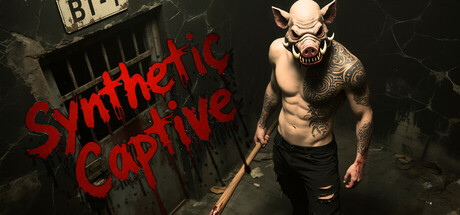
Synthetic Captive scores 68/100 — better than 23% of Horror capsules (n=3,118).

Quick text summary

Synthetic Captive scored 68/100 on Steam Analyzer — Solid for a Horror capsule. Top priority fix: [uniqueness_polish] Introduce a distinctive visual hook—such as a unique costume detail, environment signature, or thematic symbol—that differentiates the protagonist and creates memorable brand recognition.

Capsule scores by dimension

  • Genre Clarity: 7/10 — Horror stealth with human antagonist. The shirtless muscular humanoid with demonic features and aggressive posture signals action-horror or psychological thriller, supported by the dungeon setting and industrial architecture. At tiny size, the character silhouette and red warning text still convey threat and confinement. However, the first-person stealth mechanic is not visually communicated, making the core gameplay intent slightly ambiguous.
  • Title Readability: 8/10 — Red text readable, minor decay at tiny. The large red 'Synthetic Captive' text has strong contrast against the dark background and maintains legibility at small size due to high saturation and letter spacing. At tiny size, the serif-like letterforms remain distinguishable, though fine details blur slightly. The positioning across the upper-center region avoids heavy texture overlap.
  • Contrast & Color: 8/10 — Strong red-dark separation, clear silhouette. The vibrant red title and character form stark value contrast against the #1b2838 dark background, with the pale skin tone of the antagonist providing additional mid-tone separation. In grayscale, the character silhouette remains distinct from background architecture. The overall palette is well-controlled with no muddy blending.
  • Uniqueness & Polish: 6/10 — Competent horror aesthetic, generic execution. The muscular demon character and industrial dungeon environment communicate psychological horror effectively, but the visual treatment feels familiar within action-horror genre conventions. The craft is solid with good lighting and character detail, yet lacks a distinctive visual hook or memorable signature element that would elevate it above standard horror game presentation.
  • Brand Consistency: 5/10 — Limited identity cues, no iconic symbol. The antagonist design and red text color appear consistent with the game's dark thriller tone, but no distinctive brand motif, signature palette, or recognizable character icon emerges that would build recognition across multiple store assets. The presentation reads as genre-appropriate rather than unique to Synthetic Captive's identity.
  • Composition: 7/10 — Clear focal point, safe margins preserved. The shirtless antagonist anchors the right-center composition with the red title balancing from the upper-left, creating a clear visual hierarchy. The character occupies prime real estate without crowding edges, and the dark background provides breathing room. At small and tiny sizes, the focal point remains strong, though the industrial detail in the background adds minor clutter.

What works

  • Strong title contrast. Red 'Synthetic Captive' text pops decisively against the dark background and remains readable at all viewing sizes.
  • Clear antagonist focal point. The muscular demonic character commands immediate attention with good silhouette separation and skin tone lift.
  • Genre-appropriate tone. The psychological horror and dungeon confinement visuals align well with the game's stealth-escape premise.

What hurts the capsule

  • Generic horror execution. The muscular demon archetype and industrial dungeon lack distinctive visual originality or a memorable brand signature.
  • Stealth mechanic invisible. The first-person perspective and evasion-focused gameplay are not visually communicated, leaving genre clarity ambiguous.
  • No iconic brand identity. The capsule lacks a recognizable symbol, character mark, or signature visual element that would distinguish it from other action-horror games.

Priority fixes

  1. [uniqueness_polish] Introduce a distinctive visual hook—such as a unique costume detail, environment signature, or thematic symbol—that differentiates the protagonist and creates memorable brand recognition.
  2. [genre_clarity] Add subtle stealth or containment visual cues (e.g., shadows, cell elements, or warning symbols) to communicate first-person escape mechanics without muddying the antagonist focal point.
  3. [brand_consistency] Develop a signature color accent or motif beyond red and dark tones to establish internal visual language consistency across store assets.

Store copy priority fixes

  1. [hook_strength] Replace the opening sentence with an action verb or immediate threat: 'Trapped in an ancient dungeon where every shadow hunts you and escape costs lives' to frontload emotional urgency.
  2. [uniqueness] Add a concrete differentiator after the features list: explain what makes this dungeon's artificial threat (the psychological horror element) mechanically or narratively distinct—e.g., how the enemies reflect player psychology or how the dungeon layout challenges stealth in novel ways.
  3. [feature_communication] Expand the detailed description beyond the repeated short description; add a second paragraph or section describing game length, difficulty options, or how the story unfolds to answer 'what is the full experience.'
  4. [audience_targeting] Add a one-sentence audience signal at the end: 'Ideal for stealth horror veterans seeking a minimal-combat, high-tension survival challenge' to clarify player type and difficulty expectation.

Related guides

Steam app ID: 3685850 · Tags: Horror, Psychological Horror, Survival Horror, First-Person, Atmospheric