Scoring genre clarity...
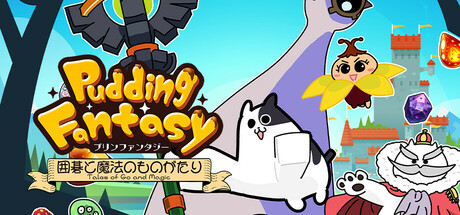
Pudding Fantasy: Tales of Go and Magic capsule

Pudding Fantasy: Tales of Go and Magic

A Go RPG where you can naturally learn Go while having fun! ♪ The legendary staff "Honin Rod" sealed away the Demon King. But the seal broke due to the staff's deterioration. The resurrected Demon King brought forth monsters called "Gomono," throwing the kingdom into chaos.

Free to PlayPositive(16)
RPGAdventurePuzzle
KANITABETAI, LLCJun 10, 2025

Pudding Fantasy: Tales of Go and Magic scores 68/100 — better than 23% of RPG capsules (n=3,544).

Positive (16 reviews) · Free to Play · Released Jun 10, 2025 · By KANITABETAI, LLC

Quick text summary

Pudding Fantasy: Tales of Go and Magic scored 68/100 on Steam Analyzer — Solid for a RPG capsule. Top priority fix: [genre_clarity] Add a visual representation of Go board mechanics (stone, grid pattern, or puzzle element) to communicate the unique educational gameplay hook and differentiate from generic fantasy competitors.

Capsule scores by dimension

  • Genre Clarity: 7/10 — Colorful fantasy RPG with unclear Go mechanic. The capsule clearly communicates a whimsical fantasy adventure with bright character designs, magical elements, and RPG-style iconography. However, the Go board game mechanic that defines the core gameplay is completely invisible—at TINY size, this reads as a generic fantasy indie RPG with no hint of the educational board game hook that differentiates it from competitors like Balatro or Slay the Princess.
  • Title Readability: 7/10 — Bold yellow title with readable English and Japanese. The 'Pudding Fantasy' title uses strong yellow letterforms with orange outline against bright cyan sky, creating good contrast at full size. The placement on the upper-left background region avoids direct competition with character elements. However, at TINY size the Japanese tagline becomes illegible and the thick stylized font starts to blur, making quick identification rely almost entirely on the English wordmark.
  • Contrast & Color: 8/10 — Vibrant palette with excellent value separation. The bright cyan sky, bold yellows, oranges, purples, and whites create strong separation from the dark Steam background. Character silhouettes are clean and readable even at small sizes due to high saturation and clear edge definition. At TINY size the design maintains legibility through light-value foreground elements against cooler background tones, though some mid-tone details in the robot and creature designs blur slightly.
  • Uniqueness & Polish: 6/10 — Competent cartoon style with generic fantasy presentation. The art style is polished and cohesive with cute character designs and clean line work, but the overall concept—colorful fantasy characters fighting monsters—does not stand out from dozens of similar indie RPGs. The whimsical pudding-themed aesthetic and vibrant palette are pleasant, but the capsule communicates nothing about what makes this game mechanically unique (the Go learning system), resulting in a competent but generic fantasy game impression.
  • Brand Consistency: 6/10 — Consistent cartoon style, no memorable identity anchor. The art direction is internally cohesive with uniform character design language, consistent outline style, and a harmonious color palette across all visible elements. However, there are no iconic symbols, recurring motifs, or signature visual hooks that would make this recognizable as 'Pudding Fantasy' specifically rather than any other cute indie fantasy game. The pudding theme is mentioned in the title but not visually reinforced through memorable branding elements.
  • Composition: 7/10 — Clear focal hierarchy with title-heavy upper region. The design uses a three-part arrangement: yellow title on left, mechanical robot on far left, characters and creatures spread across right side. The focal point shifts between the title and the various characters, which works at full size but creates some scattered attention. At SMALL and TINY sizes the composition remains readable, though the right side becomes crowded and secondary elements (smaller creatures, background elements) start to merge without clear supporting hierarchy.

What works

  • Strong color contrast against dark Steam background. Bright cyan, yellow, and saturated character colors pop immediately and maintain silhouette clarity even at tiny sizes.
  • Clean character design and art polish. Line work is consistent, character proportions are appealing, and the overall aesthetic feels intentional and well-crafted rather than asset-store generic.
  • Readable English title placement. Yellow 'Pudding Fantasy' text sits on controlled background with good outline contrast, avoiding overlap with busy character elements.

What hurts the capsule

  • Core Go mechanic completely invisible. Nothing in the visual design hints at the board game learning system that differentiates this from standard fantasy RPGs, missing the primary selling point.
  • Generic fantasy presentation lacks uniqueness. Despite polish, the capsule communicates 'cute fantasy RPG' rather than establishing what makes Pudding Fantasy distinctive or memorable.
  • Japanese tagline illegible at small sizes. The subtitle below the title becomes unreadable at TINY size, wasting valuable space that could reinforce the game's identity.
  • Right side composition becomes crowded and scattered. Multiple characters and creatures on the right lack clear hierarchy, creating competing focal points that dilute primary message at small sizes.

Priority fixes

  1. [genre_clarity] Add a visual representation of Go board mechanics (stone, grid pattern, or puzzle element) to communicate the unique educational gameplay hook and differentiate from generic fantasy competitors.
  2. [uniqueness_polish] Integrate a signature pudding visual motif or icon into the design that could become a recognizable brand anchor, perhaps incorporating it into character design or background elements.
  3. [composition] Simplify the right-side character arrangement by reducing the number of visible creatures or establishing clearer visual hierarchy so one character acts as the dominant secondary focal point.

Store copy priority fixes

  1. [hook_strength] Rewrite the short description to lead with the core gameplay verb: 'Play Go in tactical turn-based battles against Gomono monsters' or similar, positioning Go strategy as the active player experience, not just a background learning system.
  2. [feature_communication] Add a dedicated 'How You Play' section explaining the turn structure: 'In each battle, you control Go pieces on a board to capture enemy Gomono. Plan territory control to build magical power for attacks.' Make the mechanical connection explicit and immediate.
  3. [genre_clarity] Clarify the Go-to-gameplay translation by showing one concrete example, such as 'Surrounding enemy pieces on the board captures them, weakening the Demon King's army' to demonstrate how Go rules create RPG consequences.
  4. [audience_targeting] Add a sentence targeting RPG players specifically: 'If you love tactical turn-based RPGs or strategy games, Go's depth will challenge you at every level' to signal that this is a serious game, not just a learning tool.

Related guides

Steam app ID: 3753010 · Tags: RPG, Adventure, Puzzle, Board Game, CRPG