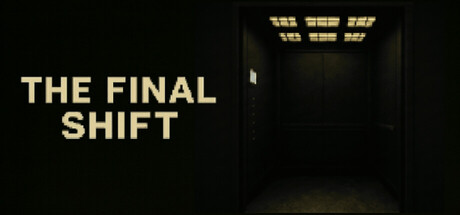
The Final Shift scores 70/100 — better than 35% of Psychological Horror capsules (n=2,166).

Quick text summary

The Final Shift scored 70/100 on Steam Analyzer — Good for a Psychological Horror capsule. Top priority fix: [uniqueness_polish] Introduce a distinctive visual element—either a unique character silhouette (the janitor), a signature prop (mop, keys, cart), or a signature lighting style that differentiates this horror from standard institutional horror tropes.

Capsule scores by dimension

  • Genre Clarity: 7/10 — Psychological horror established clearly. The dim institutional corridor with overhead fluorescent panels and stark yellow lighting immediately communicates a confined, unsettling space typical of psychological horror. At tiny size, the dark building interior and sickly-yellow ceiling lights still register as eerie and mysterious, though the specific 'janitor' context is not visually explicit—the horror mood reads well but the gameplay premise requires text to fully land.
  • Title Readability: 8/10 — Bold sans-serif reads at all sizes. THE FINAL SHIFT is rendered in a clean, all-caps sans-serif font with strong cream-colored letterforms on pure black background, providing excellent contrast and legibility at full, small, and tiny sizes. The title placement on the left with generous negative space ensures it remains readable during quick scroll and does not collide with the background environment; no decorative font collapse issues detected.
  • Contrast & Color: 8/10 — Strong dark-to-light separation holds. The cream title text achieves high value separation against the black background, and the sickly yellow ceiling detail creates a warm accent that pops against the cool darkness, mimicking a horror atmosphere while maintaining clarity. Even in grayscale stress test, the light text and structural elements of the corridor maintain silhouette integrity at small and tiny sizes, though the overall palette is intentionally desaturated to serve mood.
  • Uniqueness & Polish: 6/10 — Competent mood setup, limited novelty. The corridor setting and institutional lighting effectively establish psychological horror tone, but the visual treatment feels like a standard dark building interior without a distinctive art style, signature character, or memorable visual hook that would differentiate it from other horror games. The execution is clean and serviceable, but lacks the crafted uniqueness or visual storytelling specificity seen in top-tier indie horror titles like DREDGE or Slay the Princess.
  • Brand Consistency: 6/10 — Cohesive within itself, not distinctive. The internal palette (cream title, black void, yellow institutional light) is internally consistent and reinforces the psychological horror brand promise, but contains no iconic character, recurring symbol, or signature visual motif that would be instantly recognizable across promotional materials or screenshots. The institutional aesthetic is coherent but generic enough that it could apply to multiple horror games without clear identity markers.
  • Composition: 7/10 — Clear hierarchy, slightly unbalanced depth. The title anchors the left third with strong focal dominance, and the corridor perspective draws the eye rightward into the environment, creating reasonable directional flow. However, at tiny size the corridor detail becomes murky and secondary to the title, and the composition feels slightly empty in the right half—the layout is functional but could benefit from stronger midground balance or a secondary focal element to strengthen the read at small sizes.

What works

  • Title legibility across all sizes. Cream sans-serif on black background maintains excellent readability from full to tiny size with no font collapse or contrast issues.
  • Mood clarity and atmosphere. The dark institutional corridor and yellow ceiling lights immediately communicate psychological horror tone and convey unease in under one second.
  • Color contrast and pop. The warm yellow accent lighting creates visual interest and pops against the cool dark palette, preventing a completely flat composition.

What hurts the capsule

  • Generic horror setting without identity. The corridor is a familiar trope in psychological horror with no distinctive art style, character, or visual hook that sets The Final Shift apart from competitors.
  • Weak composition balance at small sizes. The right half of the capsule becomes muddy and unfocused at tiny size, leaving the composition feeling lopsided with wasted prime real estate.
  • Premise not visually communicated. The 'night janitor' core gameplay concept is not evident from the visuals alone; the setting reads as generic horror rather than a specific occupational scenario.

Priority fixes

  1. [uniqueness_polish] Introduce a distinctive visual element—either a unique character silhouette (the janitor), a signature prop (mop, keys, cart), or a signature lighting style that differentiates this horror from standard institutional horror tropes.
  2. [composition] Strengthen the right-side environment detail with additional visual hierarchy or a secondary focal point to improve balance and clarity at small and tiny sizes; consider repositioning the corridor perspective to fill dead space.
  3. [genre_clarity] Add a subtle visual cue that hints at the 'janitor' occupation (e.g., equipment silhouette, work uniform detail, tools) to make the gameplay premise visually recognizable without relying on text.
  4. [brand_consistency] Develop a signature color accent or lighting motif beyond generic yellow fluorescents to create a memorable identity that could scale across promotional materials and screenshots.

Store copy priority fixes

  1. [feature_communication] Expand the Game Features section with specific mechanics: 'Explore non-Euclidean office layouts,' 'Discover narrative through environmental storytelling and documents,' 'Uncover the truth about Mortov Papers and The Wonderful Day'—to clarify what players actually do.
  2. [audience_targeting] Add a line positioning the short playtime as a strength: 'A compact 1-hour psychological horror experience designed for maximum narrative impact and replayability' to set correct expectations.
  3. [uniqueness] Explicitly differentiate the cognitohazard mechanic: 'Information itself becomes a threat—certain knowledge changes how the game perceives and responds to you' to clarify what makes this horror approach distinct.
  4. [feature_communication] Explain 'Looping environment' in context: 'Return to familiar spaces that shift and distort, revealing new paths and unsettling truths with each loop' to show narrative purpose.

Related guides

Steam app ID: 4043920 · Tags: Psychological Horror, Horror, Mystery, Pixel Graphics, Immersive Sim