Scoring genre clarity...

Nights in Endless Dream capsule

Nights in Endless Dream

Nights in Endless Dream is another psychological anomaly game that focuses on the story of our main character and 2D aesthetics. Memorize the rooms and find the anomalies to escape the dream.

$4.484 user reviews
Psychological HorrorMysteryPuzzle
Ikadev StudioFeb 4, 2026

Nights in Endless Dream scores 73/100 — better than 66% of Psychological Horror capsules (n=2,167).

4 user reviews · $4.48 · Released Feb 4, 2026 · By Ikadev Studio

Quick text summary

Nights in Endless Dream scored 73/100 on Steam Analyzer — Good for a Psychological Horror capsule. Top priority fix: [uniqueness_polish] Introduce a subtle anomaly or visual oddity in the scene (e.g., impossible geometry, displaced object, environmental glitch) to hint at the core puzzle mechanic and increase distinctiveness.

Capsule scores by dimension

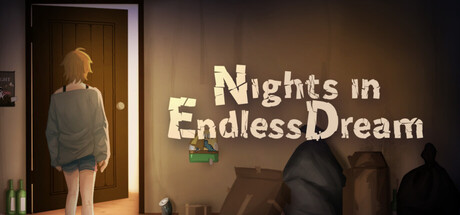
  • Genre Clarity: 7/10 — Psychological narrative with puzzle hints. The image clearly communicates a narrative-driven, story-focused experience through the contemplative pose of the character in an interior domestic space. The 3D environment with realistic lighting and the solitary figure suggest introspection and mystery, which aligns with psychological anomaly gameplay. At TINY size, the silhouette and warm interior setting still read as character-driven narrative, though the specific anomaly-hunt mechanic is not visually apparent.
  • Title Readability: 8/10 — Clear, legible sans-serif composition. The title 'Nights in Endless Dream' uses a clean, bold sans-serif font with strong contrast against the darker background, positioned prominently in the right-center area. At SMALL and TINY sizes, the text remains legible with good letter spacing and no decorative collapse. The two-line layout with consistent sizing aids quick recognition during rapid scrolling.
  • Contrast & Color: 8/10 — Strong warm-to-dark value separation. The warm golden and amber tones of the interior lighting create excellent contrast against the cool, dark Steam background (#1b2838). The character's pale clothing pops clearly against the shadowed interior, and the title text glows with sufficient brightness to maintain edge definition even at TINY size. The lighting hierarchy separates foreground character from background room elements effectively.
  • Uniqueness & Polish: 7/10 — Polished narrative aesthetic, moderate distinctiveness. The capsule demonstrates clean 3D rendering, careful lighting design, and thoughtful composition that feels intentional and well-crafted. However, the domestic interior with a solitary figure is a familiar visual language shared by several psychological and narrative games in the indie space. The execution is premium but lacks a strong signature visual hook or mechanic-specific iconography that would make it immediately distinct from similar titles.
  • Brand Consistency: 6/10 — Cohesive but internally-focused presentation. The capsule demonstrates consistent 3D rendering style, warm color palette, and introspective mood that would likely align with in-game visuals. However, without reference to the 5 store screenshots, internal cohesion can only be assessed from this single image, which shows no distinctive recurring motif, character signature, or symbolic element that would create strong brand recall across multiple Steam touchpoints. The design feels unified within itself but does not establish a memorable identity marker.
  • Composition: 8/10 — Clear focal point with effective depth layering. The character on the left serves as the primary focal point, with the interior environment providing midground context and the title positioned strategically on the right to balance the composition without competing for attention. The layering of foreground (character), midground (room furniture), and background (hallway depth) creates visual interest and guides the eye naturally. At SMALL and TINY sizes, the character silhouette remains dominant and the title stays readable without crowding, though the interior detail softens somewhat at the smallest size.

What works

  • Strong contrast and readability. The warm interior lighting creates excellent value separation against the dark Steam background, and the title text maintains legibility at all sizes without requiring squinting or enhanced focus.
  • Effective narrative focal point. The contemplative character silhouette immediately communicates a story-driven, introspective experience and serves as a clear primary subject that remains recognizable even at TINY size.
  • Professional rendering and polish. The 3D environment shows clean lighting, careful staging, and intentional composition that signals a well-crafted indie experience rather than a template-based design.
  • Balanced composition across sizes. The left-right distribution of character and title prevents visual collision and maintains readable hierarchy as the capsule scales down.

What hurts the capsule

  • Generic psychological narrative trope. The solitary figure in an empty room is a familiar visual convention shared by many indie narrative games, limiting distinctive brand identity and memorable visual signature.
  • Unclear game mechanic communication. While the narrative focus is clear, the 'anomaly detection' core mechanic is not visually hinted at in the capsule, missing an opportunity to differentiate from other narrative-heavy indie titles.
  • Limited visual storytelling depth. The image conveys mood and genre but does not communicate a specific hook, unique premise, or 'why should I play this' moment beyond 'melancholic narrative experience.'

Priority fixes

  1. [uniqueness_polish] Introduce a subtle anomaly or visual oddity in the scene (e.g., impossible geometry, displaced object, environmental glitch) to hint at the core puzzle mechanic and increase distinctiveness.
  2. [genre_clarity] Add a subtle UI element or visual indicator (e.g., a faint 'spot the difference' highlight, dreamlike distortion, or memory-trace effect) that signals the anomaly-hunt mechanic without cluttering the composition.
  3. [brand_consistency] Establish a recurring visual motif (e.g., a signature palette shift, recurring symbolic object, or distinctive environmental cue) that can anchor brand recognition across other store assets.

Store copy priority fixes

  1. [hook_strength] Replace "another psychological anomaly game" with a verb-forward hook that emphasizes discovery or unease, e.g., 'Find what doesn't belong in a woman's fractured dreams—before the night repeats forever.' This immediately creates emotional investment.
  2. [uniqueness] Add one sentence explaining what sets this game apart in the anomaly-game space, such as a specific mechanic (e.g., anomalies that change based on player choices) or narrative angle (e.g., the trauma itself reshapes the environment).
  3. [feature_communication] Expand one sentence to connect anomaly-finding to story progression, e.g., 'Each anomaly you discover unlocks diary entries that reveal the truth behind her trauma and why she's trapped.'
  4. [tone_match] Rewrite the opening of the detailed description with more atmospheric language that mirrors the psychological horror tone rather than clinical game design description.

Related guides

Steam app ID: 4283230 · Tags: Psychological Horror, Mystery, Puzzle, Exploration, Simulation