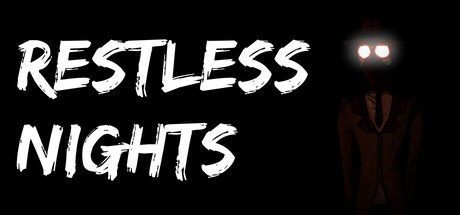
Restless Nights scores 72/100 — better than 48% of Psychological Horror capsules (n=2,166).

Quick text summary

Restless Nights scored 72/100 on Steam Analyzer — Good for a Psychological Horror capsule. Top priority fix: [genre_clarity] Add subtle visual cues that suggest adaptation or learning mechanics, such as environmental details hinting at threat variety or a progression indicator, to differentiate survival-horror from generic horror.

Capsule scores by dimension

  • Genre Clarity: 7/10 — Survival horror clearly telegraphed. The glowing eyes peering from darkness and lone figure against black background immediately signal horror survival, supported by the game's described survival-horror gameplay. At tiny size, the bright eye highlights still read distinctly as an ominous threat element, though the specific survival mechanics are not visually apparent from this capsule alone.
  • Title Readability: 8/10 — Bold title legible across all sizes. RESTLESS NIGHTS uses a thick, high-contrast white sans-serif font on pure black background with deliberate hand-drawn distressing that enhances rather than harms readability. The title remains clear at small and tiny sizes due to strong value contrast and generous letter spacing, though the distressed effect adds character without compromising comprehension.
  • Contrast & Color: 8/10 — Strong value separation with focal highlight. The bright glowing eyes (warm yellow-orange) create sharp contrast against the very dark figure and pure black background, immediately drawing attention at any size. In grayscale, the eye highlights maintain excellent separation from the dark silhouette, and the white title text pops cleanly; the composition avoids muddy mid-tones and reads distinctly even at tiny thumbnail size.
  • Uniqueness & Polish: 7/10 — Distinctive horror mood, solid execution. The minimalist approach—a mysterious figure with glowing eyes—feels intentional and specific to survival horror rather than generic. The hand-drawn distressing on the title adds character, and the pure black void background creates an eerie, isolated atmosphere that matches the game's survival-horror premise without feeling overdesigned.
  • Brand Consistency: 6/10 — Cohesive horror aesthetic, limited iconography. The visual identity—dark, minimal, ominous eyes—is internally consistent and thematically aligned with survival horror, but without strong memorable motifs or character silhouettes that would enable immediate recognition across multiple marketing assets. The stark black and white palette is cohesive, though not distinctive enough to stand apart from other horror titles without additional context.
  • Composition: 7/10 — Clear hierarchy, effective focal point. The glowing eyes naturally command attention as the primary focal point, while the title anchors the left side with strong hierarchy; the dark figure provides depth and context without competing for attention. Safe margins are respected, and the composition remains legible at small sizes, though the lower right edge contains minimal detail and could feel slightly imbalanced at full size.

What works

  • Glowing eye focal point. The bright yellow-orange eyes create an immediate ominous hook that reads distinctly at any size and communicates threat without text.
  • High-contrast typography. Thick white sans-serif with subtle distressing maintains perfect legibility across all viewing sizes on pure black while adding personality.
  • Thematic cohesion. The minimalist dark aesthetic directly supports the survival-horror premise and avoids visual noise that would dilute the eerie mood.

What hurts the capsule

  • Limited genre specificity. While clearly horror, the capsule does not visually communicate the survival or strategic adaptation mechanics that differentiate this title from generic horror.
  • Weak brand identity. The mysterious figure with glowing eyes lacks distinctive character or memorable iconography that would enable recognition across multiple marketing touchpoints.
  • Minimal visual storytelling. The composition is evocative but does not hint at the core gameplay loop (learning threats each night) or unique selling proposition.

Priority fixes

  1. [genre_clarity] Add subtle visual cues that suggest adaptation or learning mechanics, such as environmental details hinting at threat variety or a progression indicator, to differentiate survival-horror from generic horror.
  2. [brand_consistency] Introduce a recognizable character motif, iconic threat design, or signature environmental element that can anchor the brand identity across future marketing assets.
  3. [uniqueness_polish] Consider adding a secondary visual element (e.g., clock, shadow detail, or threat silhouette) that reinforces the nightly escalation or survival adaptation loop without cluttering the composition.

Store copy priority fixes

  1. [feature_communication] Replace 'use your wits to deal with these threats' with a concrete description of the player's agency—e.g., 'solve environmental puzzles,' 'hide from entities,' or 'manage light and sound to avoid detection' to clarify core mechanics.
  2. [hook_strength] Expand the short description's second sentence to lead with a specific threat or mechanic, e.g., 'Each night brings new dangers—will you survive by solving cryptic puzzles and reading clues, or fall to the shadows?'
  3. [uniqueness] Add one sentence to the Features section or synopsis that differentiates this game—e.g., 'Cryptic messages and environmental storytelling replace jump scares' or 'Custom modifiers let you remix threats in thousands of combinations.'
  4. [audience_targeting] Add a brief line after the synopsis clarifying tone and difficulty, e.g., 'Perfect for players who love psychological horror, puzzle-solving, and narrative discovery over action-driven gameplay.'

Related guides

Steam app ID: 4337510 · Tags: Psychological Horror, Strategy, Horror, Dark, Atmospheric