Scoring genre clarity...

Typical NPC capsule

Typical NPC

Run a grimy fantasy weapon shop while heroes save the world somewhere else. Sell rusty swords, survive arrogant customers, repair the damage, and fight for your retirement before the final battle arrives.

$99.99No user reviews
RPGVisual NovelTime Management
SmogGamesMay 11, 2026

Typical NPC scores 72/100 — better than 49% of RPG capsules (n=3,544).

No user reviews · $99.99 · Released May 11, 2026 · By SmogGames

Quick text summary

Typical NPC scored 72/100 on Steam Analyzer — Good for a RPG capsule. Top priority fix: [uniqueness_polish] Introduce a distinctive visual signature—consider a recurring design motif, iconic shop signage, or signature UI element that appears consistently in marketing and store screenshots to build brand recognition.

Capsule scores by dimension

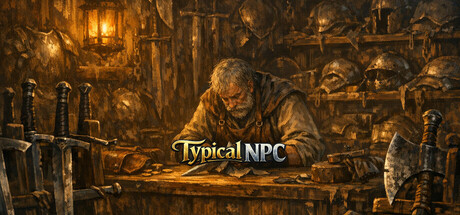
  • Genre Clarity: 7/10 — Fantasy shop setting clearly readable. The capsule immediately communicates a medieval fantasy craft/shop environment through the workbench, tools, armor pieces, and warm workshop lighting. At tiny size, the silhouette of a craftsperson at a workbench remains identifiable, though the specific 'NPC shopkeeper' angle requires reading the title. The genre signals fantasy RPG convincingly, but the unique 'running a shop while heroes adventure elsewhere' hook is not visually evident at small sizes.
  • Title Readability: 8/10 — Title clear at all viewing sizes. The 'Typical NPC' title is positioned in clean white serif font centered over the midground, with strong contrast against the darker workshop background and subtle text shadow for depth. At tiny size, the title remains legible and does not collapse, maintaining word separation and character clarity. Tagline and secondary text are absent, allowing the title to dominate without clutter.
  • Contrast & Color: 8/10 — Warm gold palette pops effectively. The capsule uses rich golden-orange ambient lighting that creates strong value separation from the Steam dark background (#1b2838), with the central figure and workbench glowing warmly against darker background elements. The warm monochromatic palette maintains cohesion while the bright highlights on metals, lanterns, and cloth provide clear silhouette definition even at tiny size. In grayscale, midtones blend slightly but key focal areas retain strong light-dark separation.
  • Uniqueness & Polish: 7/10 — Distinctive hook, competent execution. The concept of visualizing an NPC shopkeeper's perspective is a refreshingly specific angle that differentiates it from typical fantasy RPG imagery. The weathered, lived-in workshop aesthetic with detailed tool placement and authentic craftsperson posture conveys intentional worldbuilding rather than generic fantasy scenery. However, the execution relies heavily on atmospheric lighting rather than a truly distinctive art style or visual trademark that would make it instantly recognizable among indie RPGs.
  • Brand Consistency: 6/10 — Cohesive interior but limited identity markers. The interior workshop maintains visual consistency with warm amber lighting, rustic wooden textures, and aged metal craftsmanship throughout—all elements reinforce the grimy, worn-down shop fantasy. There are no clear iconic symbols, recurring motifs, or signature color blocking that would create immediate brand recognition for the game across marketing materials. The NPCs and crafting identity are strong thematic elements but lack a distinctive visual trademark comparable to the reference tier games.
  • Composition: 7/10 — Clear focal point, balanced layering. The composition uses strong depth layering with background tools and ambient lighting, midground workshop structure, and a foreground craftsperson figure leaning over the workbench—creating a natural reading hierarchy. The title sits at visual center as a secondary focus without overwhelming the scene, and the primary subject (the working figure) is well-positioned slightly left of center. At tiny size the focal point remains clear, though fine background details blur appropriately; however, some edge elements (lanterns and tools at frame edges) approach the crop boundary and could risk minor clipping depending on Steam's exact scaling.

What works

  • Strong atmospheric lighting. The golden-amber workshop illumination creates excellent contrast against the dark Steam background and maintains readability across all viewing sizes through clear value separation.
  • Legible, well-placed title treatment. The 'Typical NPC' text is positioned strategically over a mid-tone region with subtle shadow support, remaining clear and readable at tiny size without ornamental collapse.
  • Effective visual storytelling. The weathered craftsperson at the workbench with scattered tools and equipment immediately communicates the unique 'NPC shop owner' perspective without requiring text explanation.

What hurts the capsule

  • Limited brand identity markers. The capsule lacks a distinctive visual symbol, recurring motif, or signature design element that would make it instantly recognizable outside of this image context.
  • Generic fantasy RPG visual language. While competently executed, the medieval workshop aesthetic relies on familiar fantasy tropes rather than a unique art direction that would stand out among indie RPG competitors.
  • Ambiguous gameplay hook at tiny size. The specific 'shop management while heroes adventure' premise is not visually apparent at small sizes; viewers see a fantasy craftsperson but not the unique mechanical differentiation.

Priority fixes

  1. [uniqueness_polish] Introduce a distinctive visual signature—consider a recurring design motif, iconic shop signage, or signature UI element that appears consistently in marketing and store screenshots to build brand recognition.
  2. [genre_clarity] Add subtle environmental cues that hint at the 'background NPC' perspective—such as a wanted poster of heroes, adventurer silhouettes in a window, or a shop ledger visible in the composition—to visually communicate the unique selling point at small sizes.
  3. [composition] Ensure all edge-hugging elements (lanterns, tools, frame borders) maintain safe margins of at least 20px from crop boundaries to prevent clipping across different Steam scaling ratios.

Store copy priority fixes

  1. [genre_clarity] Explicitly add 'time management' language to the short description (e.g., 'manage your days and resources') to clarify the scheduling/daily loop structure.
  2. [feature_communication] Specify the branching depth and replayability in one sentence of the detailed description (e.g., 'Multiple branching paths lead to distinct endings based on your choices').
  3. [audience_targeting] Add a sentence signaling tone and difficulty to help players self-select (e.g., 'Experience dark humor and mounting pressure as the apocalypse draws closer').

Related guides

Steam app ID: 4643380 · Tags: RPG, Visual Novel, Time Management, Medieval, Singleplayer